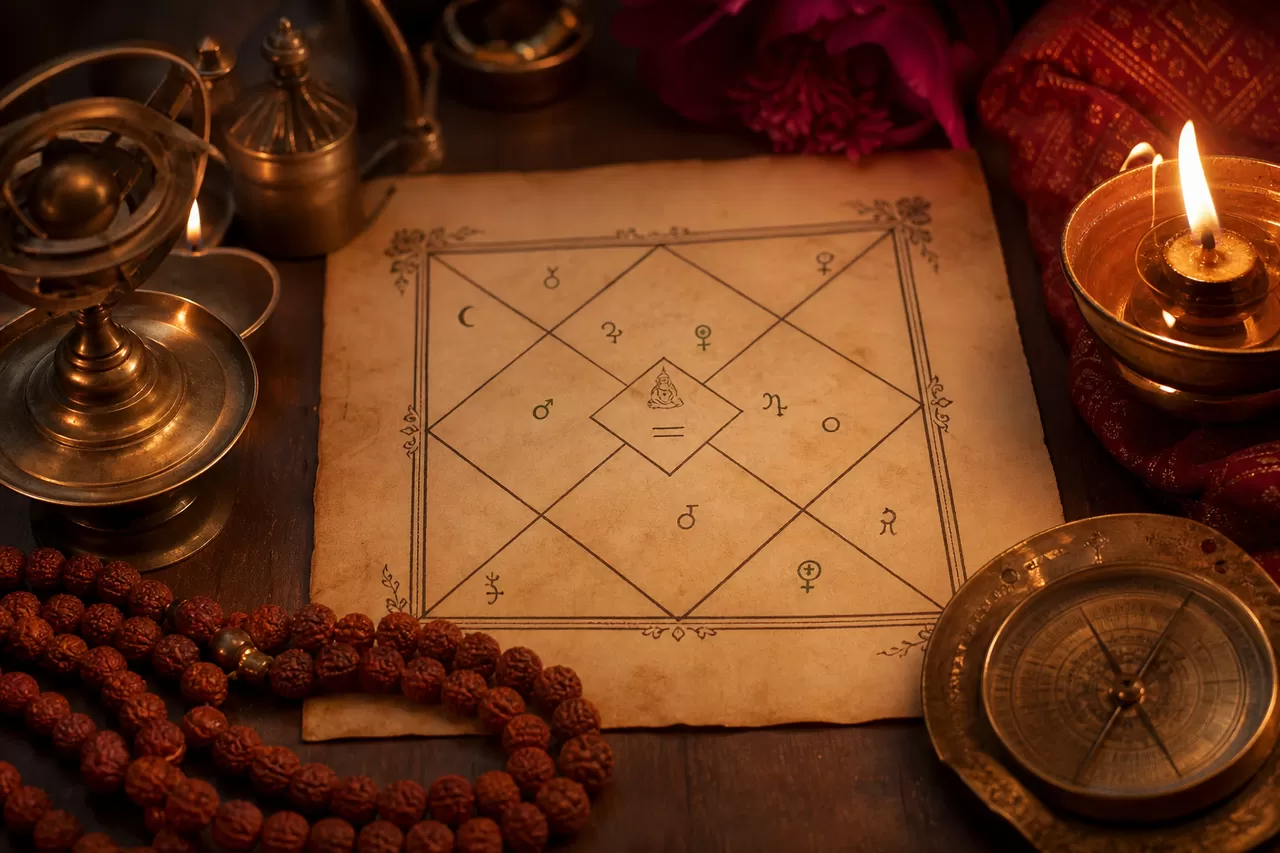


Quick answer. Nadi dosha and Bhakoot dosha are the two heaviest-weighted factors in guna milan, together accounting for 15 of the 36 points. Both have recognised cancellations in classical practice. This consultation determines whether either is genuinely present in a match and whether a cancellation applies before any decision is made.
Why these two carry so much weight
In ashtakoot matching, Nadi is worth eight points and Bhakoot seven. Between them they hold more than 40 per cent of the total, which means that failing either one drags a score down sharply — often below the conventional threshold of eighteen, and often to the point where a family refuses the match outright.
Nadi dosha occurs when both charts fall in the same nadi grouping, traditionally associated with concerns about health and progeny. Bhakoot dosha arises from particular Moon-sign distances between the two charts, traditionally associated with friction and prosperity in the household. Both are old, serious considerations and neither is a mere formality.
Both, however, come with cancellations that classical texts set out plainly. Same nadi but different nakshatra pada, the same Moon sign with different nakshatras, particular lordship relationships between the signs involved, strong Jupiter placement — each can nullify the dosha. These are precisely the checks that a generated report tends to omit, which is how a perfectly workable match ends up marked as failed.
This consultation works through them properly. Where a dosha stands after every cancellation has been considered, that is reported honestly along with any remedies that tradition offers. Where it cancels, you get a clear explanation you can take back to the family who refused.
A clear, caring path
How the doshas are assessed
The assessment identifies the nadi and Moon placements for both charts, works through every recognised cancellation rather than stopping at the first finding, then reports plainly and prescribes a remedy only where a dosha genuinely stands after that process.
Identify nadi and Moon placements
Both charts are examined for nakshatra, pada and Moon sign — the precise positions on which both doshas depend, and where an imprecise birth time causes real errors.
Work through every cancellation
Each recognised cancellation for Nadi and Bhakoot is tested against the two charts rather than assumed absent, which is the step most reports skip entirely.
Report plainly, remedy if needed
You receive a clear statement of what stands, what cancels and why, with traditional remedies prescribed only where a dosha genuinely remains.
Do any of these sound familiar?
When this consultation is needed
Most useful before a family reaches a final decision.
- A match was refused specifically over Nadi or Bhakoot dosha
- Your guna score fell just below eighteen because of one factor
- Two astrologers have given different verdicts on the same pair of charts
- A report flagged a dosha without mentioning cancellations
- You are Manglik as well and want everything assessed together
- A wedding date is set and you want the doshas checked properly first
Your questions, answered
Nadi & Bhakoot Dosha — your questions answered
Classical texts recognise several cancellations — among them the same nadi with different nakshatras or different padas, and particular planetary relationships between the charts. Whether one applies to your match is a question of the specific placements, which is what the consultation establishes.
It carries real weight in traditional matching and is not dismissed here. But it also cancels more often than most reports acknowledge, particularly where the sign lords are friendly or identical. It deserves a careful reading rather than either alarm or dismissal.
Then you are told plainly, and traditional remedies are set out along with an honest account of what they are understood to address. You will not be told a match is impossible, nor that a payment makes the problem disappear.
Accurate times matter here, because both doshas depend on Moon placement and nakshatra. Where a time is uncertain, birth time rectification is offered first so the assessment rests on something solid.
Yes, and it is often better that way. Families frequently ask for the check quietly, before a proposal becomes public, so that an unfavourable finding does not have to be managed in front of everyone.