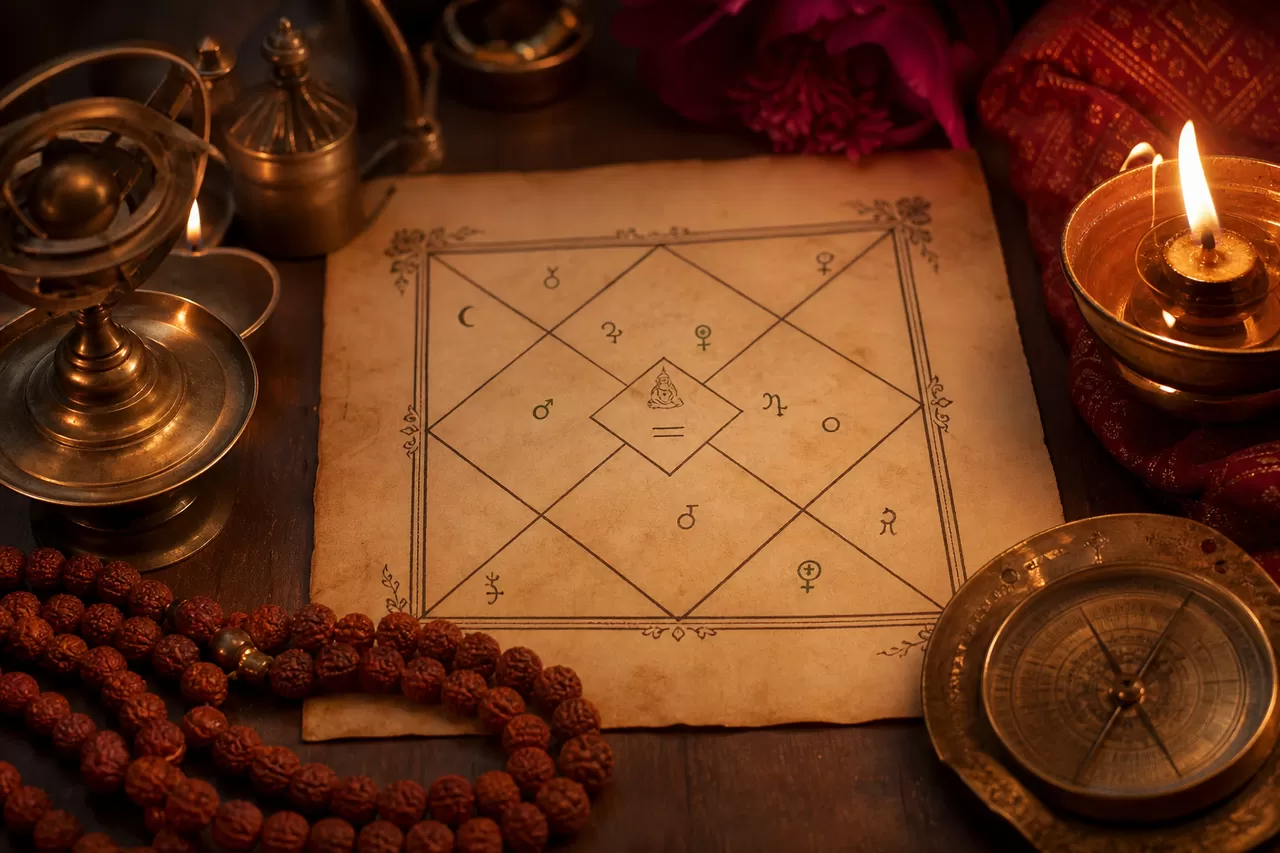

Vedic astrology is a centuries-old Indian system of chart interpretation that uses the sidereal zodiac, fixed to the actual position of the stars, to study a person's birth chart or kundli. Western astrology, by contrast, uses the tropical zodiac, anchored to the seasons and the sun's relationship to the Earth. Both traditions read the sky, but they measure it differently, and this single distinction shapes almost everything else — the dates of your sun sign, the planetary periods used for timing events, and the remedies suggested. Many people in Kitchener, Waterloo, and Cambridge ask Master Vijay Ram why their Western sun sign feels off after a Vedic reading, and the answer almost always comes back to sidereal versus tropical calculation. This article walks through the real, practical differences so you can understand which approach answers the questions you actually have about your life, career, or relationships.
What is the core difference between Vedic and Western astrology?
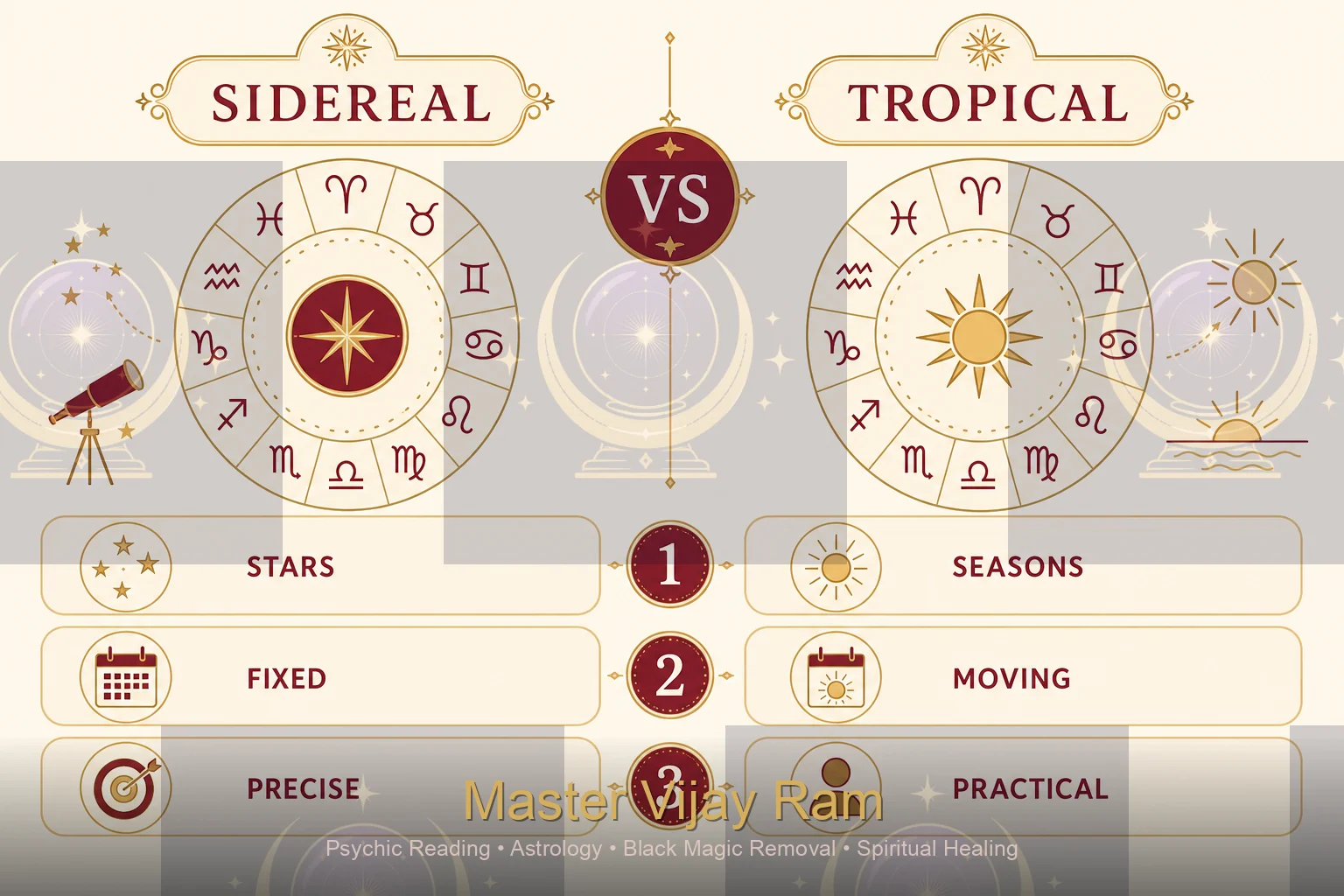
The core difference is the zodiac reference point. Vedic astrology (jyotish) uses the sidereal zodiac, tied to fixed star positions, while Western astrology uses the tropical zodiac, tied to the spring equinox and seasonal changes. This creates an offset of roughly 24 degrees, known as ayanamsa, between the two systems.
Both traditions divide the sky into twelve 30-degree segments, but they disagree on where the wheel begins. The tropical zodiac used in the West locks the first degree of Aries to the spring equinox every year, so it stays connected to seasons rather than actual constellations.
The sidereal zodiac used in Vedic astrology is measured against the real backdrop of stars, as documented by long traditions of naked-eye observation described in classical Hindu astrology texts. Because the equinox point slowly drifts relative to the stars (a phenomenon called precession), the two zodiacs no longer overlap — they differ by about 24 degrees today.
Practically, this means your sun sign in a Vedic kundli horoscope reading may show one sign earlier than your familiar Western sign. Neither calculation is 'wrong'; they are simply answering to two different reference frames.
How does sidereal vs tropical actually change my birth chart?
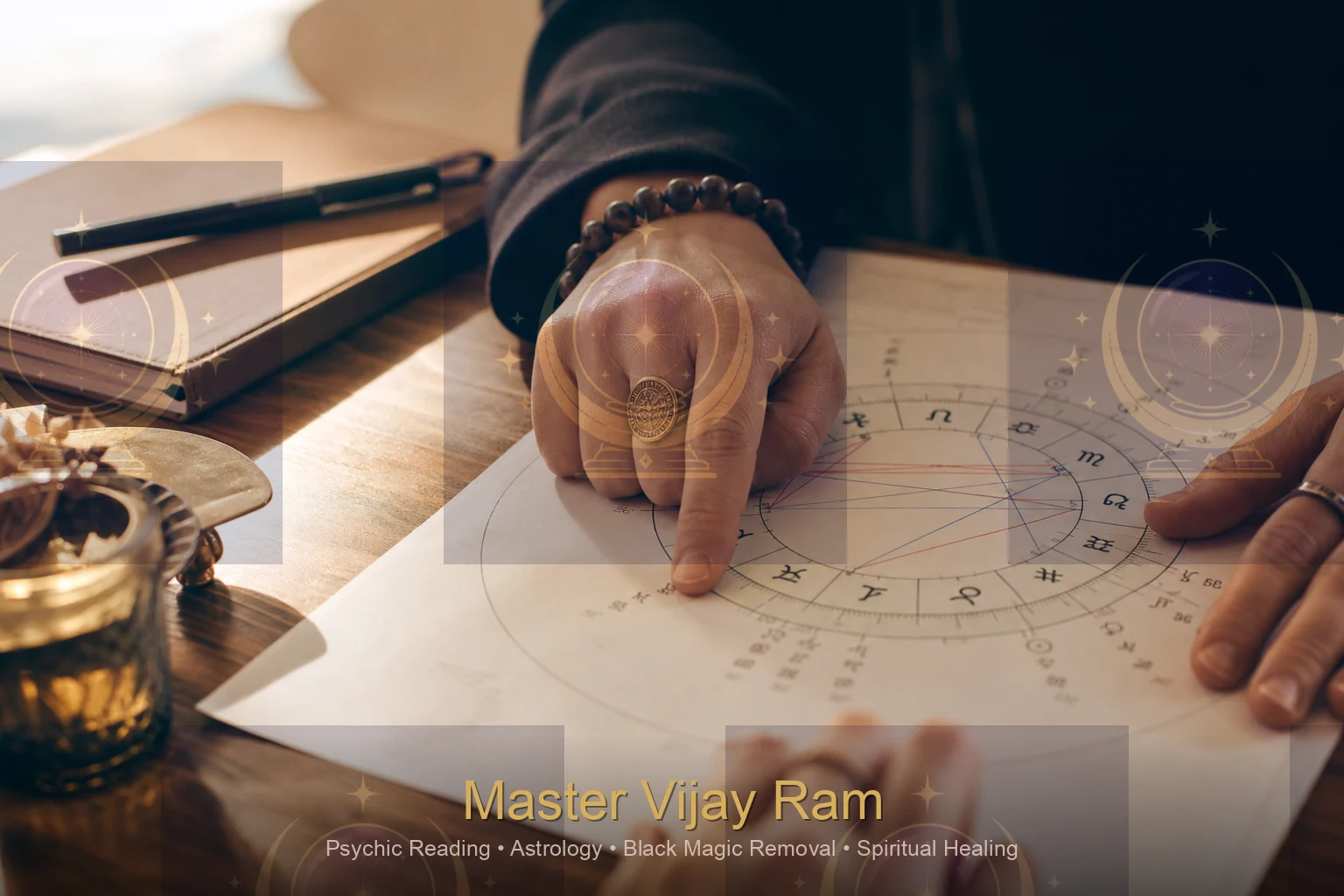
Sidereal calculation shifts most planets back by roughly 24 degrees compared with tropical placements, which can move your moon sign, rising sign, and even sun sign into an adjacent zodiac sign. This is why a Vedic reading of the same birth details can look noticeably different from a Western one.
If you were told you're a Western Leo, a sidereal calculation could place your sun in Cancer instead. This is the single most common source of confusion for new clients booking a session with an astrologer in Kitchener.
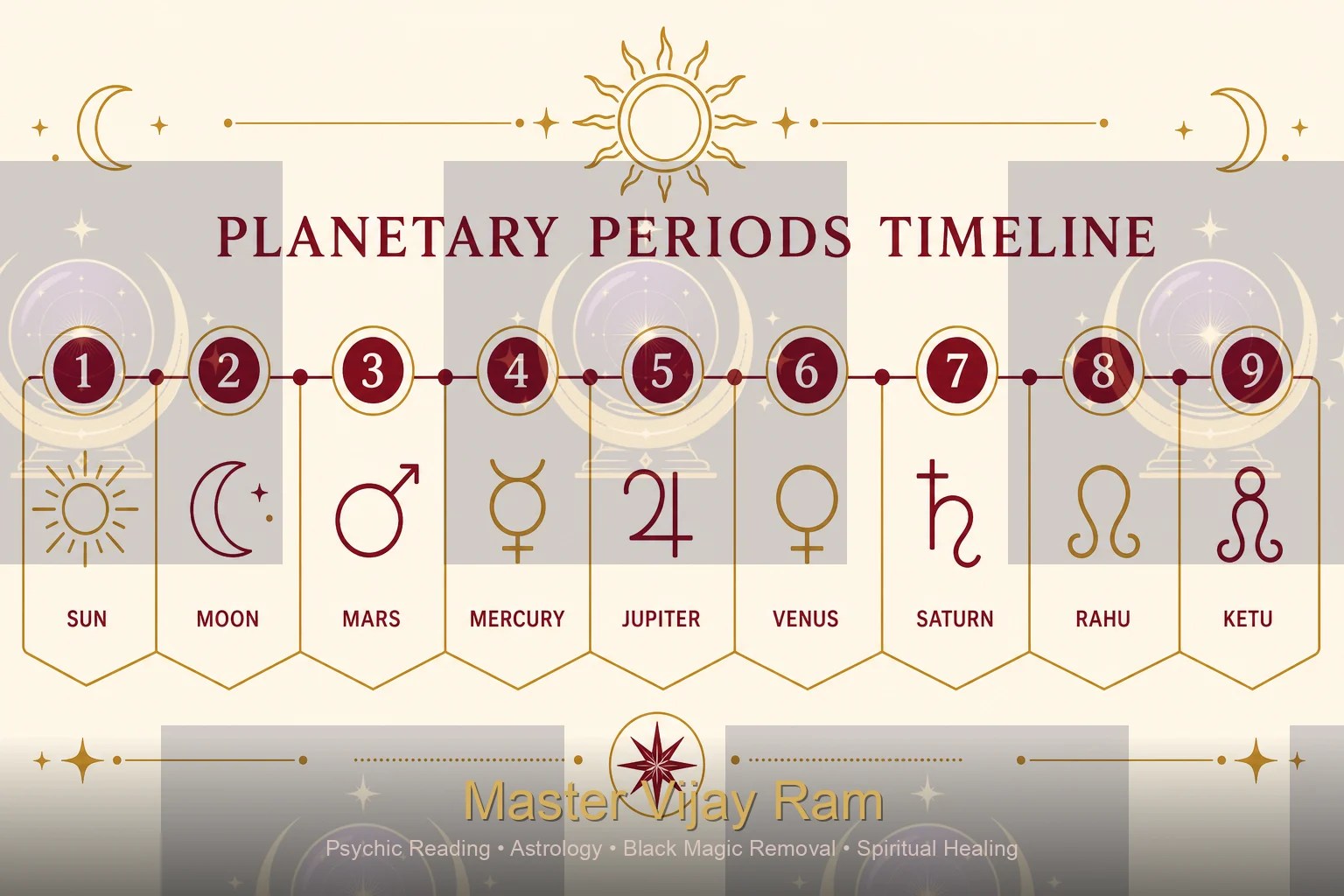
The shift also changes house placements, which affects predictions about career, marriage timing, and health. In Vedic practice, this recalculated chart becomes the base for the Dasha system — a sequence of planetary periods that Western astrology does not use in the same structured way.
- Vedic charts emphasize Nakshatras (27 lunar mansions) for finer timing.
- Western charts emphasize aspects and transits for present-moment psychology.
- Both use planets, houses, and signs, but weight them differently.
Neither method is inherently more accurate; they were built to answer different kinds of questions, a point supported by general overviews of astrology's history from Encyclopaedia Britannica.
Which system is better for predicting life events?
Vedic astrology is traditionally stronger for event-based prediction because of its Dasha and transit timing tools, which map specific life periods to specific planets. Western astrology is often preferred for psychological insight and self-understanding rather than precise event timing.
Vedic astrology's Dasha system assigns each planet a multi-year ruling period across your lifetime, giving a practical timeline for questions such as "When will my career improve?" or "When is a good period for marriage?" This is why many clients researching business and career astrology guidance lean toward the Vedic approach.
Western astrology's transit and progression techniques are also predictive, but the tradition has, over the past century, moved further toward archetypal and psychological interpretation — understanding personality patterns rather than pinpointing dates.
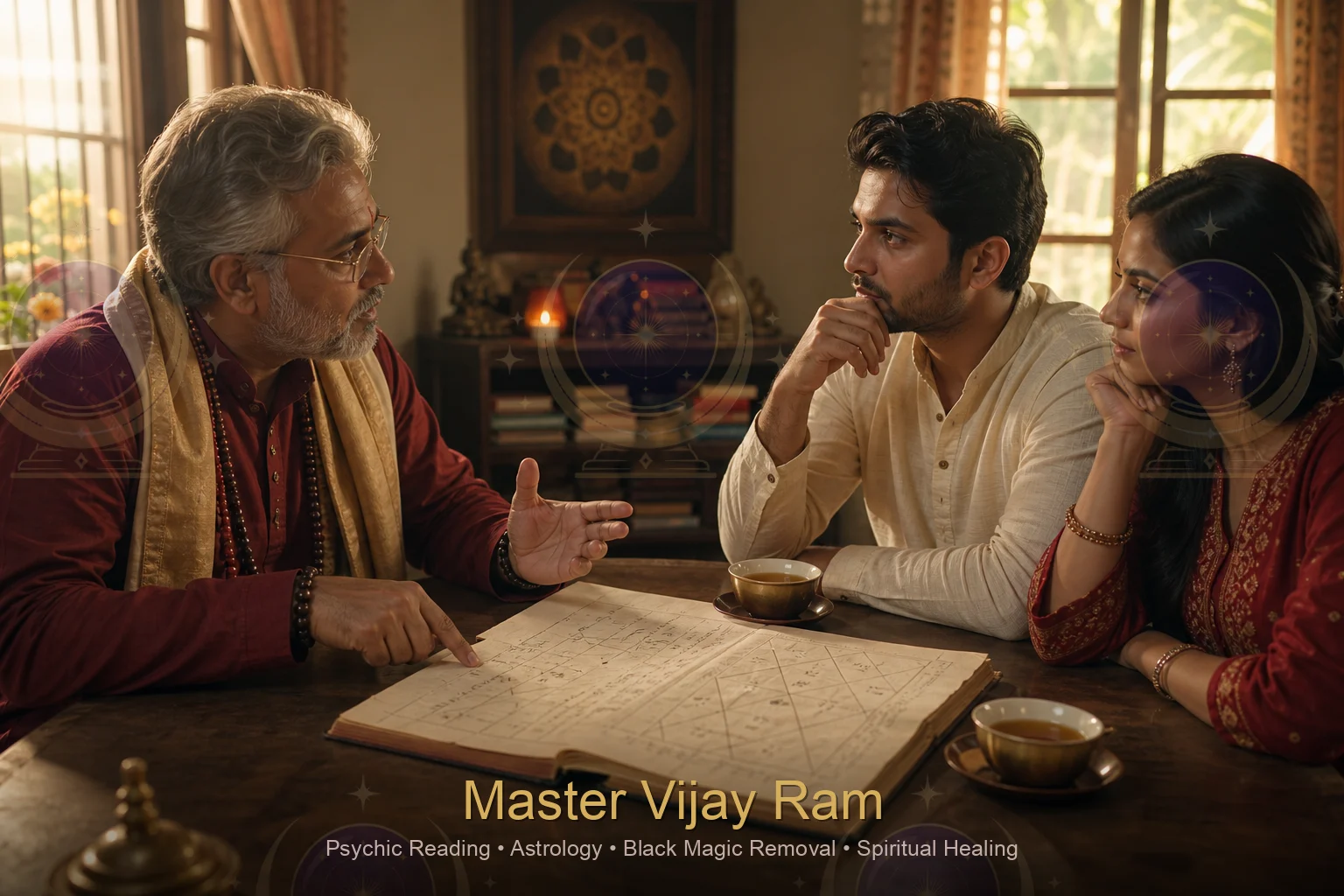
Master Vijay Ram, with 40+ years reading kundlis for families across Ontario, generally uses the Vedic framework for timing-sensitive concerns like love and marriage compatibility readings, while acknowledging Western astrology's value for those who want a more reflective, character-based lens.
Do Vedic and Western astrology use different remedies?
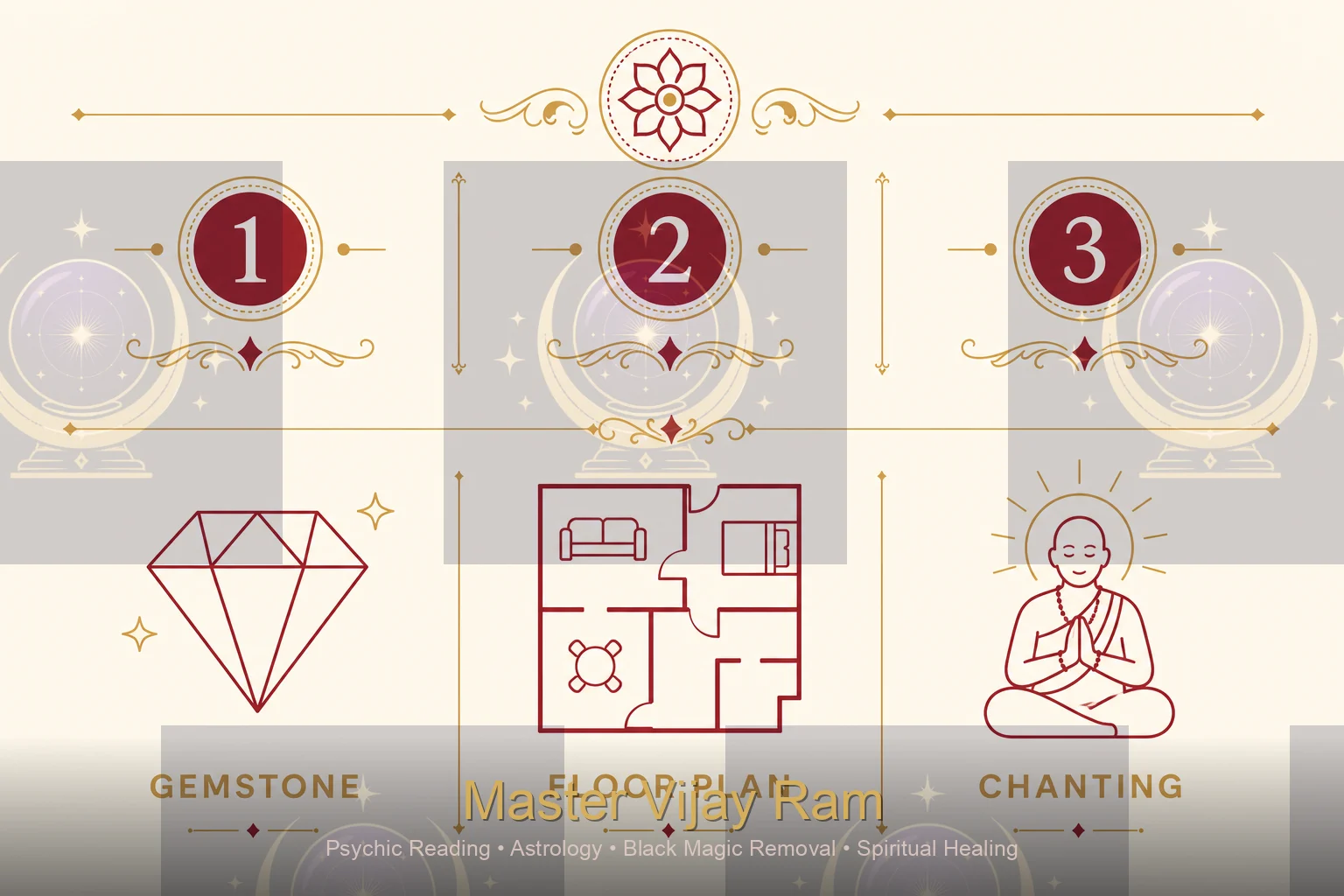
Yes. Vedic astrology pairs predictions with tangible remedies — gemstones, mantras, and vastu adjustments — meant to ease a difficult planetary period. Western astrology rarely prescribes remedies; it favours journaling, self-reflection, or lifestyle changes based on your chart's psychological themes.
This is one of the most practical distinctions. In Vedic tradition, an afflicted planet in your kundli might be addressed through a recommended gemstone, chanting, charitable acts, or corrections to your living space. Clients often explore this further through gemstone and numerology guidance once a birth chart flags a specific weak or troubled planet.
Vastu, the Vedic architectural science of directional energy, is another remedy layer entirely absent from Western astrology. If a chart and a home's layout both point to blocked progress, a combined vastu consultation is sometimes suggested alongside chart remedies.
Western astrology, rooted more in modern psychology since the early 20th century, tends to stop at interpretation — it describes tendencies but does not usually offer ritual countermeasures.

Can I combine Vedic and Western astrology, or should I pick one?
You do not have to choose permanently. Many clients use Western astrology for quick personality insight and Vedic astrology for deeper timing, career, and relationship decisions. What matters most is working with a reader who is transparent about which system they are using and why.
Some questions are better suited to one system. A quick "what's my personality like" curiosity may be satisfied by a Western sun-sign read. A serious decision — a wedding date, a business launch, a long relationship pattern — usually calls for the depth of a Vedic kundli reading.
It also helps to understand where astrology sits next to other practices you may have heard of. Our earlier piece on palmistry or astrology, which reading to choose compares two Vedic-rooted tools, while psychic, astrologer, and medium differences clarifies what an astrology session does and does not involve.
Honesty matters here: no legitimate astrologer, Vedic or Western, can guarantee a specific outcome. Astrology offers guidance and probability, not certainty, and a careful reader will always say so plainly.


Serving nearby: Kitchener · Waterloo · Cambridge · Guelph · Brantford · London · Hamilton
Key takeaways
- Vedic astrology uses the sidereal zodiac (aligned with real stars); Western astrology uses the tropical zodiac (aligned with seasons).
- The sidereal-tropical gap (ayanamsa) is about 24 degrees, which can shift your sun sign between the two systems.
- Vedic astrology emphasizes event timing through Dasha periods; Western astrology emphasizes psychological interpretation.
- Vedic astrology pairs predictions with remedies like gemstones, mantras, and vastu; Western astrology generally does not.
- No honest astrologer in either tradition can guarantee specific outcomes.
In closing
Understanding the difference between sidereal and tropical zodiacs is the first step to knowing which kind of astrological guidance actually answers your question. If you are ready to look closely at your own birth chart, Master Vijay Ram welcomes you to a private, confidential consultation — in person or by phone — to walk through your kundli with care and clarity.