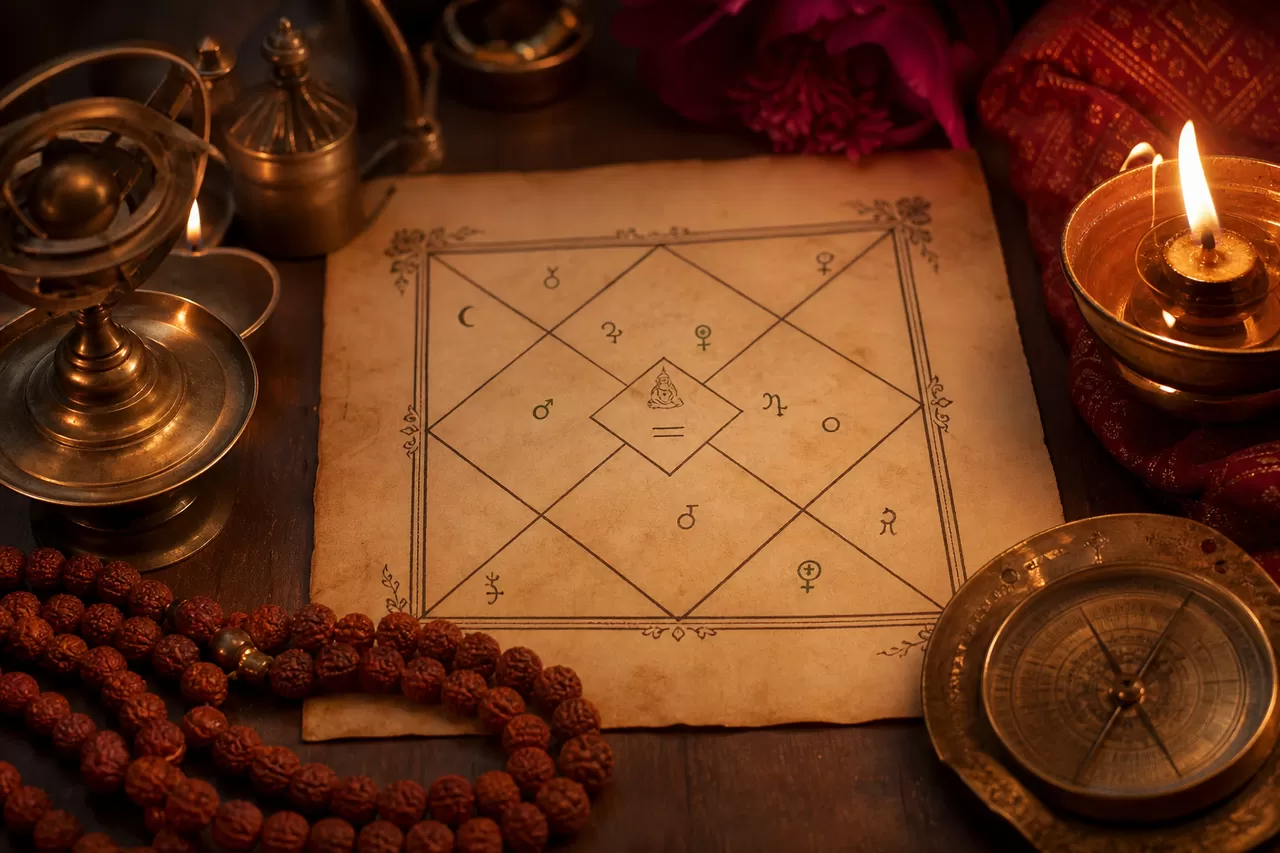

Gemstone advice is the most freely given and least carefully checked recommendation in this field. A jeweller suggests a stone, a relative reports what worked for them, an online calculator returns a result from a birth date alone — and a significant purchase follows. The logic underneath is sound; the application usually is not, and the failure mode is worse than doing nothing.
The principle, and where it breaks
Each stone strengthens its planet. Strengthening only helps if that planet is a benefic for your ascendant — which depends on the whole chart.
The associations are straightforward: ruby for the Sun, pearl for the Moon, red coral for Mars, emerald for Mercury, yellow sapphire for Jupiter, diamond for Venus, blue sapphire for Saturn, hessonite and cat's eye for Rahu and Ketu.
The mechanism, in this tradition, is amplification. The stone strengthens its planet's influence in your life. That is the whole of the principle, and it is where the trouble begins — because amplification is only desirable if the planet in question is doing you good.
Whether a planet is a functional benefic or malefic depends on your ascendant, since that determines which houses each planet rules. Saturn is a benefic for some ascendants and distinctly unhelpful for others. So the same stone that steadies one person amplifies exactly the influence causing another's difficulty.
Why blue sapphire causes the most trouble
Neelam is powerful, widely sold, and suits a minority of charts — a combination that produces a great many bad outcomes.
Blue sapphire has a reputation for going wrong and the reputation is earned, for reasons that are not mysterious.
It is associated with Saturn, regarded as the fastest-acting of the stones and the most powerful. It is also widely sold, frequently recommended, and expensive — which means it is commercially attractive to prescribe. And Saturn is a functional malefic for a significant number of ascendants.
Put those together and you have a strong stone, sold often, that suits a minority of the people who buy it. The traditional advice is a trial period before purchase — wearing it for a few days and observing — precisely because the tradition itself recognises how often it does not suit.
If you have been recommended neelam without your chart being read, that is the recommendation to pause on hardest.
What a proper prescription specifies
Stone, weight, metal, finger, the day and hour to begin, the energising mantra, and what to watch for in the first weeks.
A real prescription is considerably more detailed than a stone name, and the detail is not decoration.
Which stone, established from the functional benefics for your ascendant and the planets actually needing support. Weight, in carats or ratti, scaled sensibly. Metal — gold, silver or panchdhatu — since the setting matters in traditional practice. Which finger, which differs by planet. The day and hour to first wear it, chosen for the planet concerned. The energising mantra and the procedure before first wearing.
And crucially: what to watch for. If sleep worsens, if irritability rises, if things become noticeably harder in the first two or three weeks, the stone comes off. That instruction is standard traditional practice and is almost never given by whoever sold the stone.
The conflict of interest worth avoiding
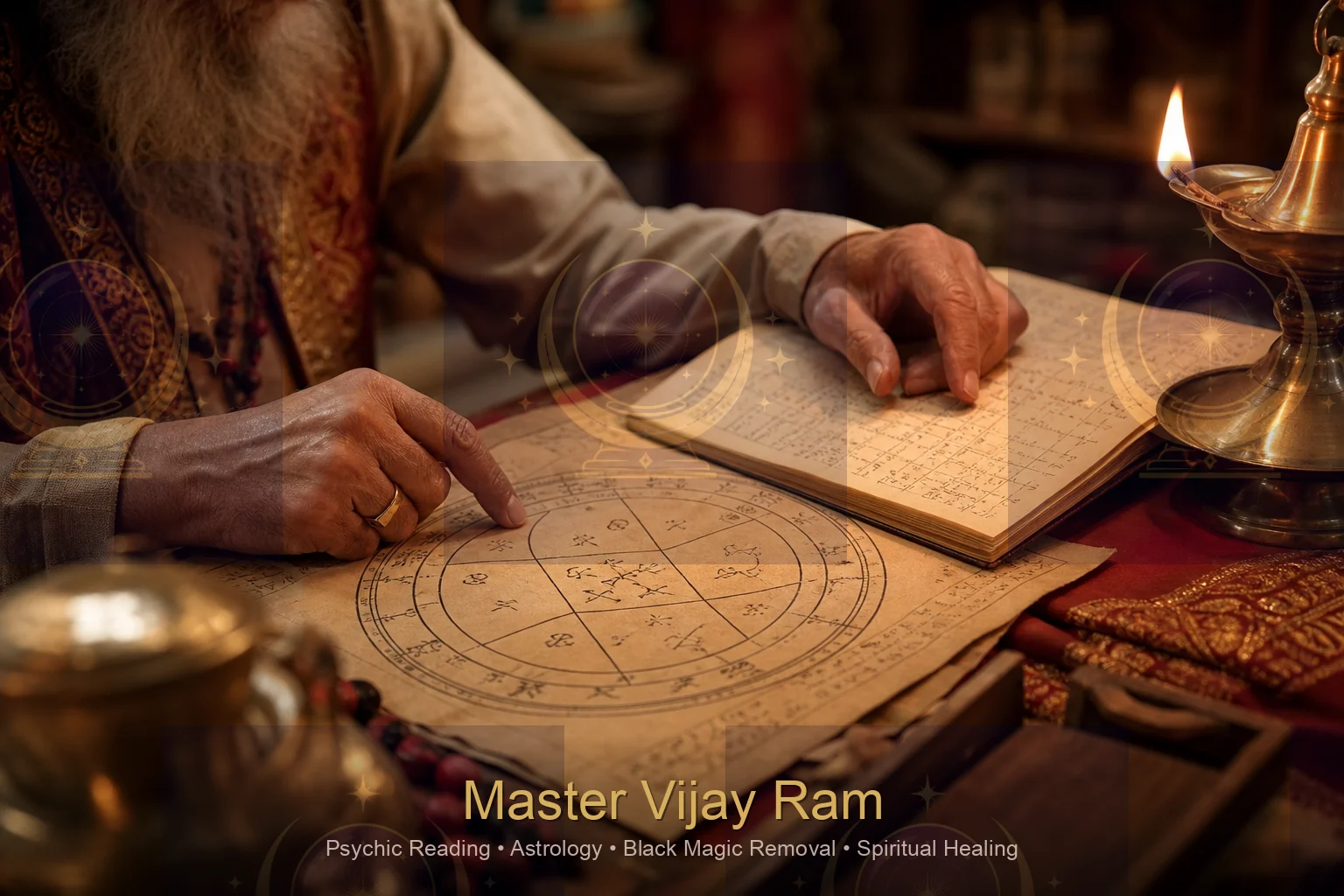
An astrologer who both prescribes and sells gemstones has an obvious interest in prescribing. Separate the two.
This is the most practical piece of advice on the page. A practitioner who both recommends the stone and sells it to you has a direct financial interest in the recommendation, and in the recommendation being an expensive one.
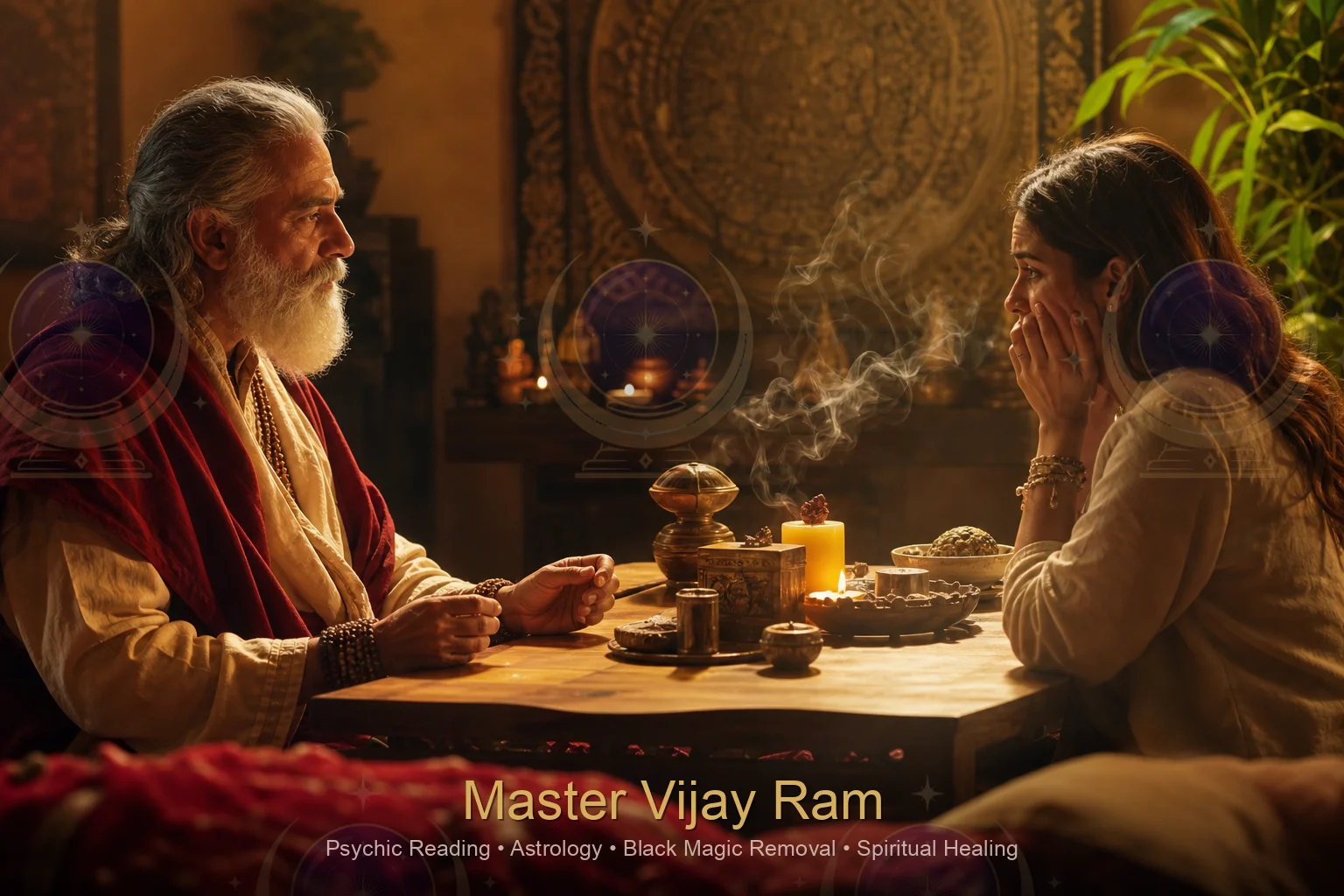
That does not make every such practitioner dishonest. It does mean the incentive runs the wrong way, and it is trivially avoidable: have the chart read by someone who does not sell stones, then buy from a jeweller who does not read charts. Master Vijay Ram deliberately does not sell gemstones for this reason — you are told what to buy and you buy it wherever you choose.
The same applies to markup. Once a stone is presented as astrologically necessary, price comparison tends to stop, and that is precisely when it matters most.

When no stone is the right answer
Many charts need no gemstone at all. Mantra, charity and observance are the older remedies and cost nothing.
It is worth saying plainly: a great many people do not need a gemstone, and being told so is a legitimate outcome of a consultation.
Gemstones are one category of remedy among several, and not the primary one. The older and more consistently recommended remedies are mantra recitation, fasting on a particular weekday, charity directed to the significations of the afflicted planet, and service. None of them costs anything, and the tradition is quite consistent that they are the substance of remedial practice rather than the accessory.
Where a stone is genuinely indicated it is prescribed properly. Where it is not, that is said — which is the least profitable answer available in a field where the alternative is a sale.

Serving nearby: Waterloo · Cambridge · Guelph · Brantford
Key takeaways
- A gemstone amplifies its planet — helpful only if that planet is a benefic for your ascendant
- Blue sapphire is powerful, widely sold, and suits a minority of charts
- A proper prescription covers weight, metal, finger, day, mantra and what to watch for
- Never take a gemstone recommendation from whoever is selling you the gemstone
- Many charts need no stone at all; mantra, charity and observance cost nothing
In closing
The logic of gemstones is sound and the application is where it goes wrong. Have your chart read by someone with no stake in the sale, expect a full prescription rather than a stone name, and treat any recommendation arriving from the person holding the stock with appropriate caution.