Almost no house in Ontario was built with vastu in mind, and a consultation that opens by telling you the entrance faces the wrong way is not much help when the entrance cannot move. The useful question is always what can actually be adjusted — and in most Canadian homes, a surprising amount can, at no cost.
The framework, briefly
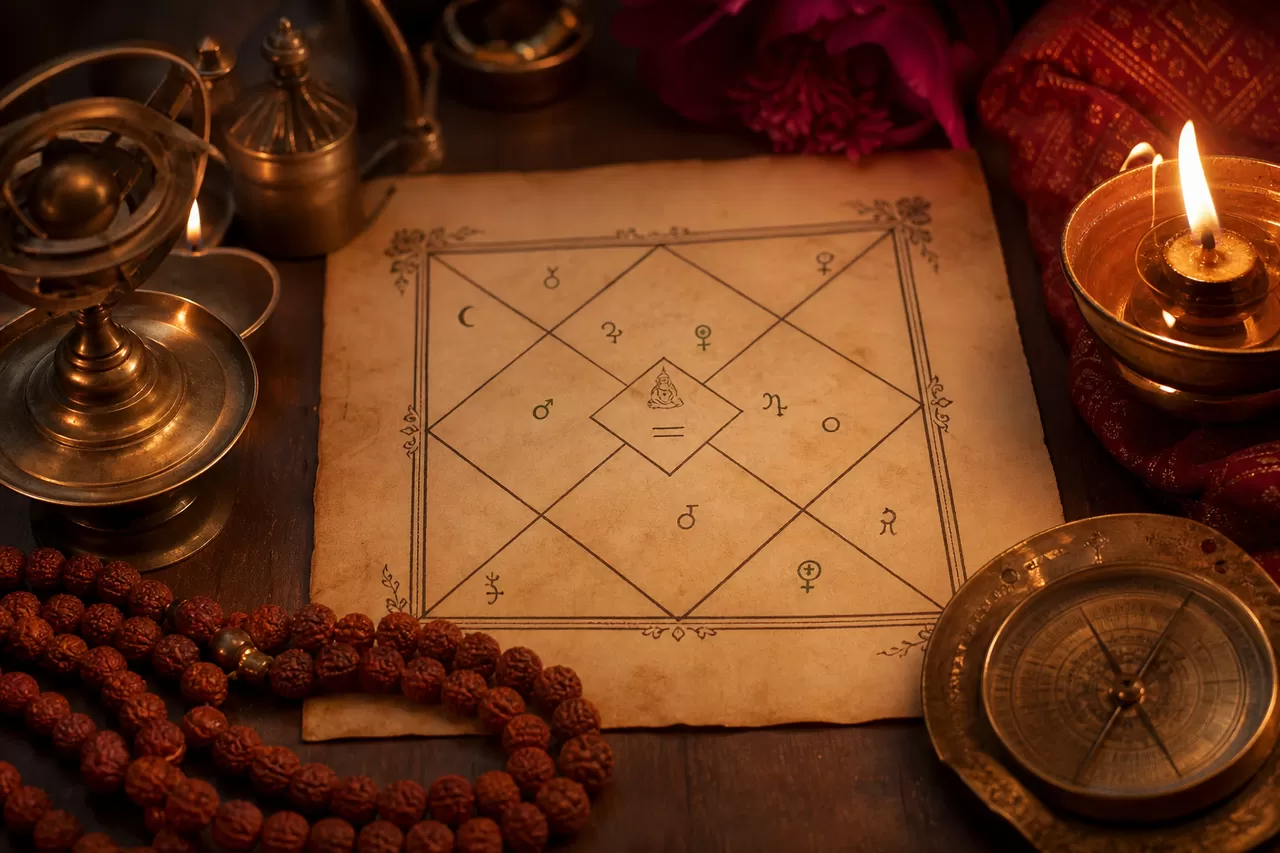
Eight directions, each associated with an element and with uses that suit it. North-east light and clear, south-east for fire, south-west for weight and rest.
Vastu shastra assigns qualities to the eight directions and relates them to the five elements. In practical terms a handful of principles do most of the work.
The north-east is associated with water and is kept light, clean and uncluttered — it is the zone that most often causes problems in Canadian homes because it is where people put storage. The south-east is fire, which is why kitchens belong there. The south-west is earth and stability, suiting the main bedroom and heavy storage. The north relates to opportunity and wealth.
You do not need to accept any metaphysics to find the framework useful. Much of it reduces to observations about light, traffic flow and where weight sits in a building, which is why it survives translation to housing stock its authors never saw.
Basements — the feature vastu never contemplated
Classical texts describe no basements. Treat them as heavy, earth-aligned space: storage and utility rather than a child's bedroom or a home office.
The full basement is close to universal in Ontario and entirely absent from classical vastu, which leaves practitioners to reason by principle rather than cite a rule.
The sensible reading is that a basement is earth-heavy, low-light space. That suits storage, utility, laundry and occasional-use rooms. It suits less well the uses Canadian families most often put it to: a child's permanent bedroom, a full-time home office, an elderly parent's room.
Where a basement bedroom is unavoidable — which it often is — the mitigations are practical rather than mystical: maximise what natural light exists, keep the space genuinely dry, avoid heavy storage directly overhead, and prefer the south-west portion. Damp and darkness are the actual problems, and they are worth fixing whatever framework you use.
Attached garages, and where the car sits
An attached garage introduces a large empty, cold volume into the house footprint. Its position matters more than its existence.
The attached garage is another Canadian standard with no classical equivalent. It is a large volume that is cold, mostly empty, and frequently used as overflow storage.
Where it sits matters. A garage occupying the north-east is the least helpful arrangement, since that zone should be the lightest and clearest part of the house — and a garage is neither. In the south or west it is considerably less problematic, being heavy, closed space in a quarter that suits weight.
Since relocating a garage is not realistic, the corrections are about use: keep it genuinely tidy rather than a dumping ground, keep the connecting door closed, and do not let the garage become the household's default storage for everything unresolved. That last one does more work than it sounds.
Open-plan layouts and the missing walls
Vastu assumes defined rooms. In open plan, define zones by furniture, rugs and lighting rather than trying to impose walls that are not there.
Classical vastu assumes a house of discrete rooms with walls and doorways. The open-plan kitchen-dining-living space that dominates newer Canadian builds has none of that, and a strict reading simply fails to apply.
The workable adaptation is to define zones without building walls. A rug, a change of lighting, the orientation of a sofa and the placement of a dining table all mark boundaries that the framework can then work with. The cooking zone is treated as the kitchen for directional purposes, the seating area as the living room.
The one arrangement worth avoiding is a cooking area in the north-east, which open-plan design produces fairly often. Where it exists and cannot move, the mitigation is to keep the north-east portion of the space as light and uncluttered as possible and to shift heavy storage away from it.
The corrections that cost nothing
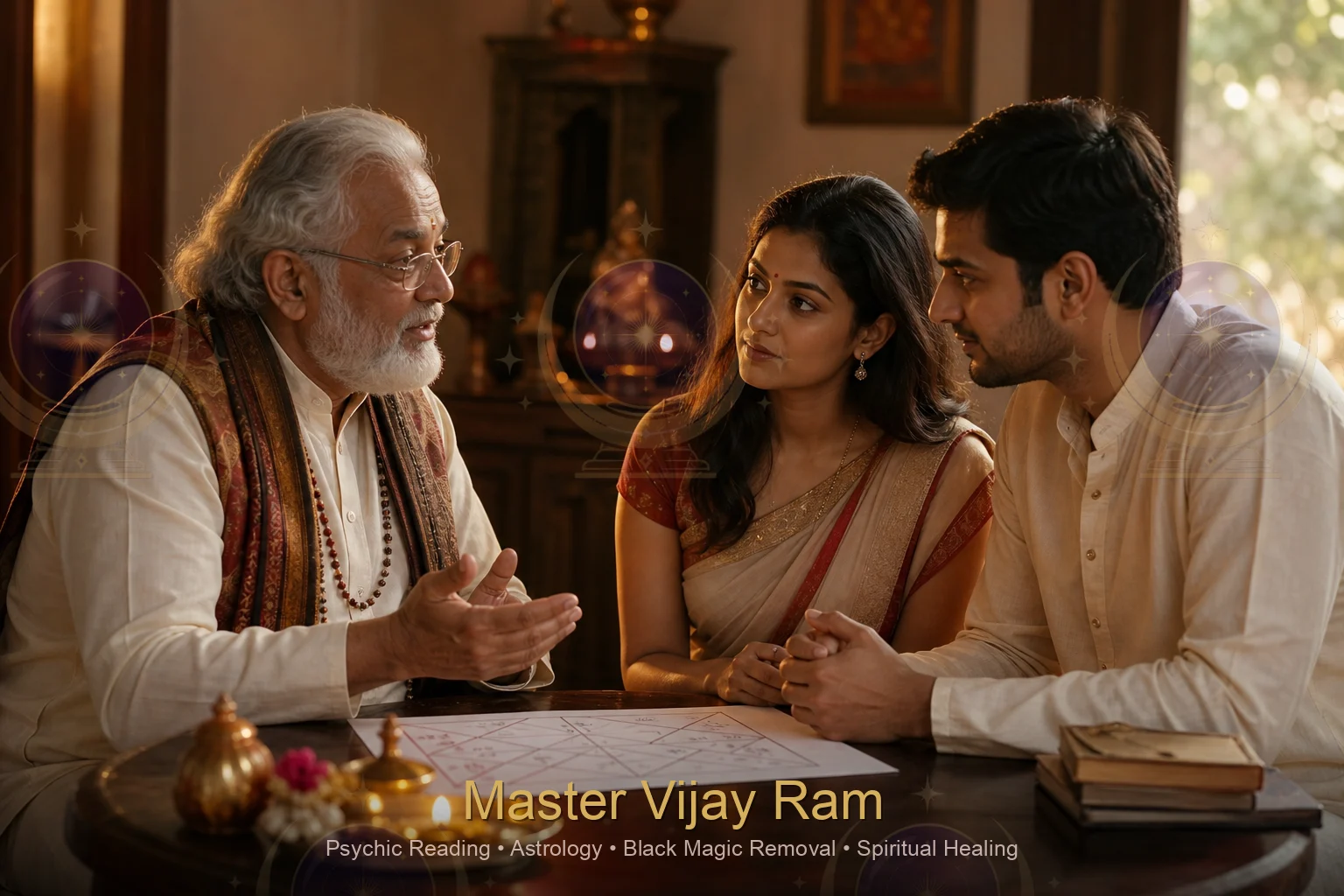
Most of a typical consultation is free: clear the north-east, move the bed, relocate a mirror, change which room is the study, move the safe.
The bulk of what a vastu consultation recommends in a Canadian home costs nothing at all, which surprises people who expected to be told to knock down a wall.
Clear the north-east. This single item comes up in most consultations, because that corner is where storage accumulates. Move the bed — head to the south or east, away from being directly in line with the door. Relocate a mirror, particularly one facing a bed. Change which room is the study, since north and east suit concentration. Move the safe or cash box so it sits in the south-west and opens towards the north.
Where a genuine structural conflict exists — a toilet in the north-east is the classic — the honest answer is that it can be substantially offset with light, salt, plants and colour, but not fully resolved without work you may not want to do. You should be told the size of the effect rather than sold a remedy that claims to erase it.

Serving nearby: Waterloo · Cambridge · Guelph · Brantford
Key takeaways
- Most vastu corrections in Canadian homes cost nothing — they are placement and use changes
- Basements are best treated as earth-heavy utility space; damp and darkness are the real problems
- An attached garage matters most when it occupies the north-east
- Open-plan layouts are handled by defining zones with furniture and light, not walls
- Clearing the north-east is the single most common recommendation
In closing
Vastu applied honestly to a Canadian house is a practical exercise, not a mystical one. Expect a list ordered by what is free, what is cheap and what would require real work — and expect to be told plainly when something cannot be fully corrected. Anyone whose first recommendation involves construction is not reading your house carefully.