Ontario has a large and largely invisible spiritual services sector — practitioners working from homes, storefronts, community networks and increasingly from video calls. There is very little public information about how any of it works: who is regulated, what anyone is allowed to claim, what things cost. This is a practical overview for people trying to navigate it.
There is no licence, and no professional body
Nobody registers or regulates psychic practitioners in Ontario. Credentials in this field are self-issued and mean little.
The first thing to understand is that there is no regulator. Unlike medicine, law or even massage therapy, spiritual practice in Ontario requires no licence, no registration and no minimum training. Anyone may print a card tomorrow.
That means certificates and titles carry very little information. A "certified" reader is certified by whoever issued the certificate, which is frequently an organisation that exists to issue them. There is no equivalent of a college registry to check someone against.
It also means the burden of assessment falls on you. That is not a reason to avoid the field — it is a reason to apply the practical checks in place of credentials, and those checks turn out to work reasonably well.
Consumer protection law still applies
Ontario's consumer law covers how any service is sold, including this one. Pressure tactics and open-ended charges are not exempt.
Although the practice is unregulated, the selling of it is not. Ontario's consumer protection legislation applies to spiritual services as it does to any other, covering misrepresentation, unconscionable practices and pressure tactics.
In practical terms that matters most for the pattern where fear is used to extract escalating payments — a curse diagnosed, a remedy sold, a complication requiring more. That is not merely unethical; a sufficiently aggressive version of it may fall foul of consumer law, and people who have been through it can and do complain.
Keep records if a practice starts to feel wrong: what you were told, what you paid and when. Most people who lose significant money have no documentation, which makes recovering it much harder.
What readings actually cost here
A single consultation at a stated rate is the normal arrangement. Open-ended series are where the real money goes.
Rates vary widely and a single session at a clearly stated price is the normal structure. Ask when you book, and treat evasion as information.
Where people actually lose serious money is not a single expensive hour — it is the open-ended series. A few hundred dollars, then a few hundred more for the remedy, then a further payment because something has complicated. Clients arrive here having paid thousands in increments, frequently with no clear idea of the total until they add it up.
Free readings deserve a note. Genuinely free short readings exist and are often a legitimate introduction. The version to be wary of is the free reading that discovers a serious problem requiring paid work — the diagnosis and the cure arriving from the same person, with the first given away to establish the second.
Remote practice is now the norm, and it works
Chart work, guidance and remedies translate to video without loss. Only ceremony and property work genuinely need presence.
A significant share of practice in Ontario is now remote, and for most of what people want, that is fine rather than a compromise.
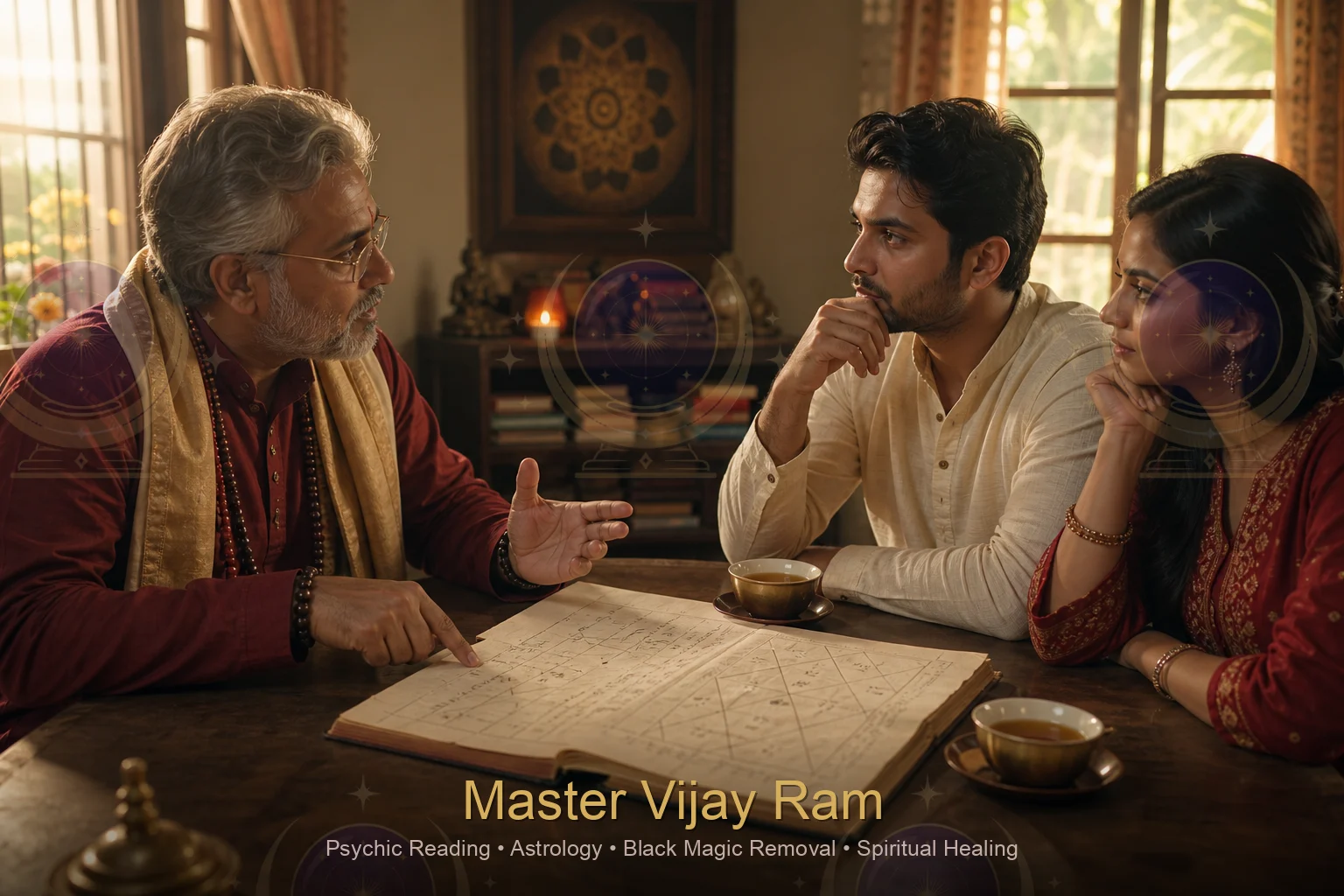
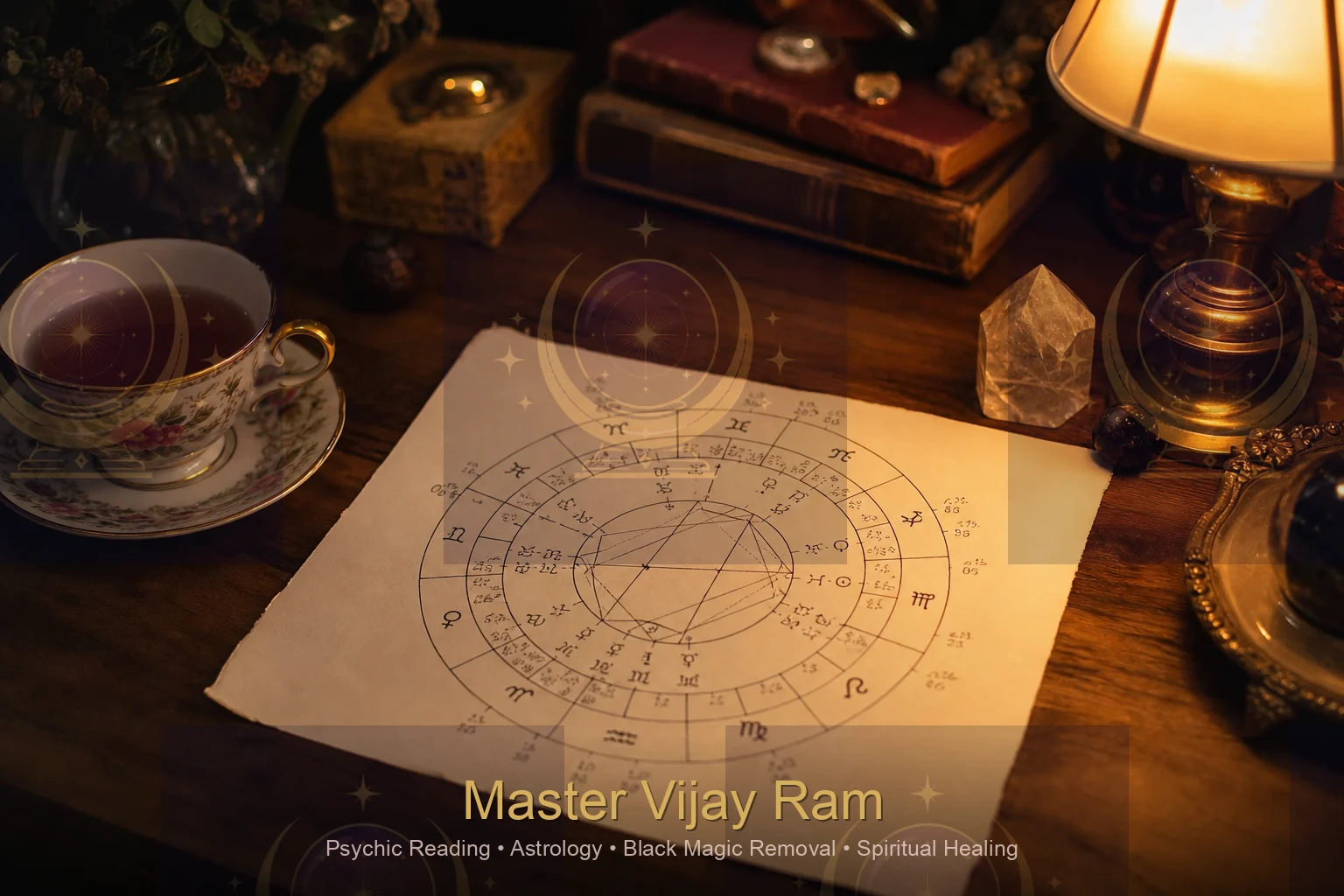
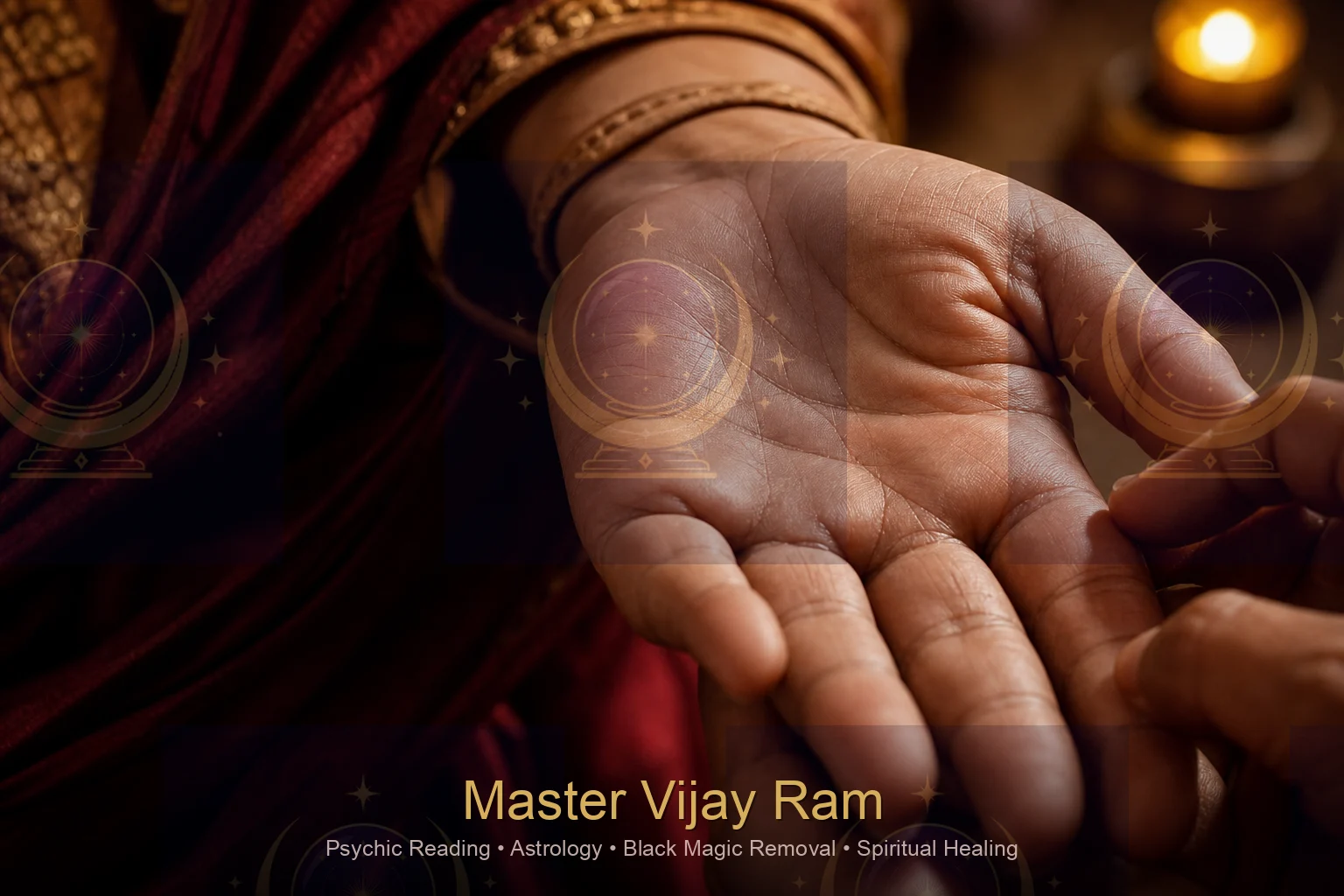
A chart reading is a conversation over a chart; it does not much matter whether the two of you are in the same room. Guidance, remedial instruction, mantra teaching with pronunciation corrected, matching and timing work all translate directly. Palmistry works from clear photographs of both hands taken in good light.
What genuinely needs presence is ceremony and property work — a havan, a puja in your home, cleansing a house or business premises. A practitioner who claims to cleanse your home over video is either redefining the word or is not being straight with you.
Practical checks that work better than credentials
Ask what they do not offer, what the method cannot tell you, and what it costs. Three clear answers is a good sign.
Since credentials tell you little, here is what to substitute — all three answerable on the phone before you commit to anything.
"What do you not offer?" A practitioner with a defined practice answers immediately. One who offers everything — astrology, cards, mediumship, spell work, curse removal, all of it — is describing a menu rather than a discipline.
"What can this method not tell me?" Competence knows its limits. A confident answer to everything is a warning, not a reassurance.
"What does it cost, and what happens after?" A stated price for a defined session, with no obligation attached, is the answer you want. Anything open-ended is the structure to avoid.
Serving nearby: Waterloo · Cambridge · Guelph · Brantford
Key takeaways
- Ontario does not licence or regulate psychic practice — credentials are self-issued
- Consumer protection law still governs how services are sold, including pressure tactics
- A single stated-price session is normal; open-ended series are where money is lost
- Remote consultations work for chart and guidance work; only ceremony needs presence
- Ask what they don't offer, what the method can't do, and what it costs
In closing
The absence of regulation is not a reason to avoid the field, but it does mean the checking is yours to do. Ask what someone does not offer, what their method cannot establish, and what it costs. Three straight answers will tell you more than any certificate on a wall.