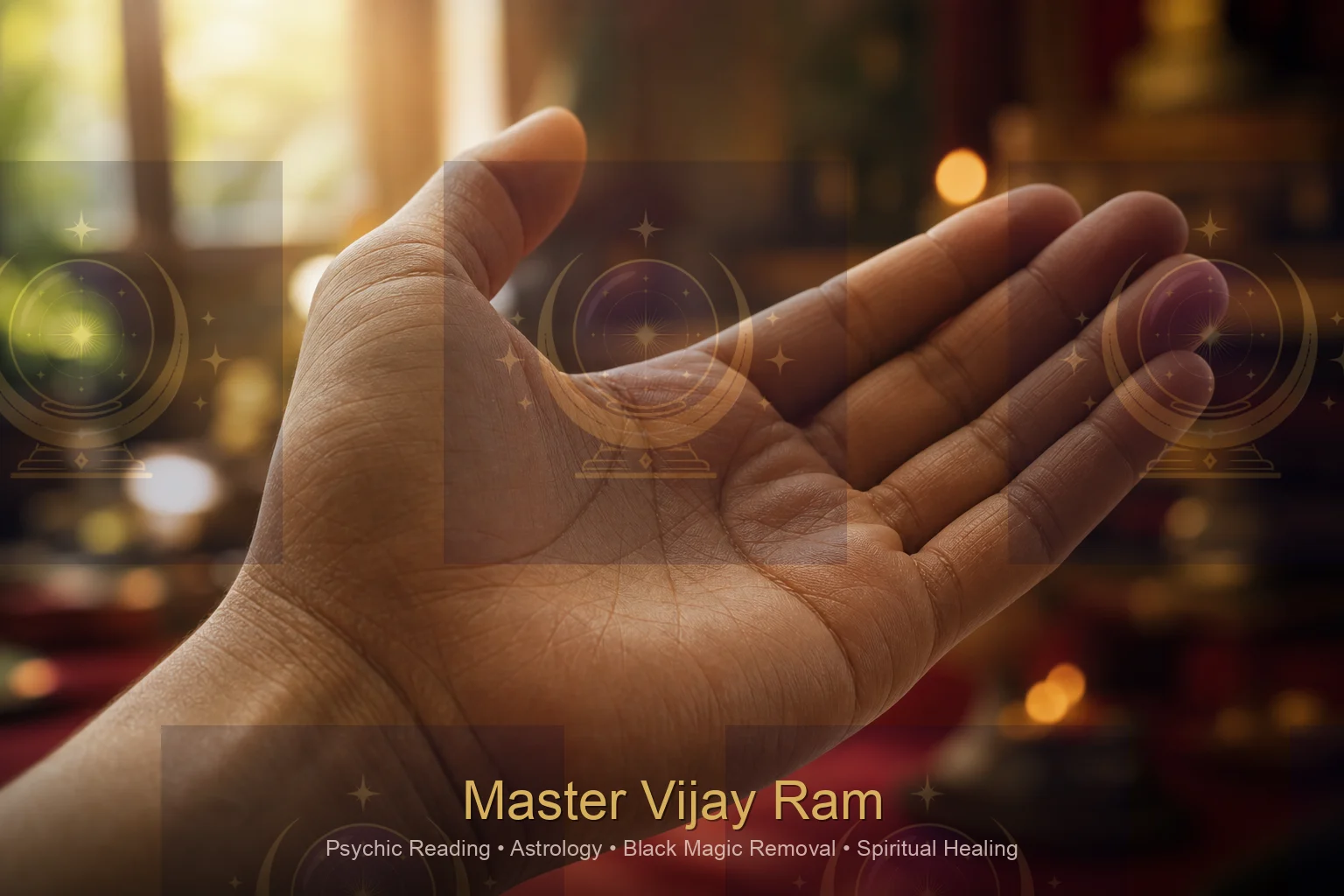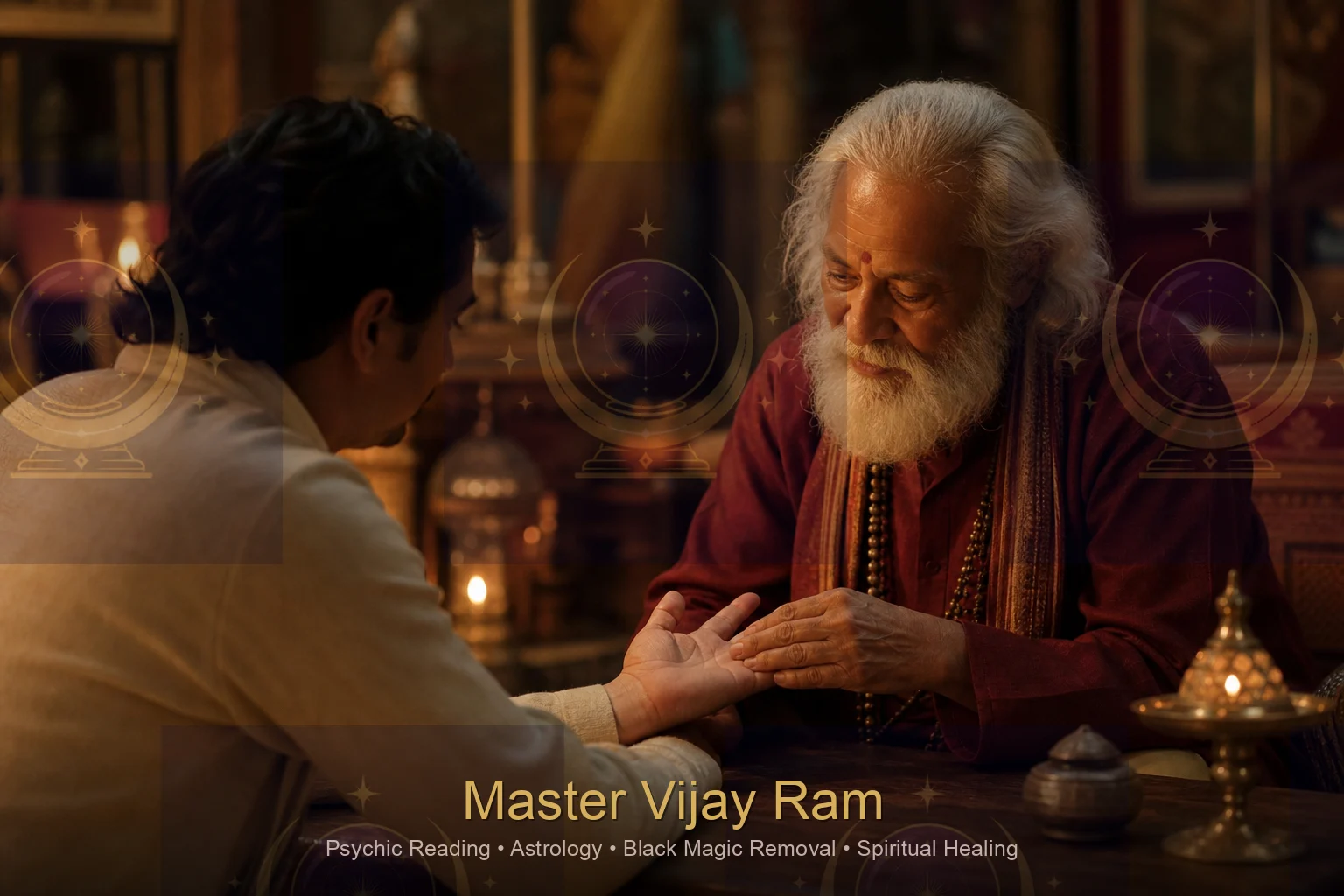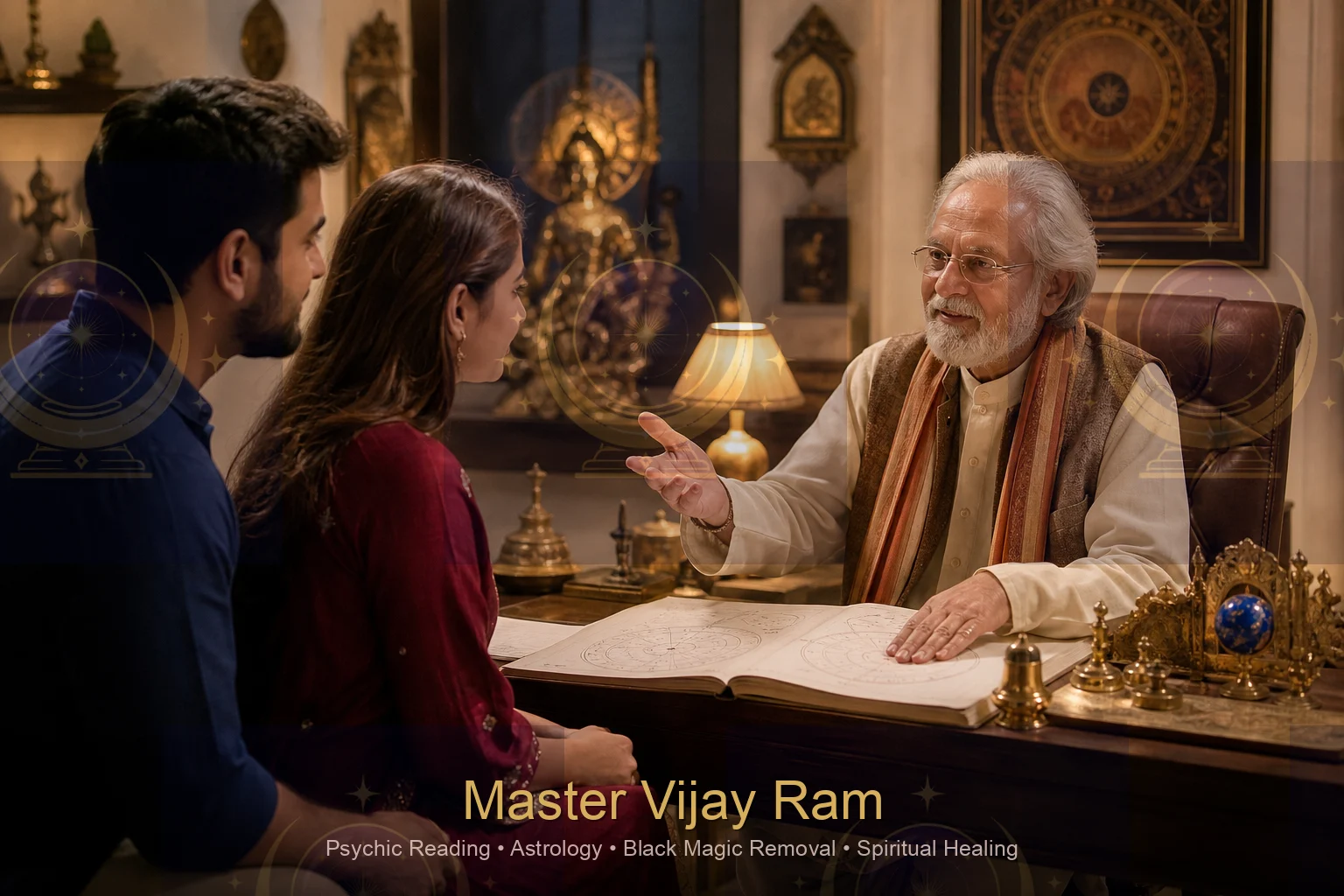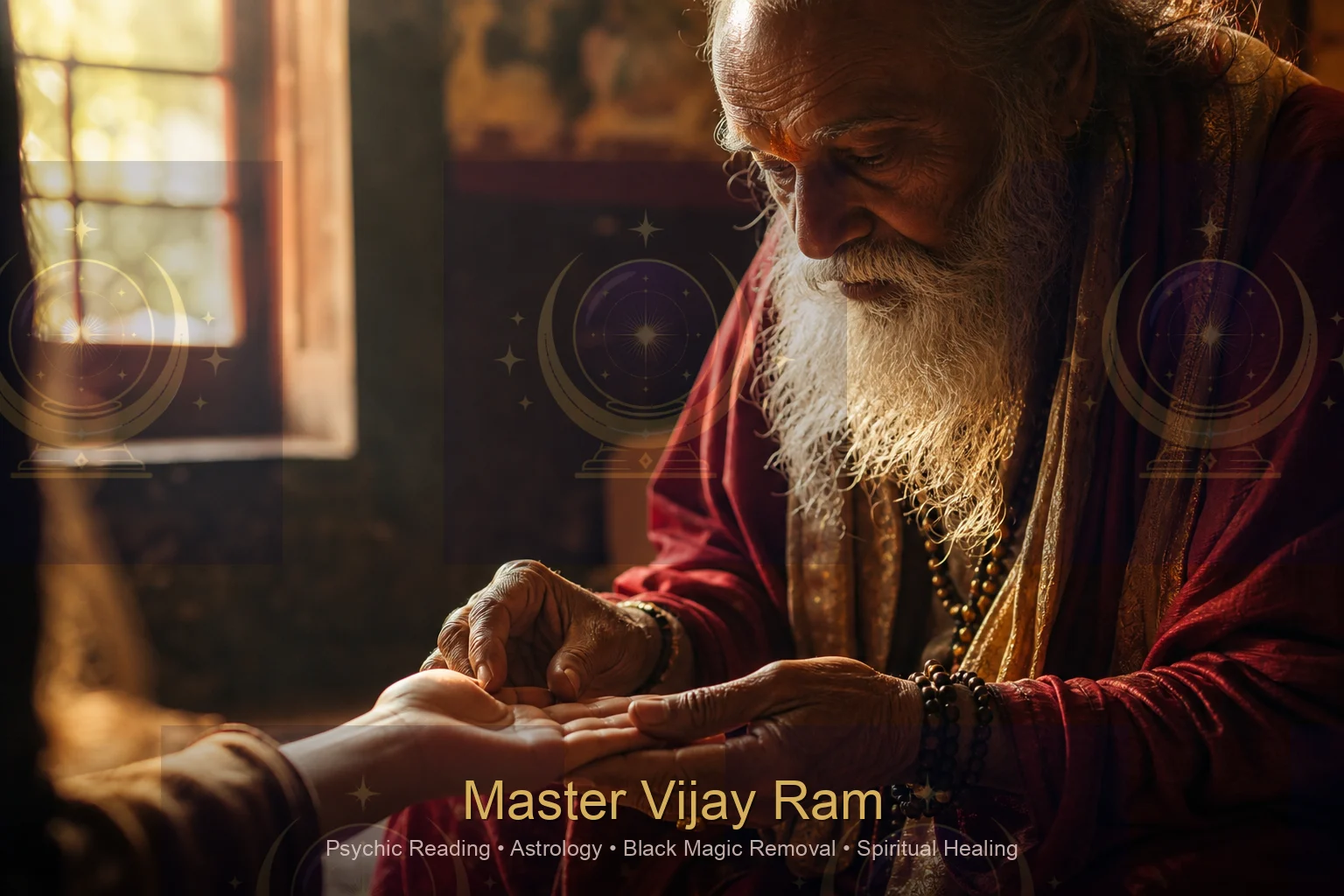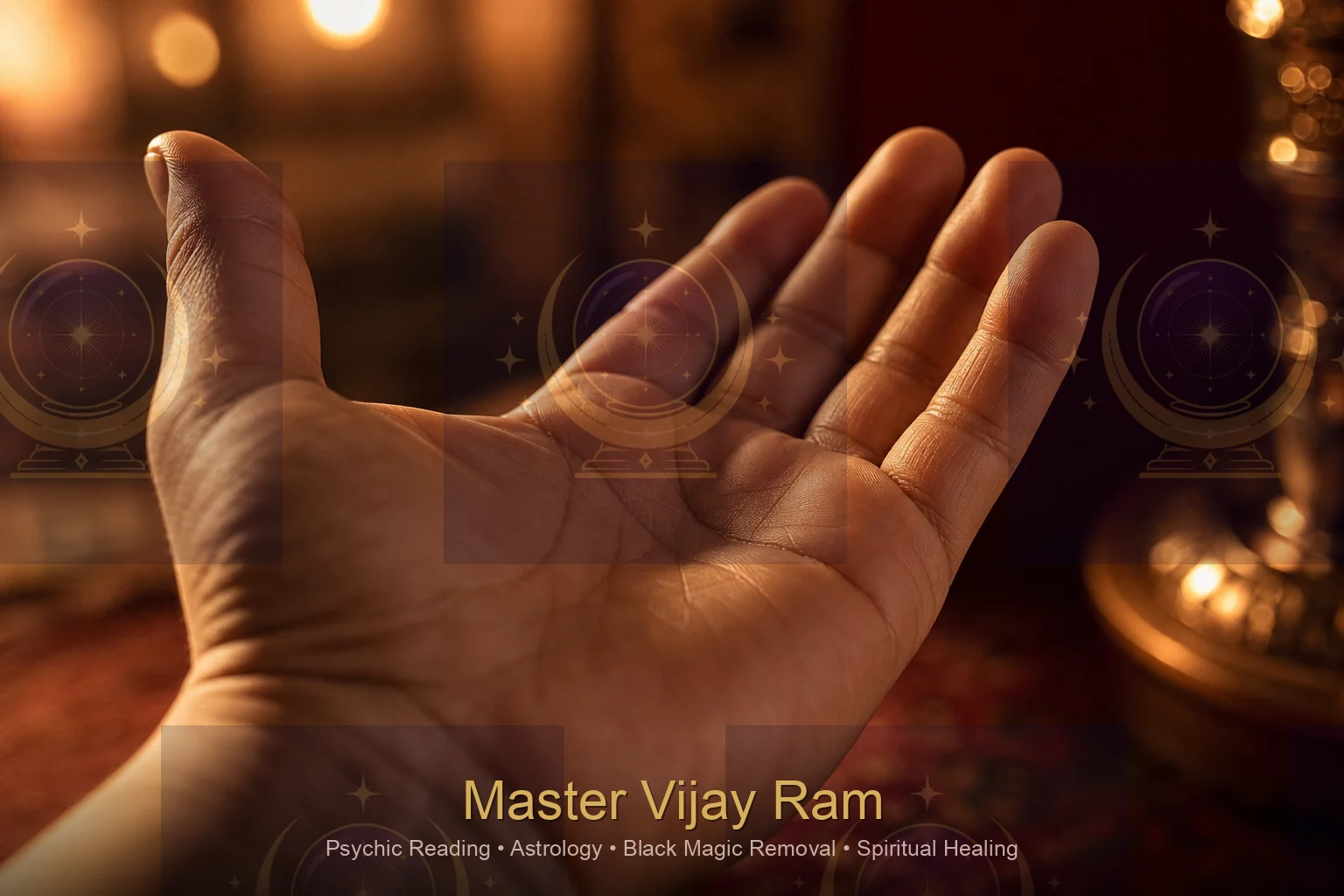
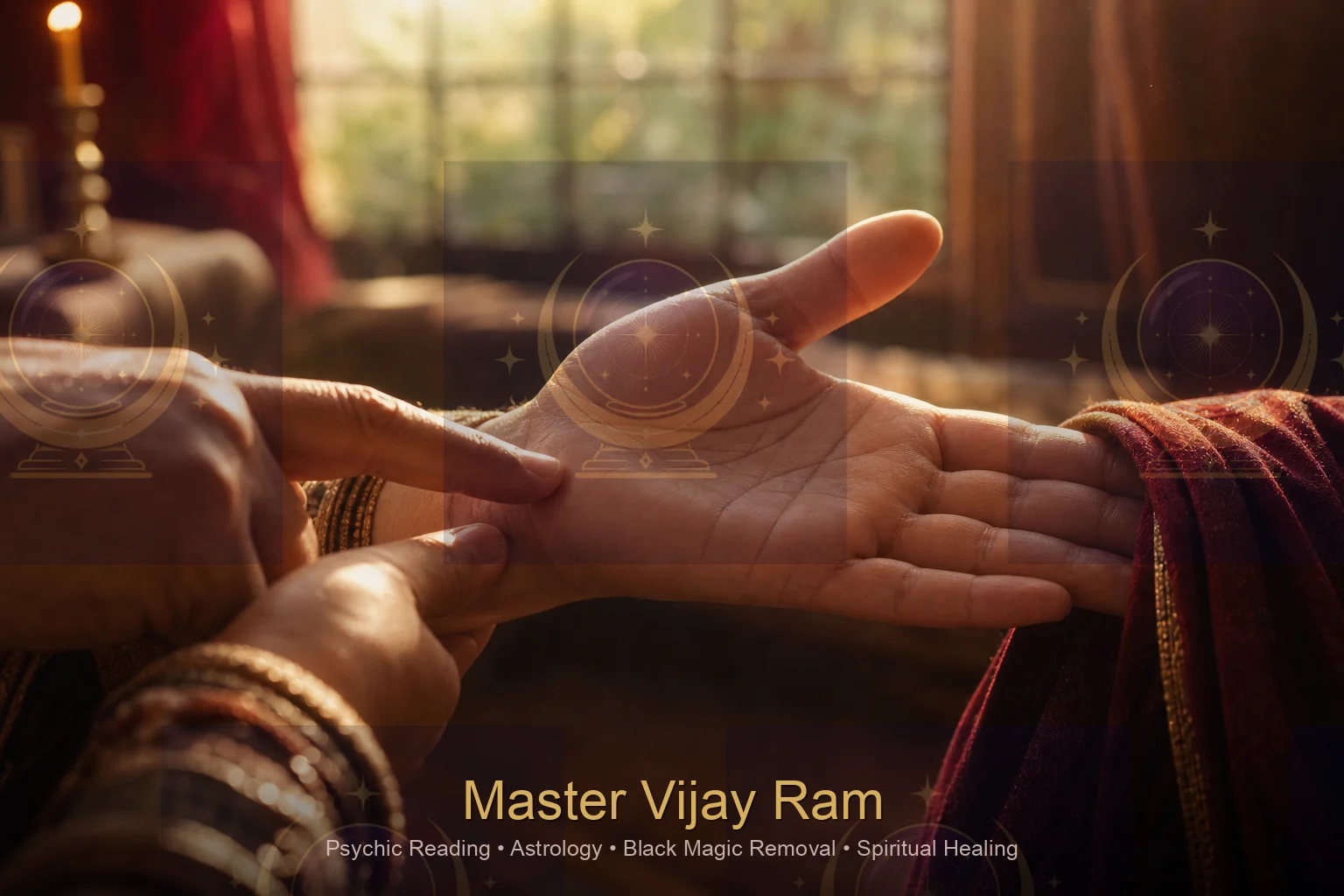
Life line palmistry is the study of the curved line that runs around the base of the thumb, and it is one of the most misunderstood marks in the entire palm. Life line palmistry is a traditional reading practice that examines this line's length, depth, and shape to describe a person's vitality, resilience, and life journey — not the number of years they will live. Many people arrive at a palm reading session anxious, believing a short or broken line predicts an early death. That fear is one of the oldest palm reading myths, and it simply is not how the tradition works. In 40+ years of practice, Master Vijay Ram has met countless clients carrying this worry needlessly. This article explains what the life line meaning actually covers, why lifespan predictions are a myth, and how this line fits into a fuller picture alongside Vedic astrology and your kundli horoscope reading.
Does the life line really predict how long you will live?
No. This is the single biggest palm reading myth. The life line reflects vitality, energy levels, and how a person responds to life's ups and downs — it does not forecast a date of death. Reputable palmists, including Master Vijay Ram, have never treated it as a lifespan calendar.
This myth likely grew from the line's dramatic curve around the thumb, which visually resembles a boundary or edge — something finite. But traditional palmistry, much like astrology, was always meant to describe tendencies and inner patterns, not fixed outcomes carved in stone.
A short life line can belong to someone who lives a long, vigorous life. A long, unbroken line can belong to someone who faces serious health challenges early on. What actually matters is the line's:
- Depth and clarity — steady energy versus fluctuating stamina
- Curve — how someone engages with adventure versus caution
- Breaks or islands — periods of major transition, stress, or recovery
- Sister lines — additional support or resilience running alongside it
Clients often bring this same worry into a palm reading in Kitchener session, and clearing up this misunderstanding is usually the first, most reassuring part of the conversation.
What does the life line actually reveal about a person?
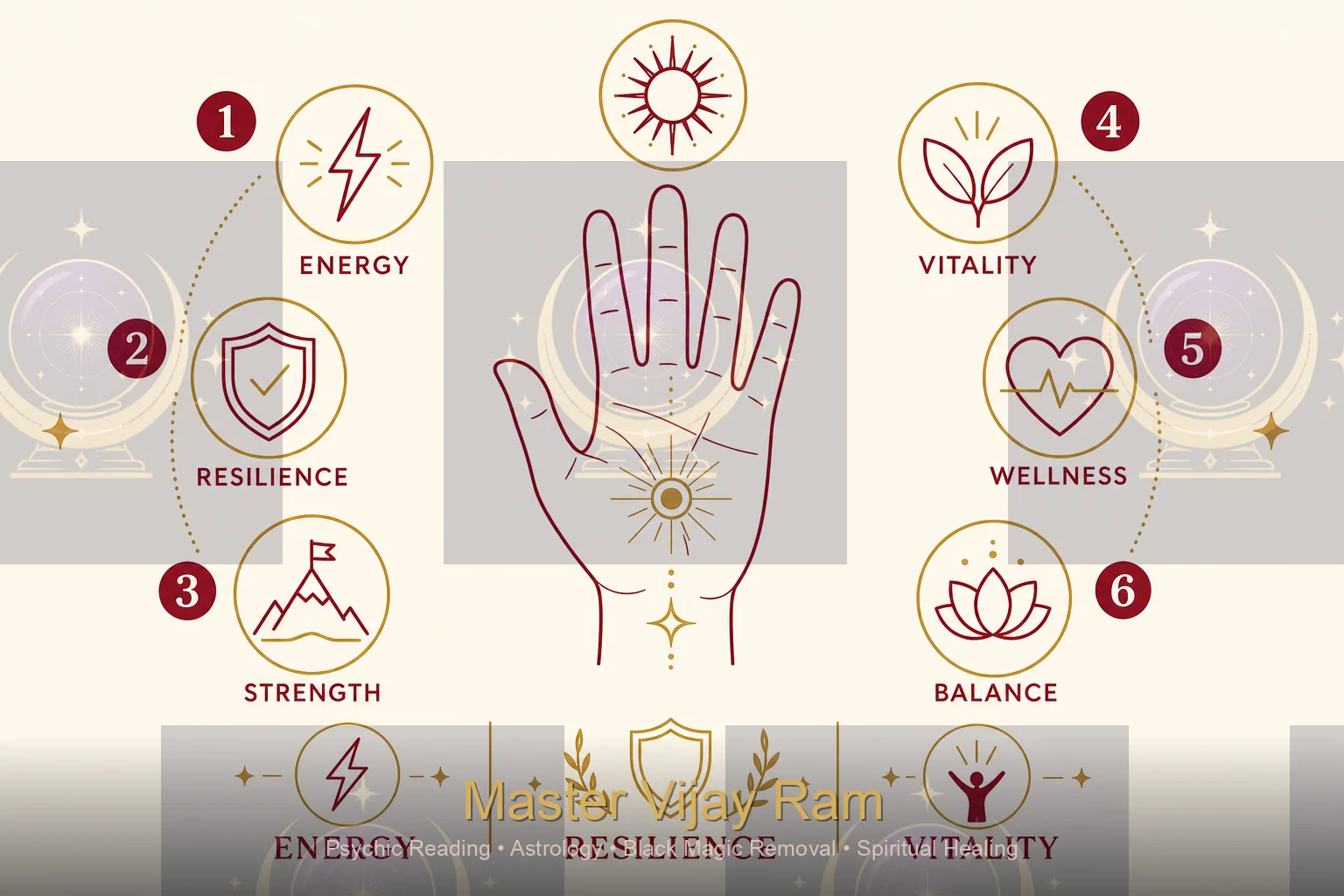
The life line speaks to physical vitality, general well-being, and how a person responds to change — including illness, relocation, career shifts, or emotional upheaval. It is read as a record of life force and resilience, offering insight into energy patterns rather than specific events or timing.
In Vedic palmistry, the life line is considered a mirror of one's constitution — how robust someone's energy tends to be and how they recover from setbacks. A deep, well-formed line often suggests strong stamina and a steady approach to challenges. A faint or wavering line may point to sensitivity, a need for rest, or a life marked by frequent change rather than weakness itself.
Common features and their traditional meanings
- Wide curve toward the thumb: cautious, home-oriented temperament
- Wide curve outward: adventurous, energetic disposition
- Breaks in the line: significant turning points, not necessarily negative ones
- Chained or faint sections: periods of low vitality or stress needing attention
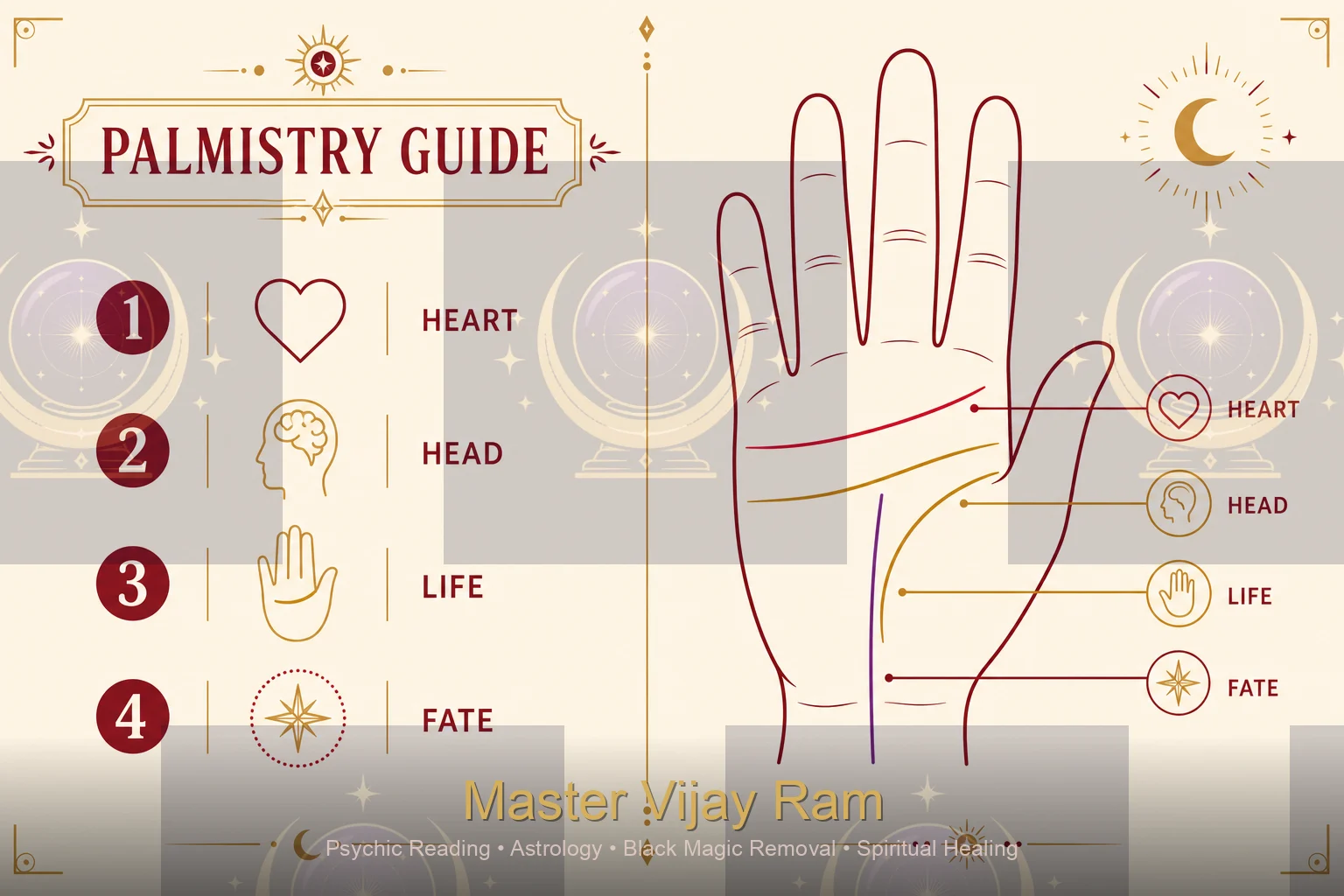
None of these are read in isolation. A skilled palmist cross-references the life line with the heart line, head line, and fate line before saying anything meaningful about a client's path.
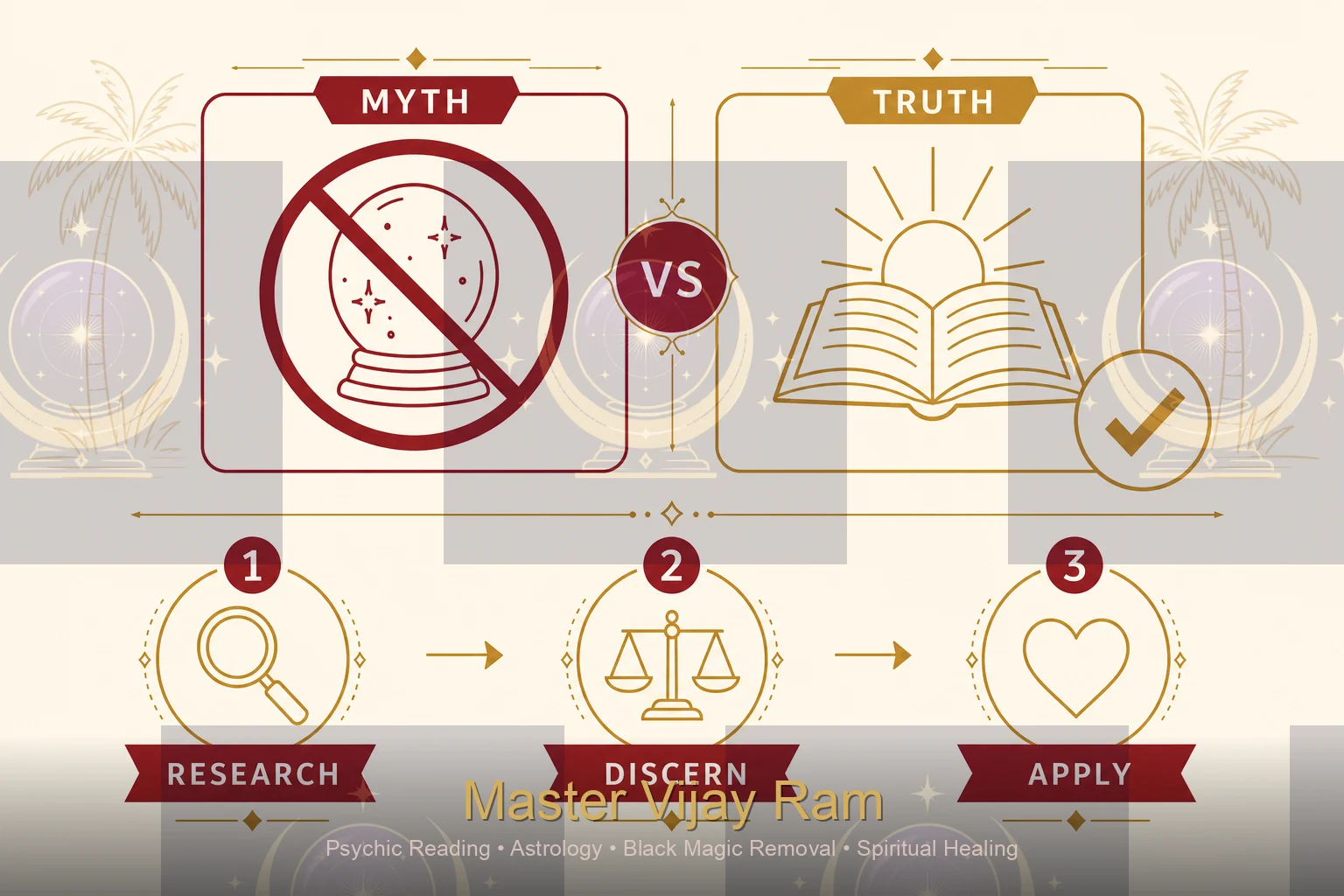
Why do so many people misread the life line?
Most misreadings come from pop-culture palmistry — quick internet quizzes and movie scenes that oversimplify a line's meaning into a single dramatic prediction. Real palmistry, like Vedic astrology, requires context, comparison across all lines, and years of study to interpret responsibly.
Palmistry has a long documented history as part of the wider Vedic tradition of self-understanding, related in spirit to Vedic astrology reading practices that examine birth charts rather than the hand. Both are symbolic systems meant to illuminate tendencies and choices — not to hand down fixed verdicts. Encyclopaedic sources on the history of palmistry confirm it has been practised across many cultures for centuries, evolving well beyond the simplified lifespan myth that circulates online today.
Social media has compressed a nuanced practice into single-line predictions for shareability. This is where most of the fear around the life line comes from — not from the tradition itself, but from a shortcut version of it.
If you're curious what a fuller reading actually involves, it helps to review first psychic reading questions to ask before any session, palm reading included, so you know what to expect and what not to fear.
How does the life line relate to astrology and other readings?
The life line offers a physical, energetic layer of insight, while a Vedic birth chart offers timing, planetary influence, and karmic patterns. Master Vijay Ram often reads the palm alongside a kundli or numerology profile so clients receive a rounded, cross-checked perspective rather than one isolated signal.
Palmistry and astrology are companion practices, not competitors. Where the hand shows vitality and temperament, a kundli horoscope reading shows planetary timing — which years may bring opportunity, rest, or challenge. Together they build a more complete, honest picture.
Numerology can add another layer entirely, connecting birth numbers to personality traits; you can read more in our guide on what your birth chart reveals. Clients interested in this combined approach sometimes also explore gemstone and numerology guidance as a complementary step after a palm or chart reading.
No single method — palm, chart, or number — should be treated as the final word. Each offers a different angle on the same person.
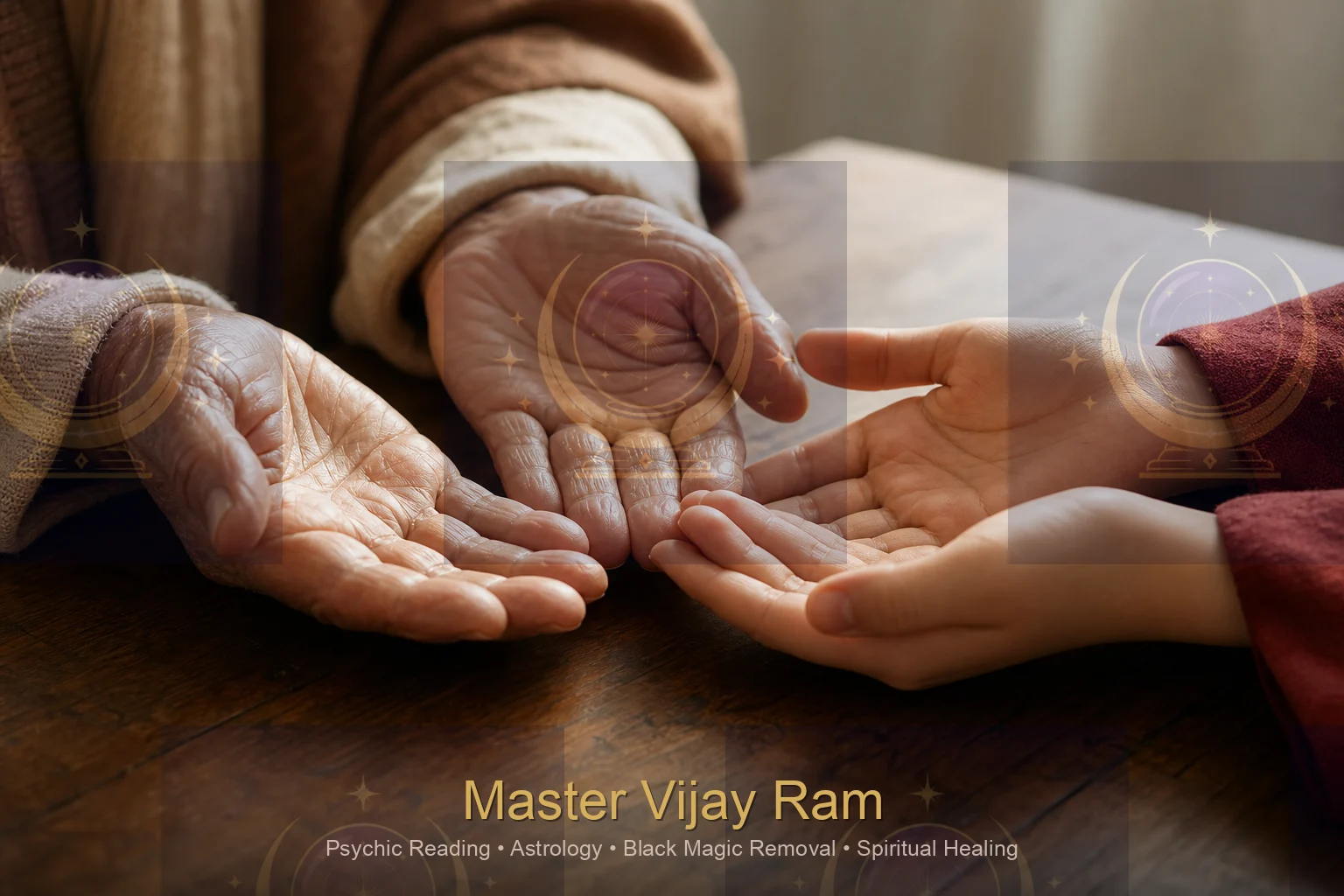
Should you worry if your life line looks short or broken?
No. A short or broken life line is common and does not indicate a short life or misfortune. It more often reflects a phase of transition, a change in lifestyle, or simply the natural creasing of an individual hand. Context always matters more than any single mark.
Breaks can appear for many mundane reasons — an old injury, natural hand creases, or simply how a person holds their palm during a reading. A responsible palmist looks at the whole hand, both hands where possible, and asks about life context before drawing any conclusion.
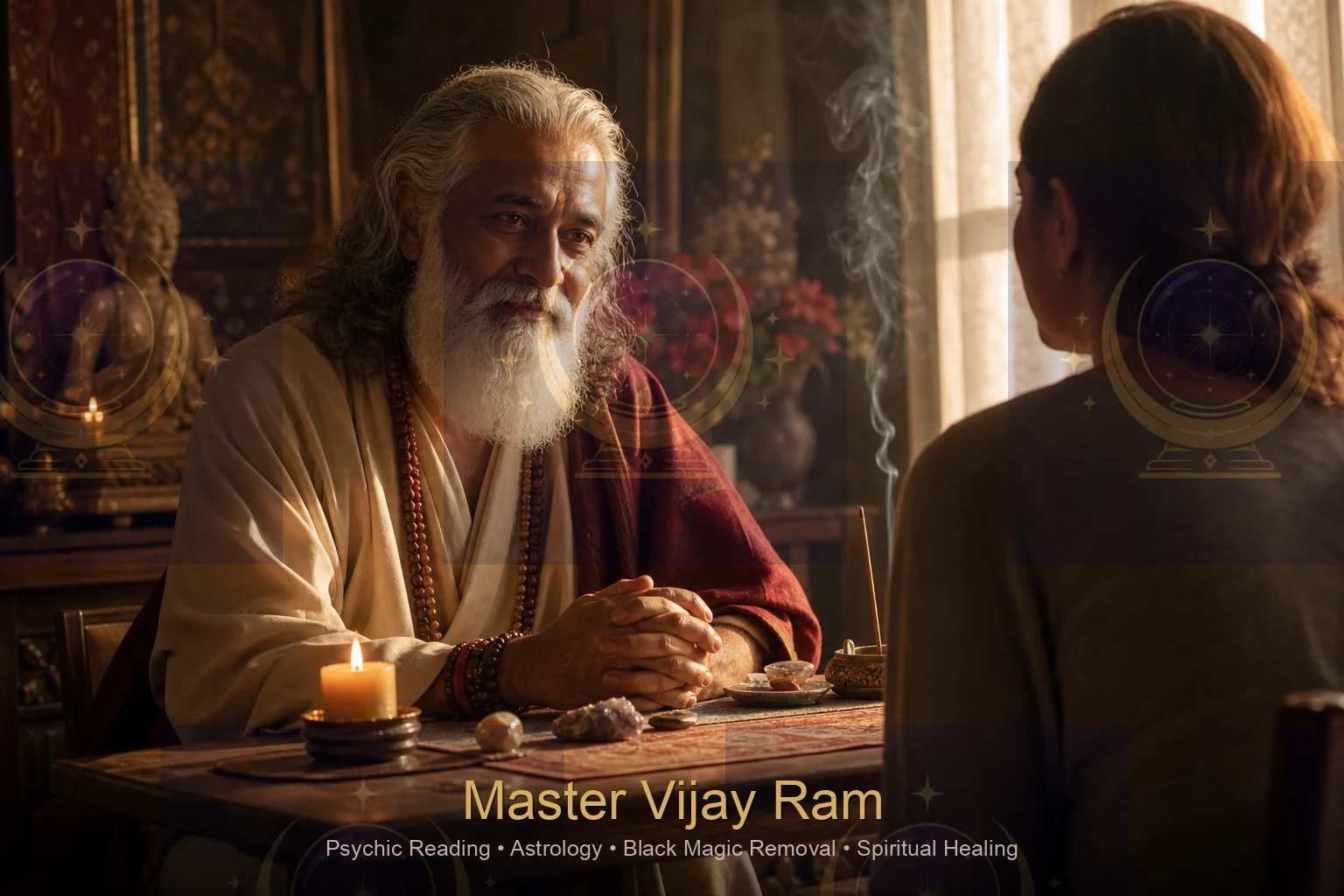
Master Vijay Ram is honest with every client: no reading, palm or astrological, can guarantee outcomes or predict exact events. What a careful reading can offer is perspective — a way to understand patterns of energy, resilience, and choice so you can move forward with more clarity and less fear.
If lingering anxiety about health or life direction is affecting you, it may help to also explore a psychic reading for broader guidance, alongside — never instead of — advice from a qualified medical professional.
Serving nearby: Kitchener · Waterloo · Cambridge · Guelph · Brantford · London · Hamilton
Key takeaways
- The life line reflects vitality and resilience, not lifespan or date of death.
- Breaks, curves, and depth describe life transitions and energy, not fixed fate.
- Palmistry works best alongside Vedic astrology and kundli readings for a fuller picture.
- No honest palmist or astrologer can guarantee outcomes — readings offer perspective, not certainty.
- Master Vijay Ram's 40+ years of practice emphasize honest, myth-free guidance for all faiths.
In closing
The life line has nothing to do with how long you will live — it speaks to vitality, resilience, and the texture of your journey. If you would like a calm, honest conversation about what your hand actually shows, Master Vijay Ram welcomes you to book a private, confidential consultation and ask your questions directly, without fear or guesswork.