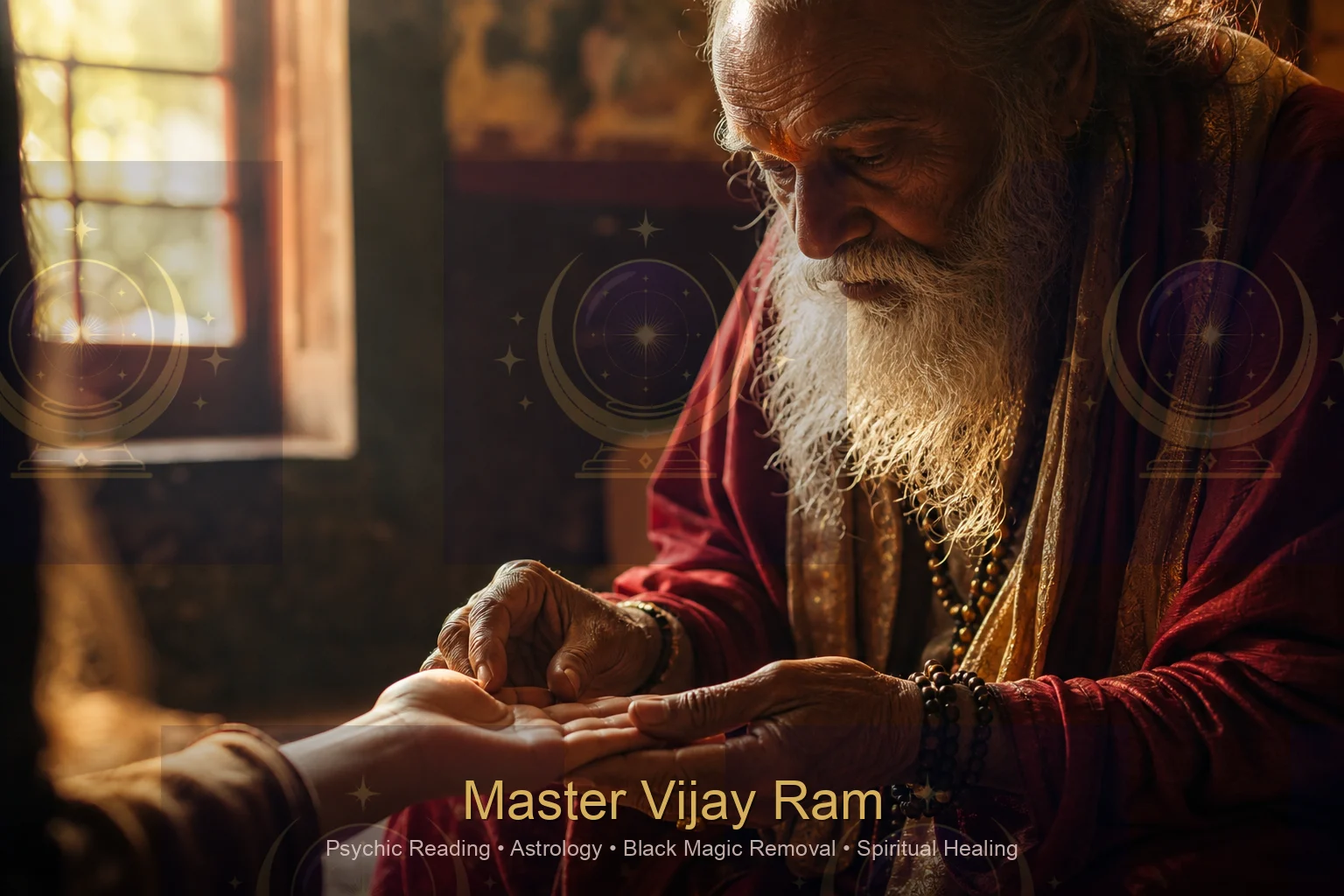
Palm reading is a traditional practice of studying the lines, mounts, and shape of the hand to understand a person's character, tendencies, and life patterns. Also called palmistry or hand reading, it has been practised across Indian, Chinese, and European traditions for centuries, each culture adding its own methods of interpretation. Many people arrive at a palm reader curious but skeptical, unsure whether their palm can really say anything meaningful about their life. This article looks honestly at what palmistry studies, which lines matter most, and what a session with Master Vijay Ram actually involves. With over 40 years of experience offering palm reading sessions to families across Kitchener, Waterloo, Cambridge, Guelph, and Brantford, he approaches every palm with care, treating it as one part of a person's larger spiritual and astrological picture rather than a fixed prophecy.
What exactly does palmistry study on the hand?
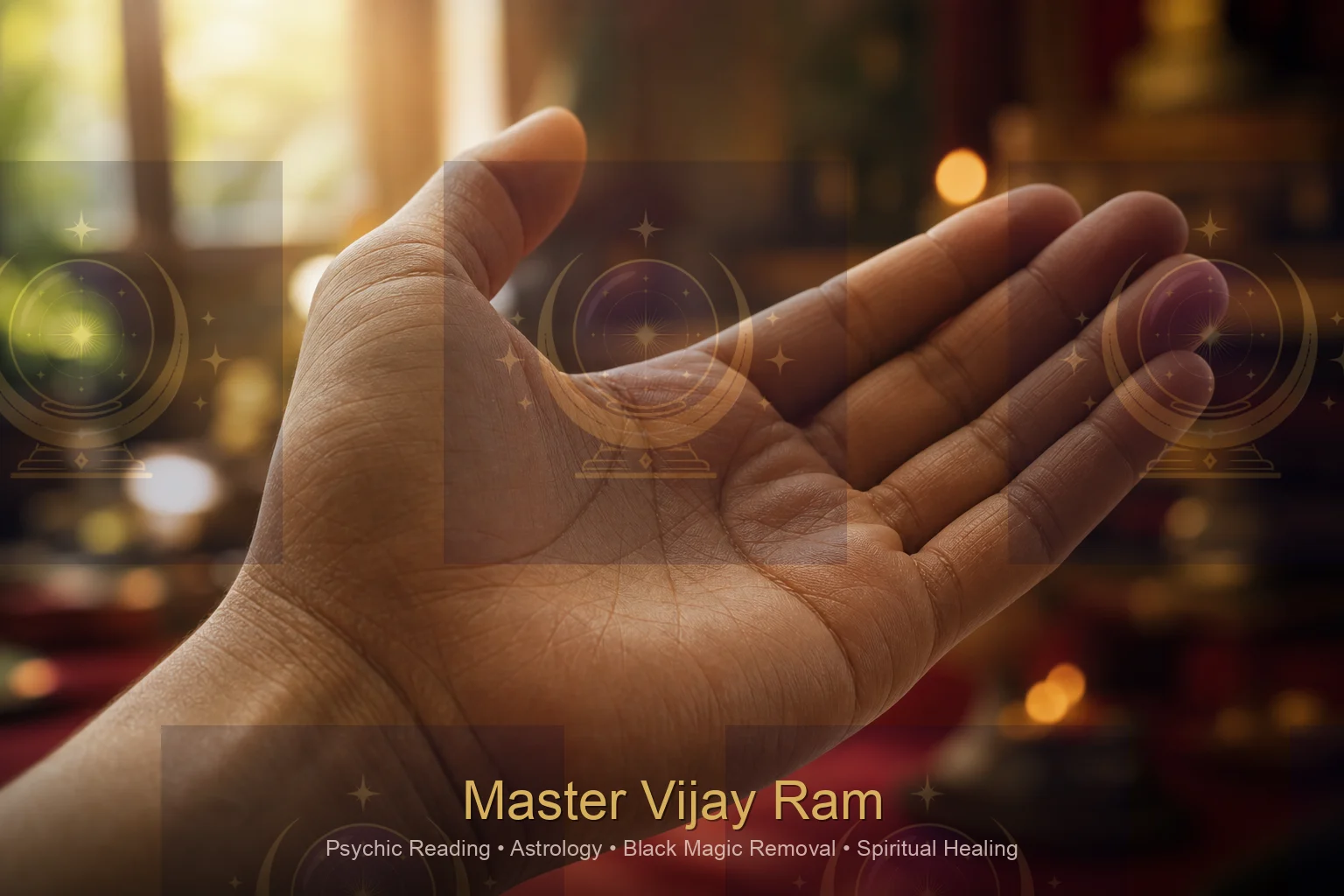
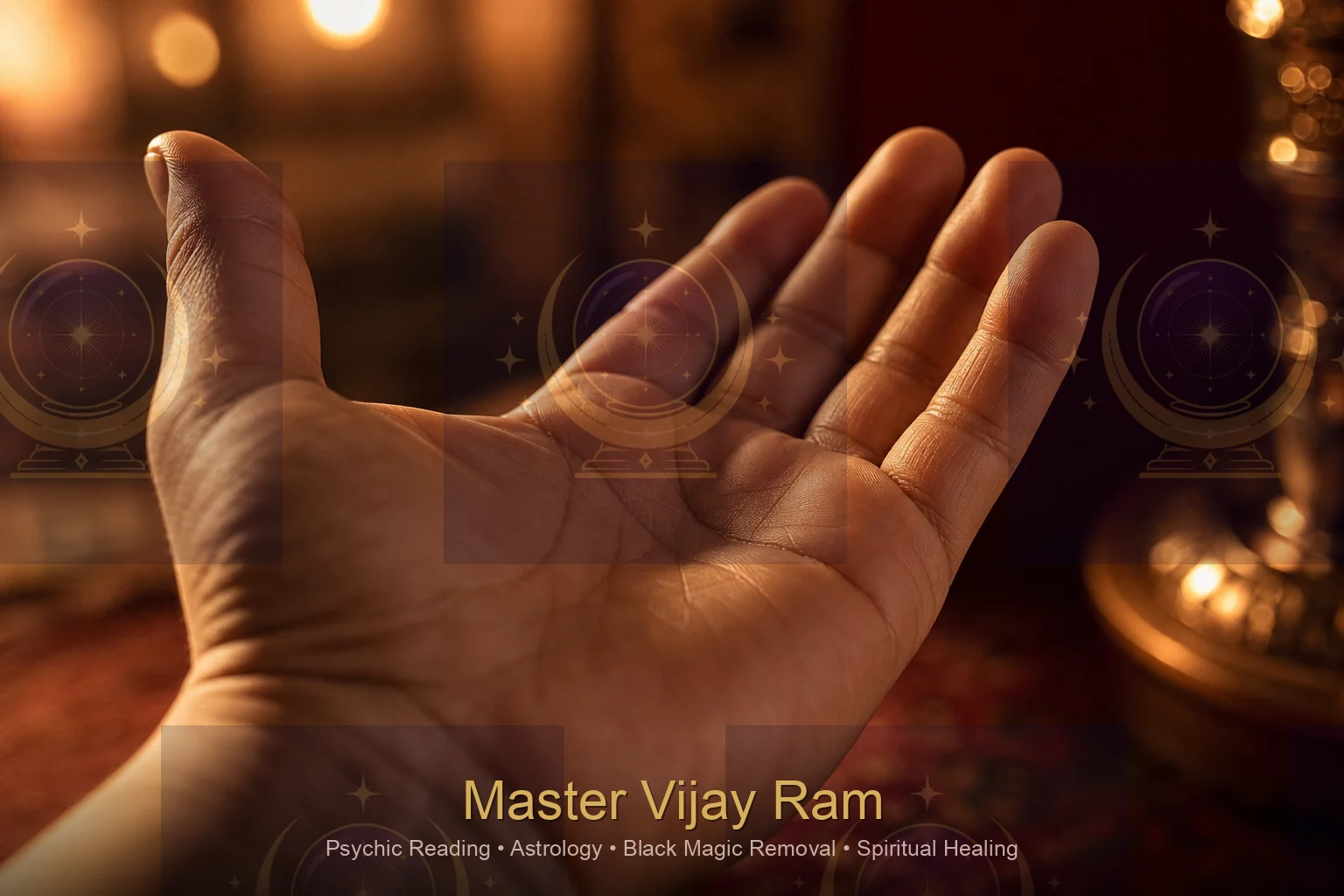
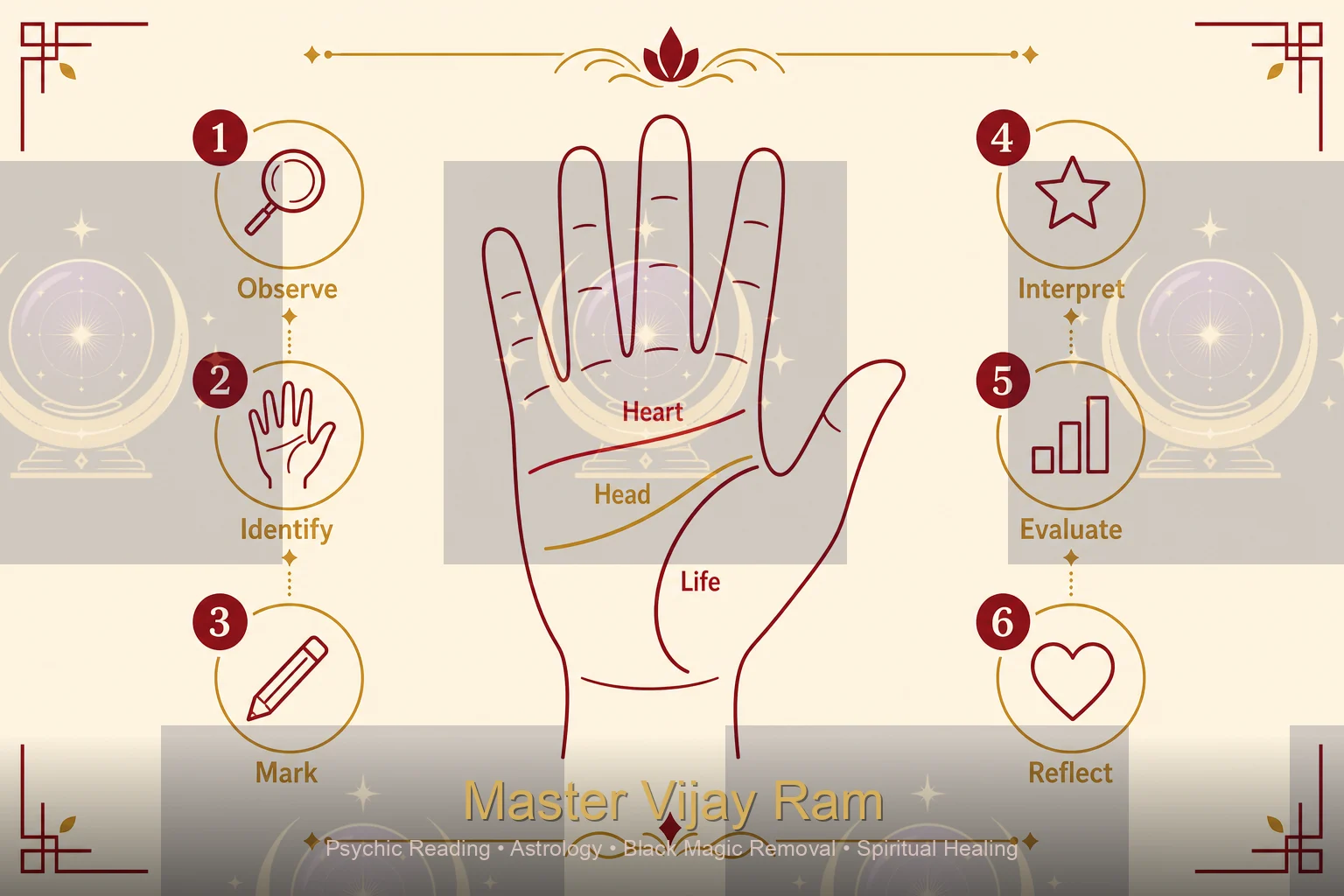
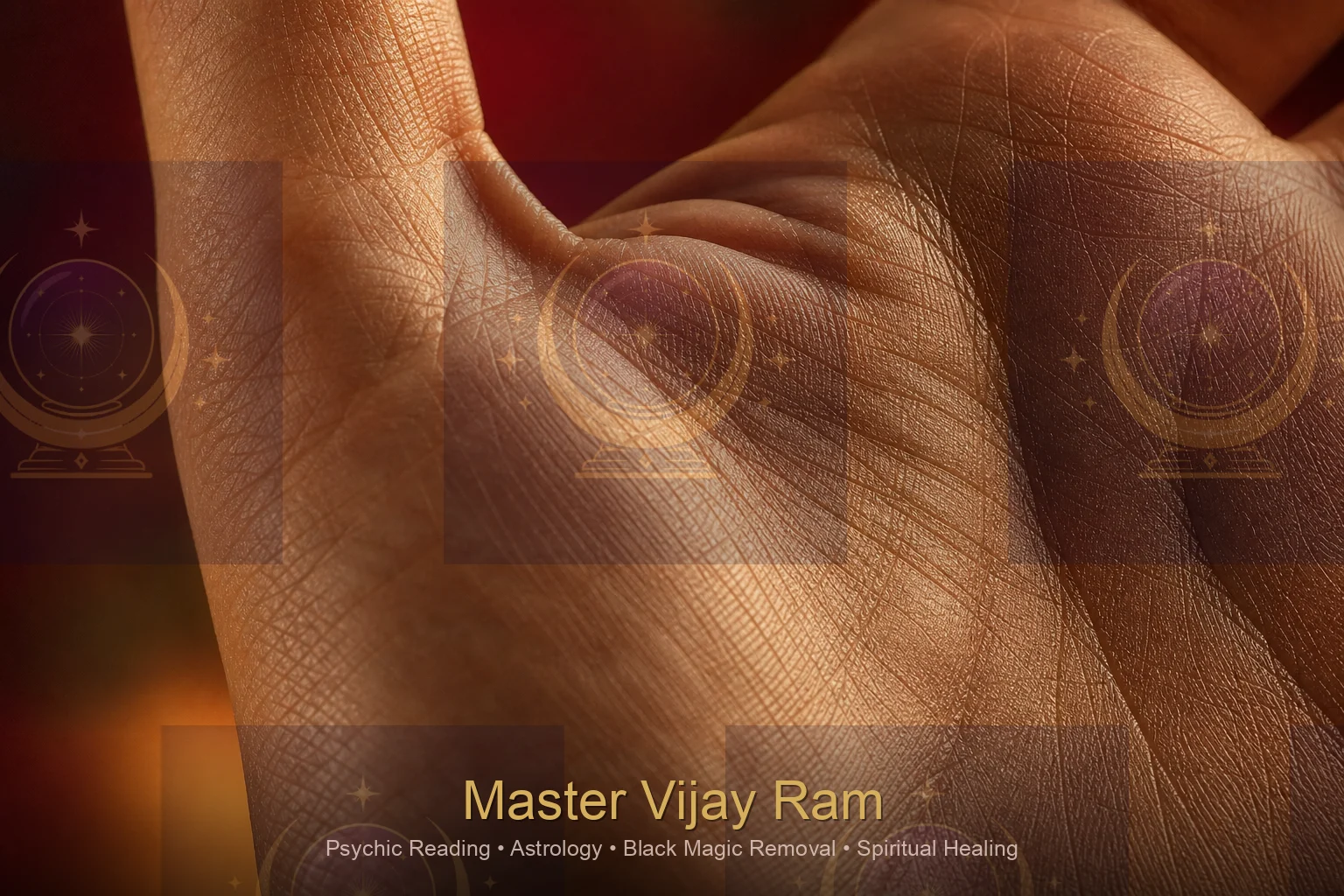
Palmistry examines four main features: the major lines (life, heart, head, and fate), the mounts (fleshy pads beneath each finger), the shape and texture of the palm, and finger length and flexibility. Together these are believed to reflect temperament, emotional patterns, and life tendencies rather than fixed, unchangeable outcomes.
Traditional palmistry divides the hand into several zones of study, and a trained eye looks at all of them together rather than one line in isolation.
- The life line — curves around the base of the thumb; often linked to vitality, major life changes, and general resilience.
- The heart line — runs beneath the fingers; associated with emotional temperament and relationship patterns.
- The head line — crosses the middle of the palm; linked to thinking style, decision-making, and focus.
- The fate line — runs vertically toward the middle finger; considered a marker of career direction and outside influences on one's path.
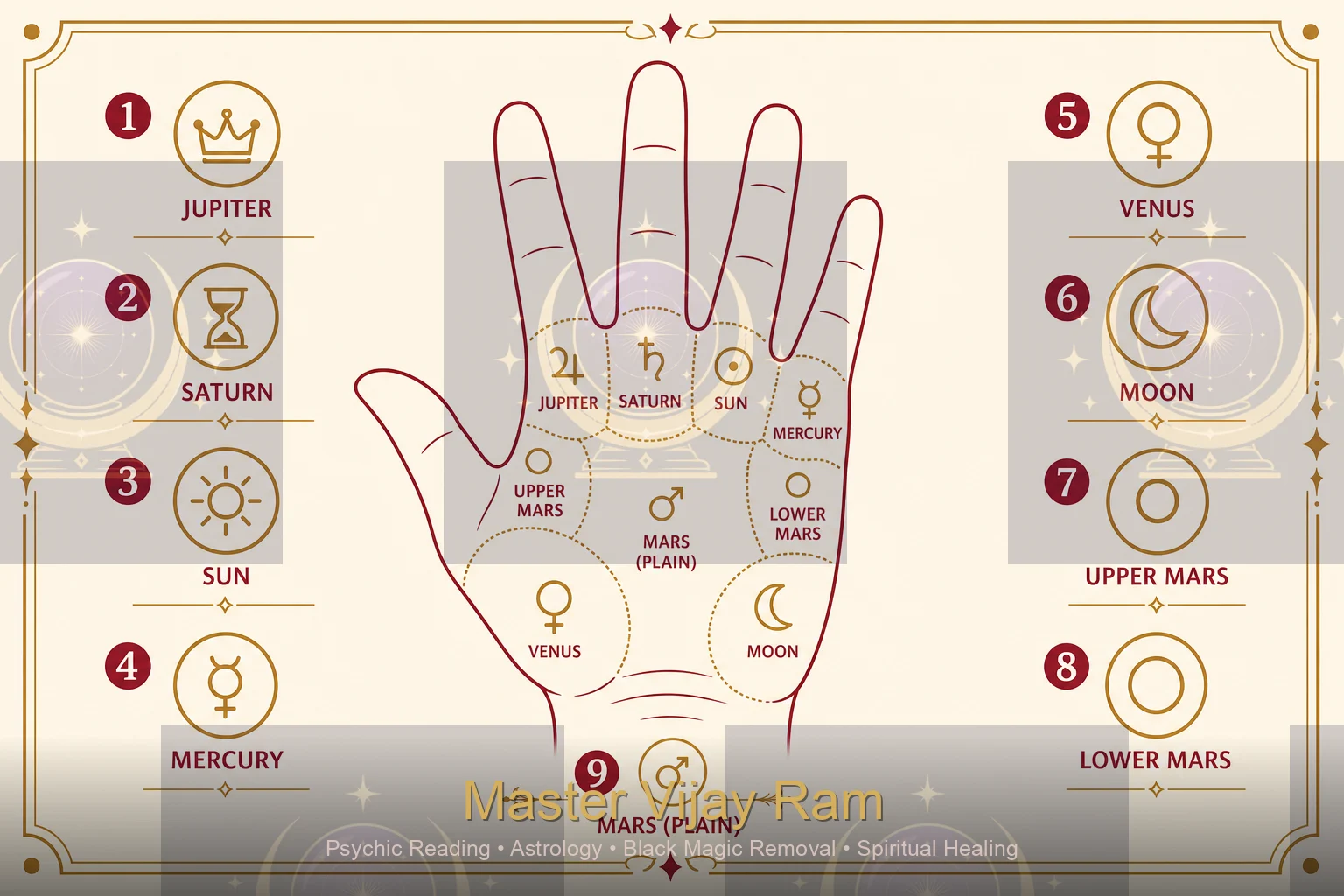
- Mounts — raised areas below each finger and along the palm's edge, each associated with a planetary quality in Vedic astrology reading traditions.
Shape matters too — square palms, long fingers, flexible thumbs, and skin texture are all read as supporting details that round out the overall picture, much the way an astrologer reads a full chart rather than a single planet.
Can a palm reading really predict my future?
No honest palm reader can guarantee the future. Palmistry works best as a tool for self-reflection and guidance — highlighting tendencies, strengths, and patterns worth watching. Lines can shift subtly over years as habits and choices change, which is why sessions focus on direction and understanding rather than fixed certainty.
This is one of the most common questions people bring to a first session, and it deserves an honest answer. Palm reading is a descriptive art, not an exact science, and no reputable palm reader should ever promise a guaranteed or 100% certain outcome. What it can offer is a thoughtful reflection of patterns already present in your temperament and choices.
Many clients find it most useful alongside other tools — for instance, comparing what the hand shows with a kundli horoscope reading based on birth details, or a straightforward psychic reading focused on a specific life question. Used together, these give a fuller, more balanced picture than any single method alone.
If you're new to this kind of consultation altogether, it can help to review some first psychic reading questions to ask before you go, so you arrive with clarity about what you want to understand.
What can palm reading reveal about love and relationships?
The heart line, along with certain markings near the mounts of Venus and Mercury, is traditionally read for emotional temperament, attachment style, and relationship patterns. It may reflect how openly someone expresses affection or handles conflict, offering insight for people asking about compatibility or recurring relationship struggles.
Questions about love are among the most frequent reasons people book a session. The heart line's depth, length, and curve are traditionally associated with how a person gives and receives affection — whether they tend to be guarded, expressive, or prone to overthinking in relationships.
The mount of Venus, at the base of the thumb, is often read for warmth and vitality in relationships, while markings near Mercury can point to communication style. None of this replaces open conversation with a partner, but it can offer a starting point for reflection, especially for those also exploring love psychic readings and what they can tell you as a complementary perspective.
It's worth remembering that hands change subtly with life experience, and so can the patterns they reflect — this isn't a fixed verdict on your love life.
How is Vedic palmistry different from Western palmistry?
Vedic palmistry, rooted in Indian tradition, links each mount and finger to a planet and interprets the palm alongside astrological principles from a person's kundli. Western palmistry, more common in Europe, focuses primarily on line shape and psychological interpretation without the planetary framework.
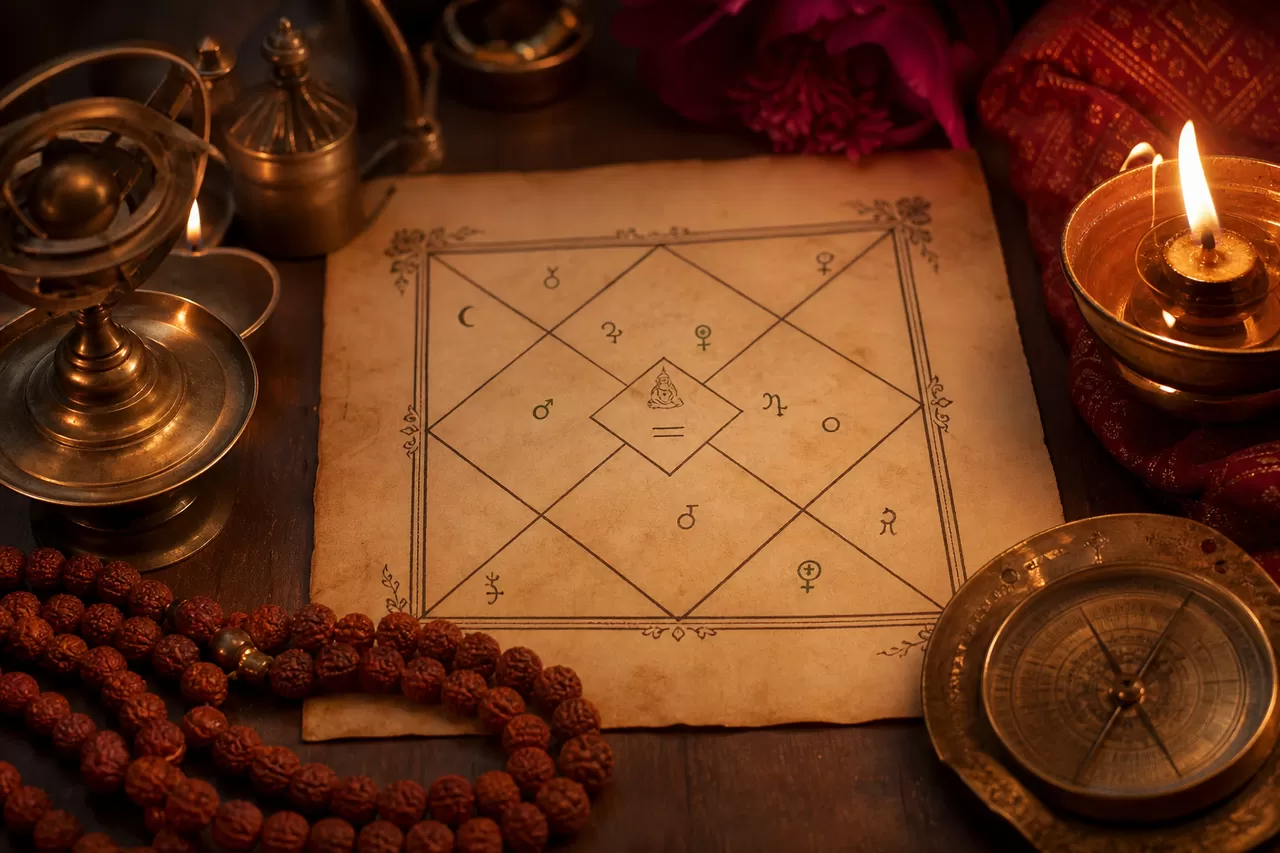
Both systems study similar physical features but read them through different lenses. Vedic palmistry, practised for generations across India, treats the palm as a map connected to planetary influences described in classical Hindu astrology — a tradition with roots stretching back thousands of years, as documented in general studies of Hindu astrology. Each mount corresponds to a planet — the mount of Jupiter beneath the index finger, Saturn beneath the middle, and so on — echoing the same planetary logic used in a full Vedic astrology reading.
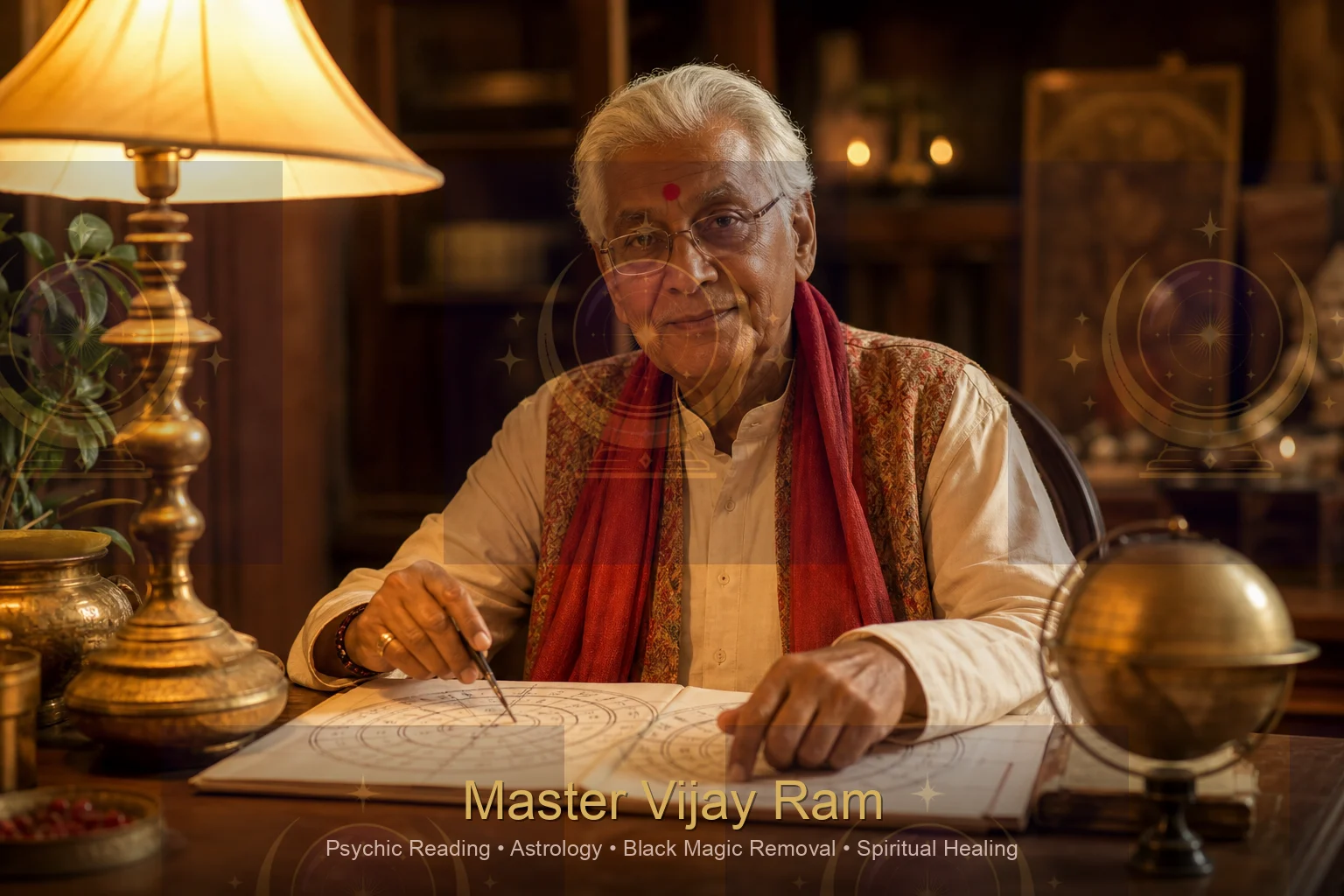
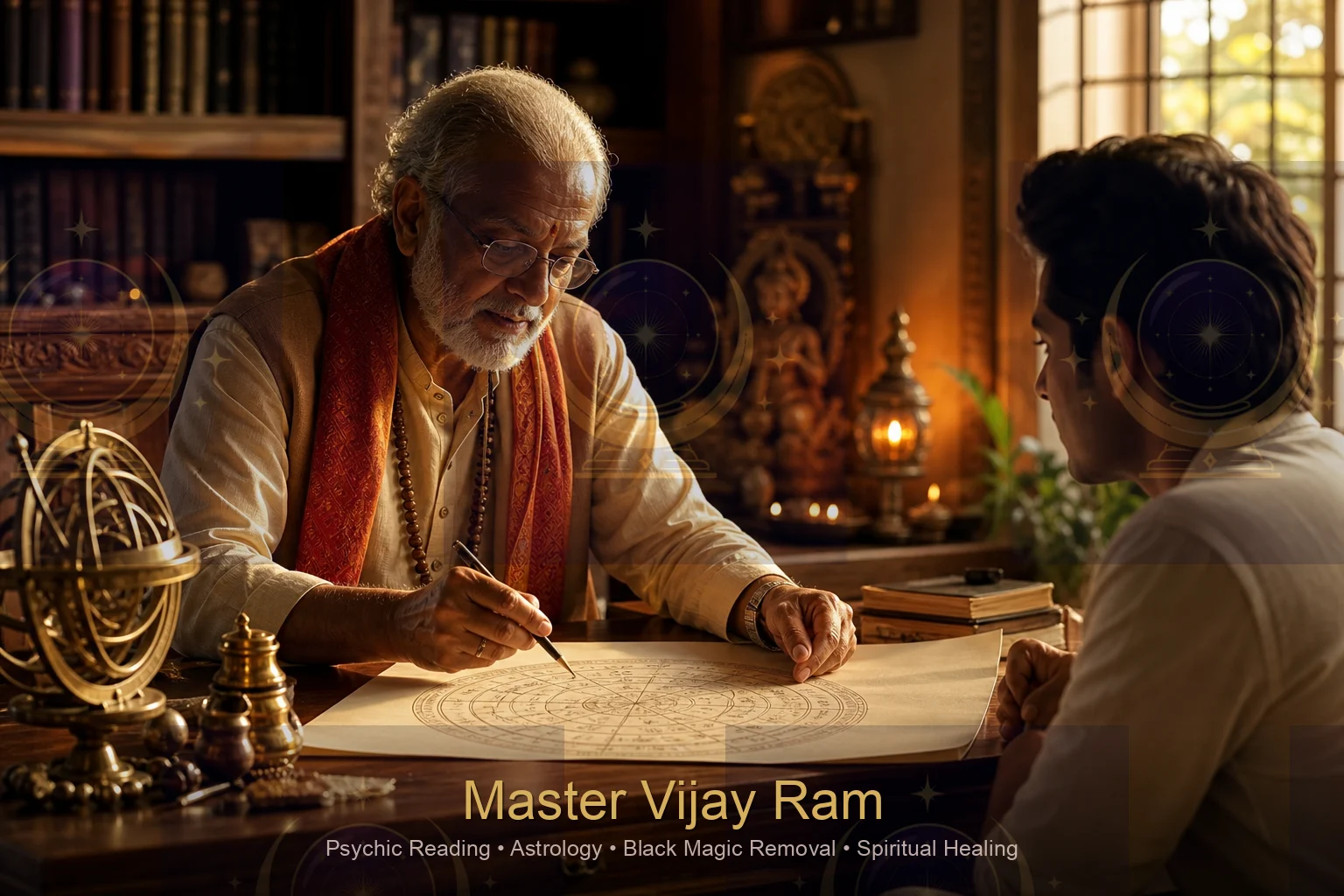
Western palmistry, by contrast, developed largely as a psychological and character-reading tradition, focusing on line shape, hand shape typologies, and personality traits without the planetary overlay. Master Vijay Ram draws primarily from the Vedic approach, often reading the palm alongside a person's birth chart or gemstone and numerology guidance for a more layered understanding.
What happens during a palm reading session with Master Vijay Ram?
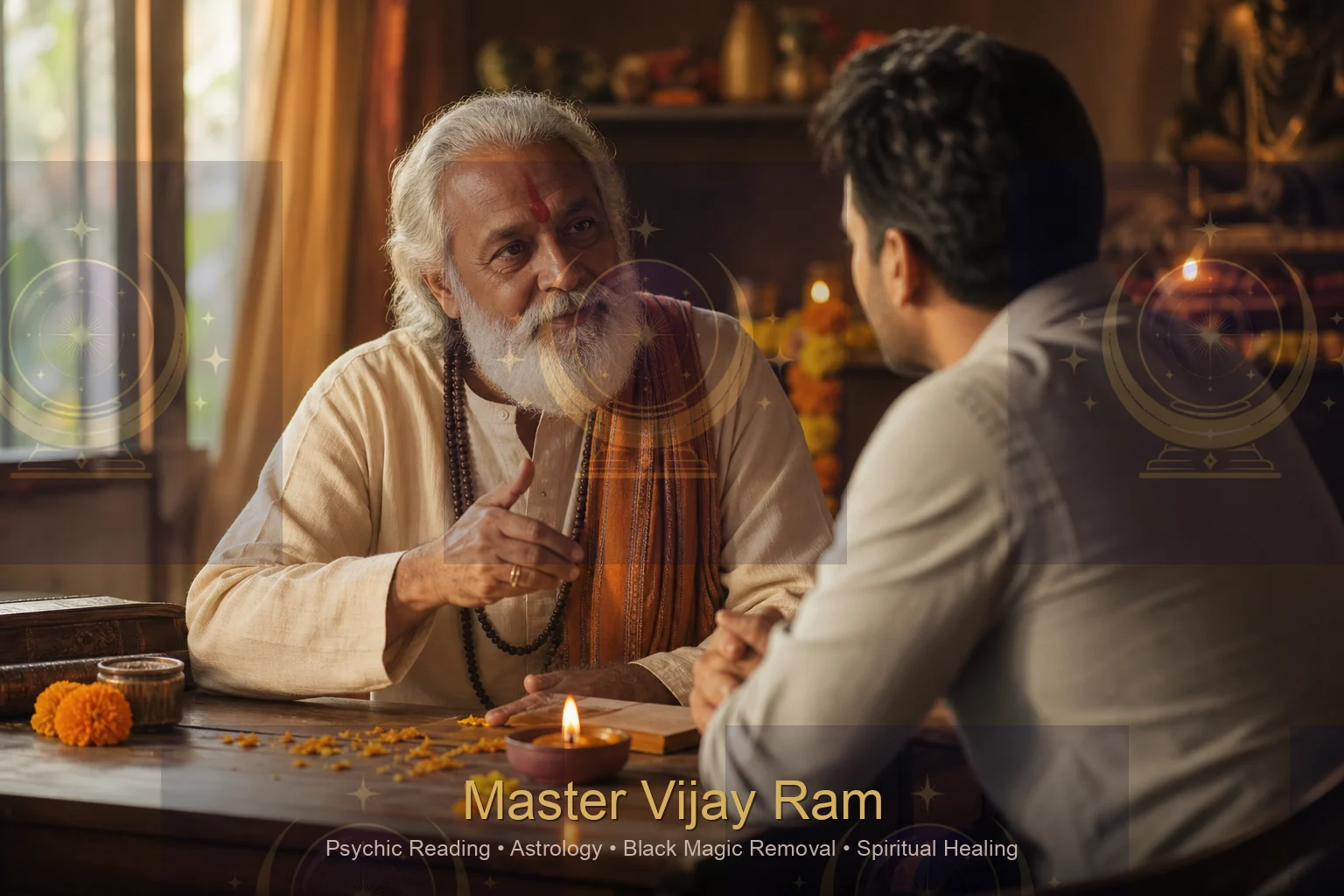
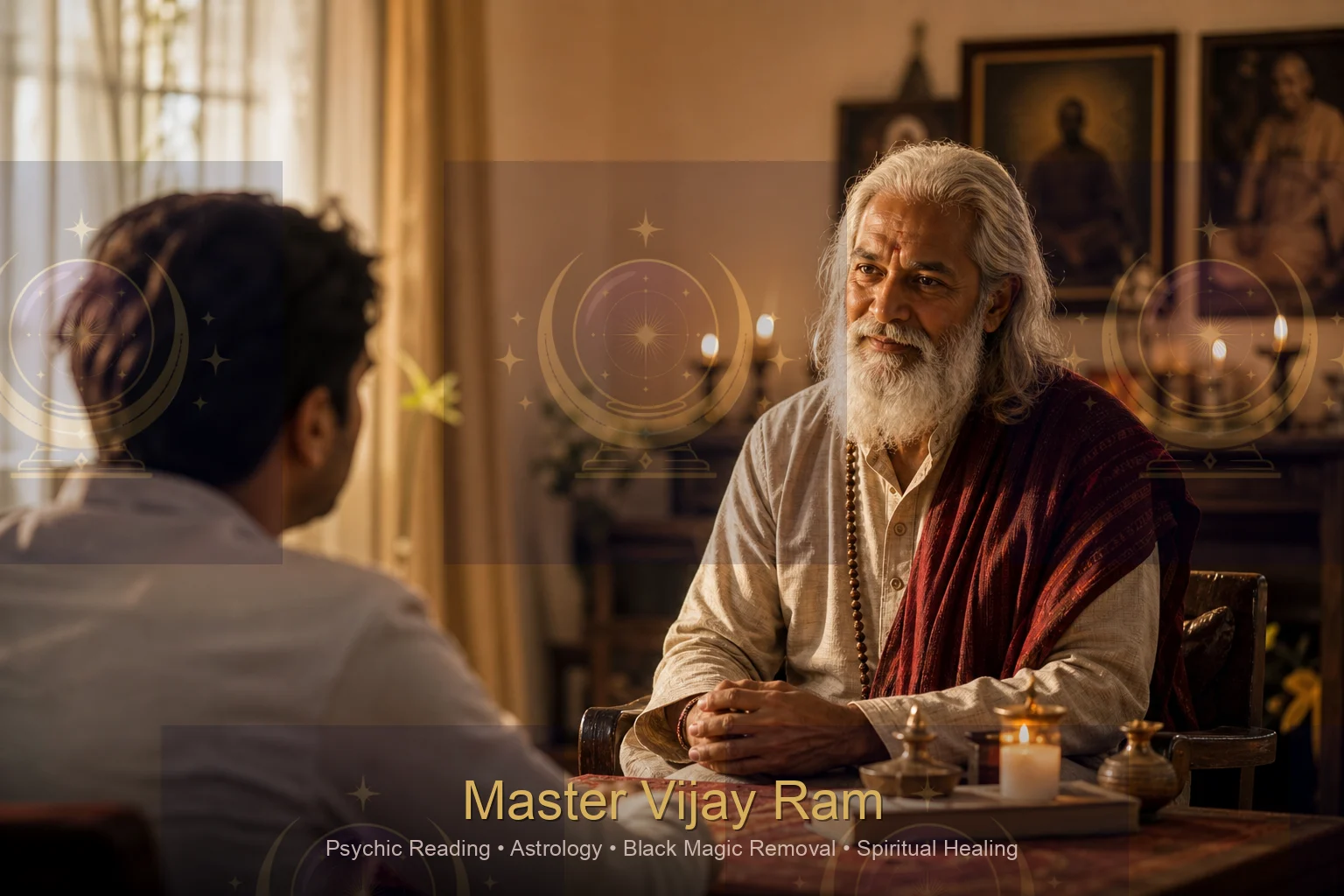
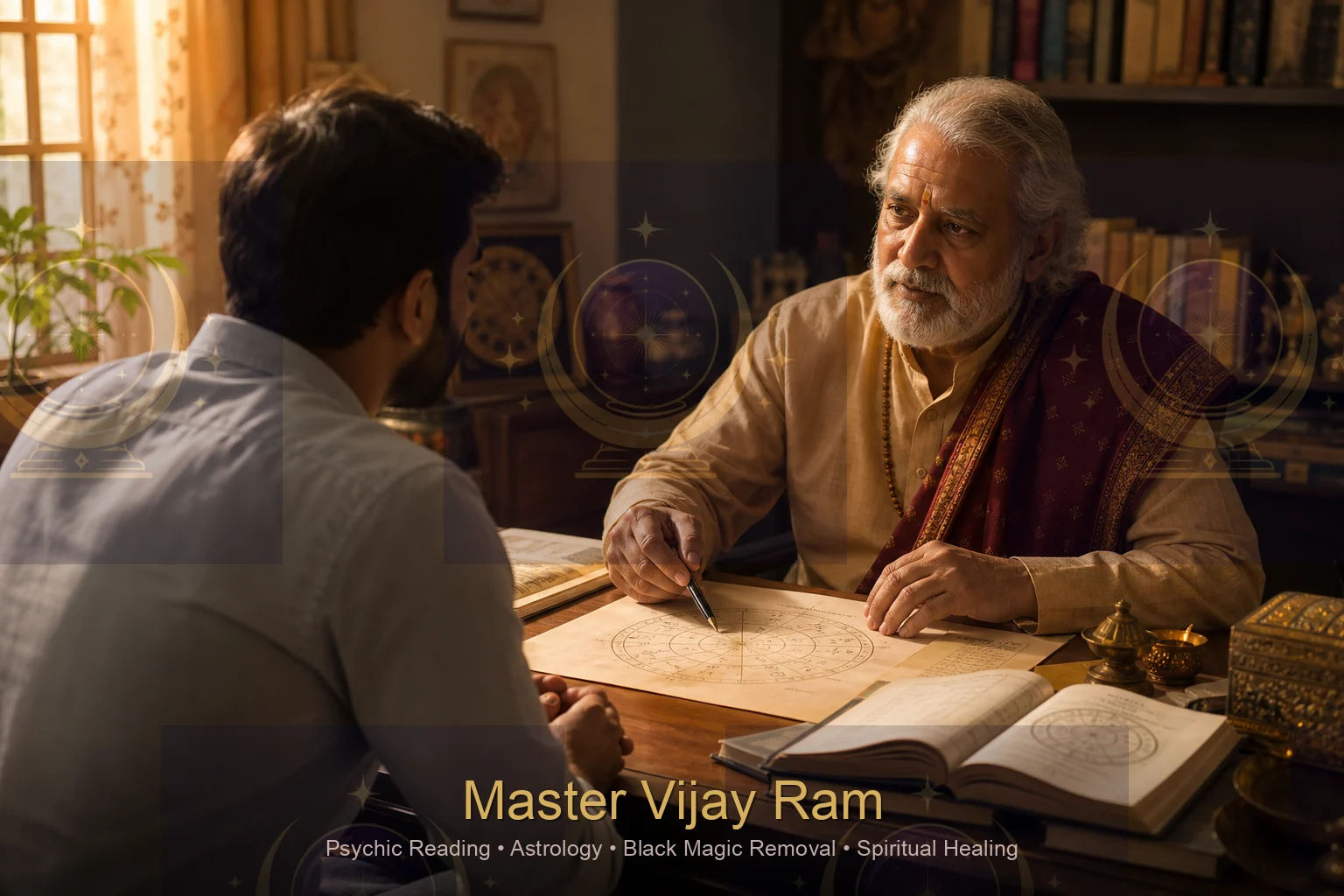
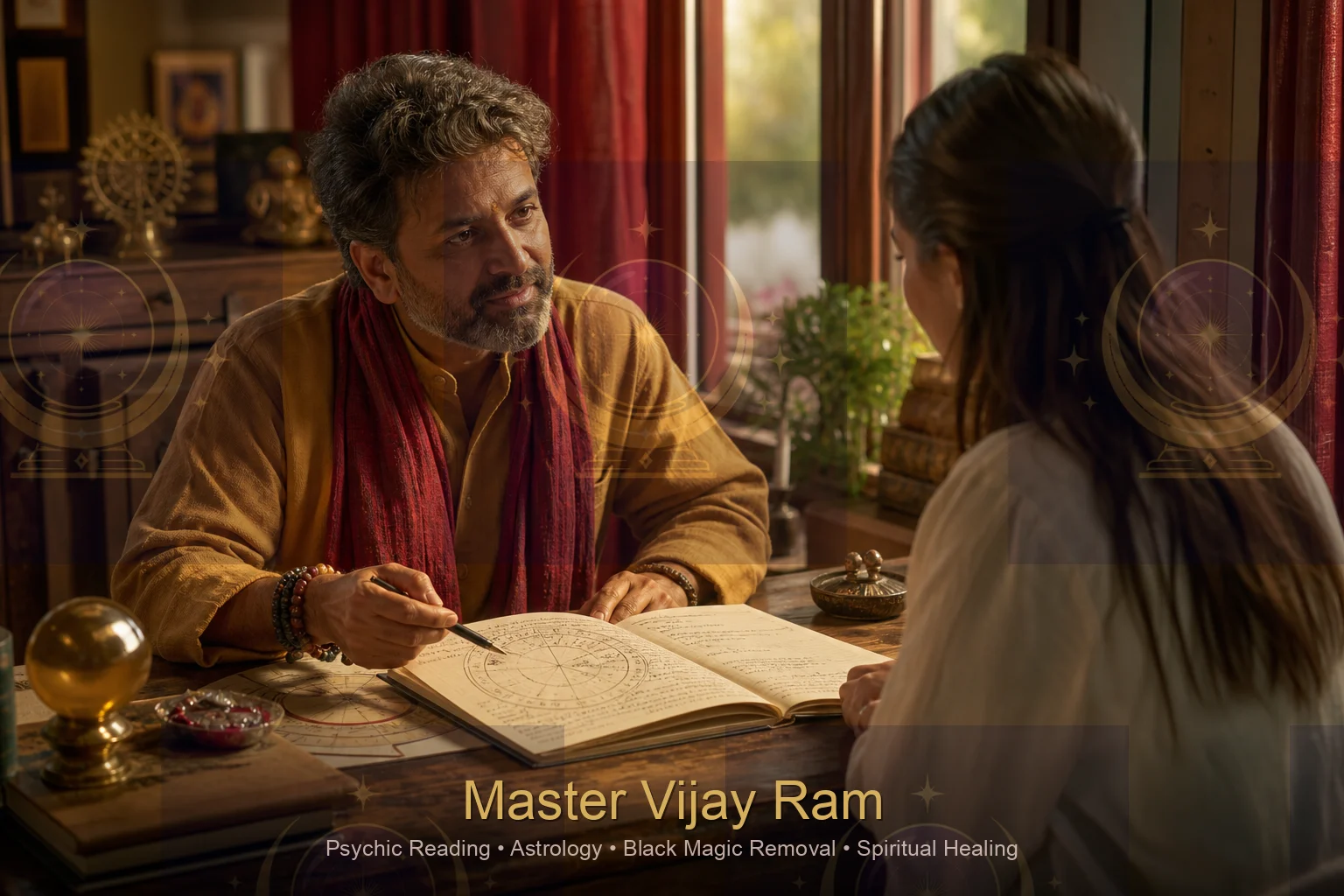
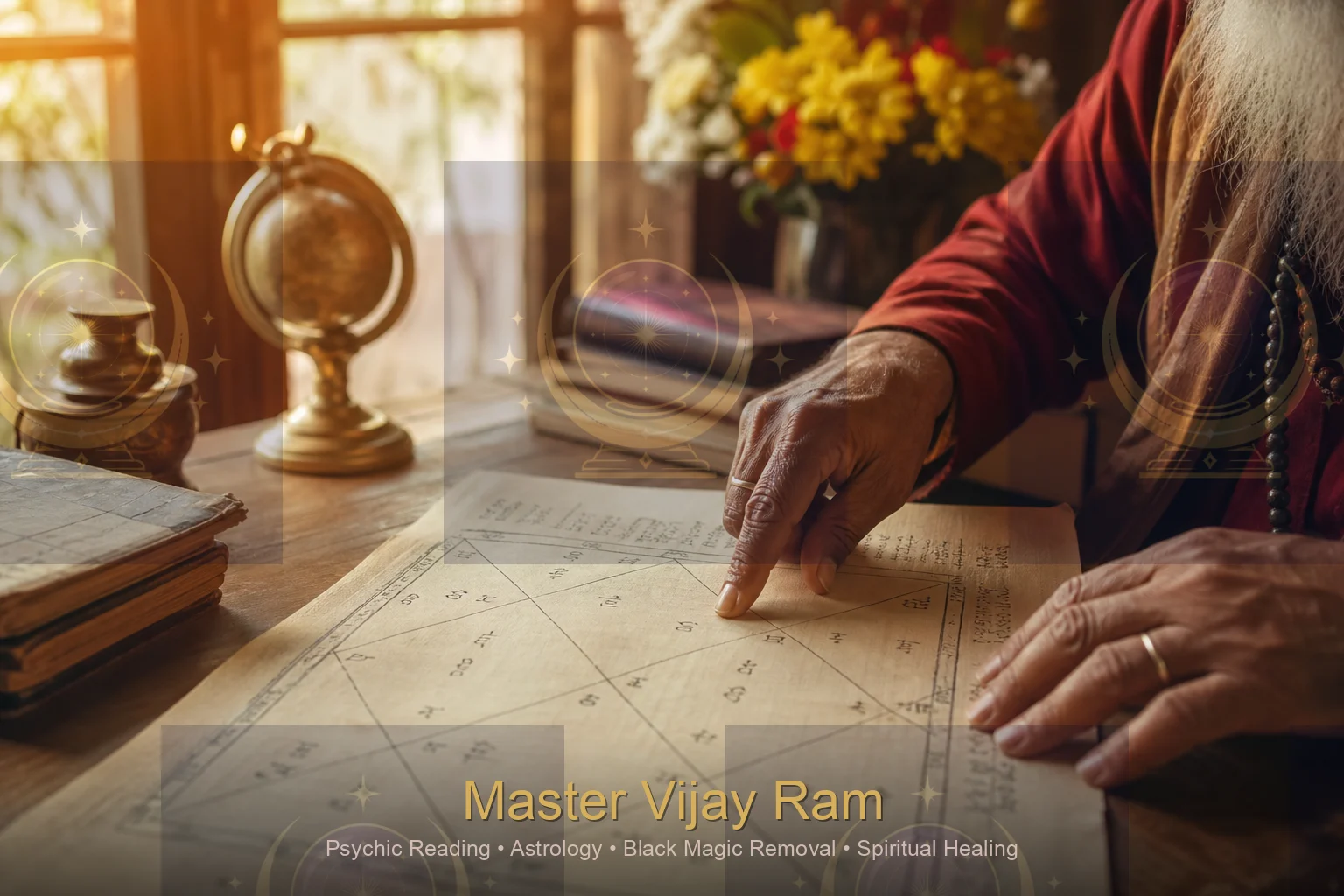
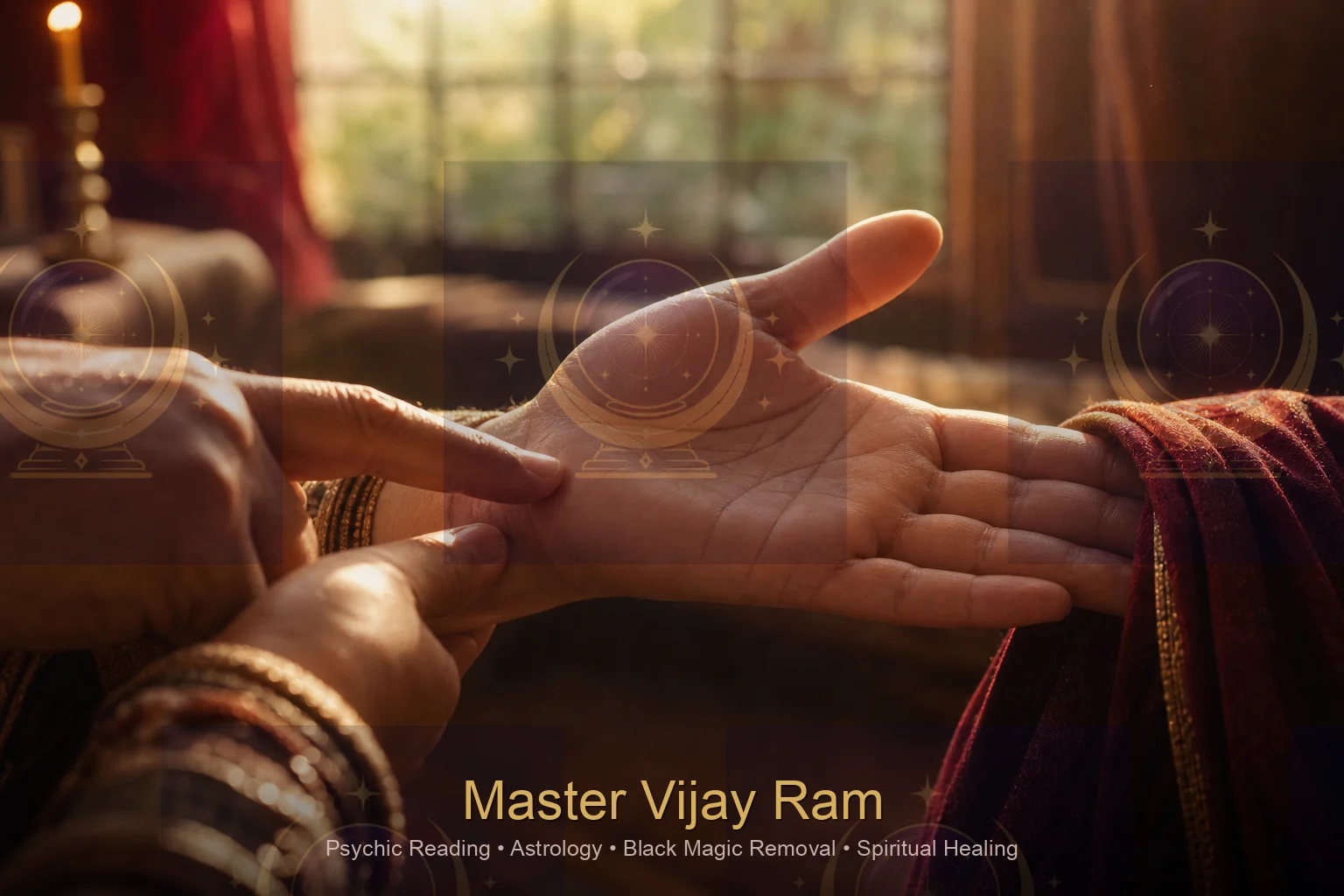
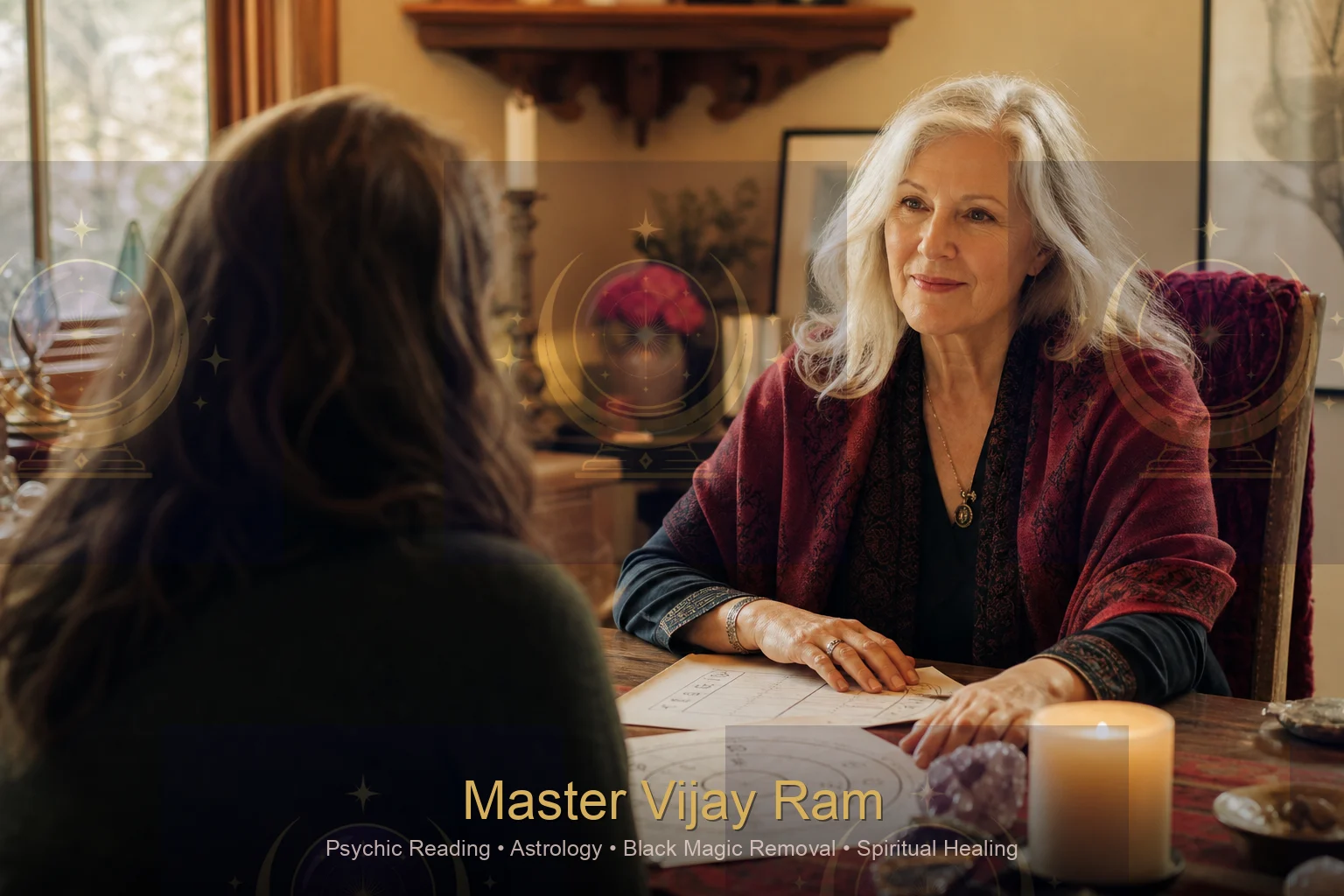
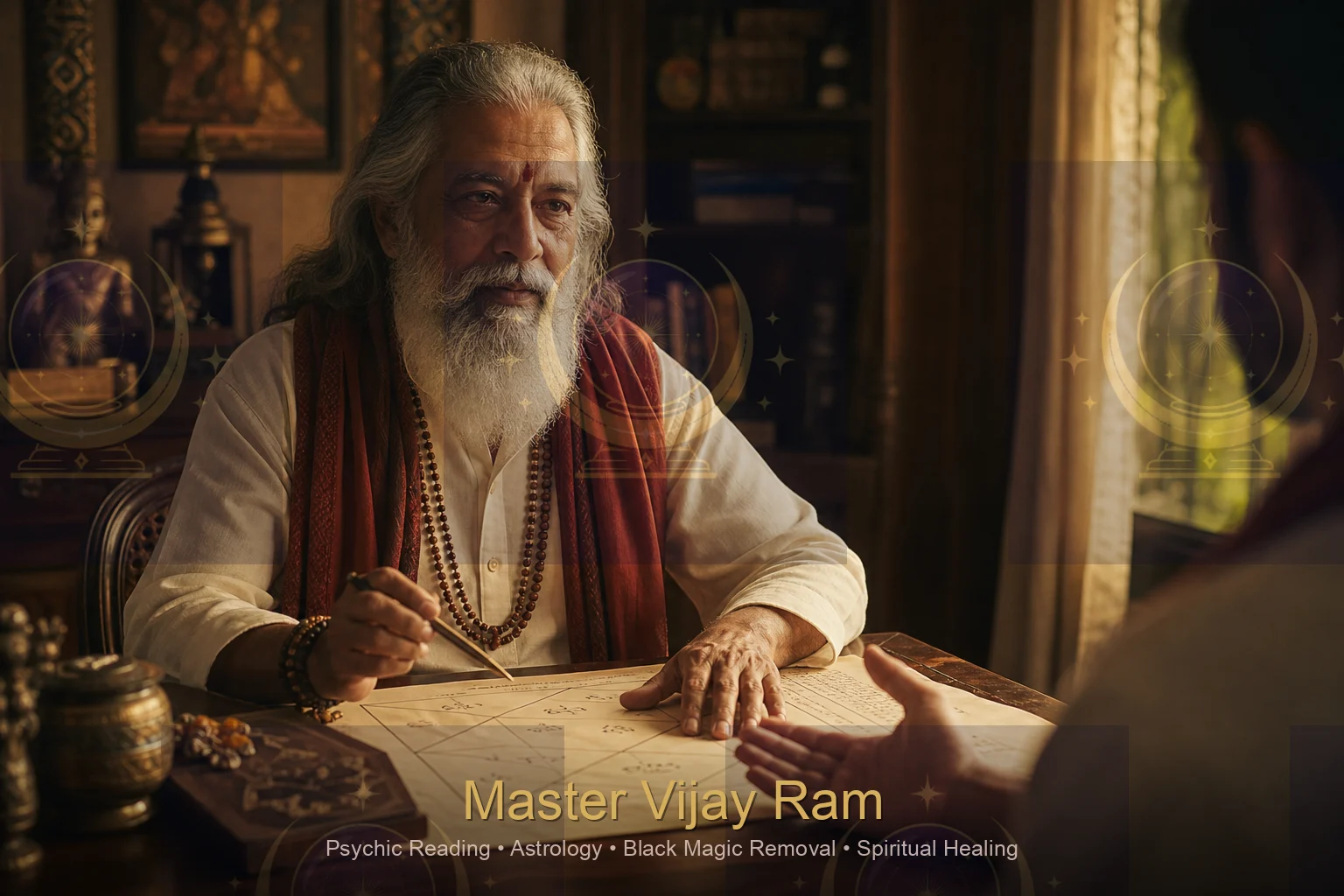
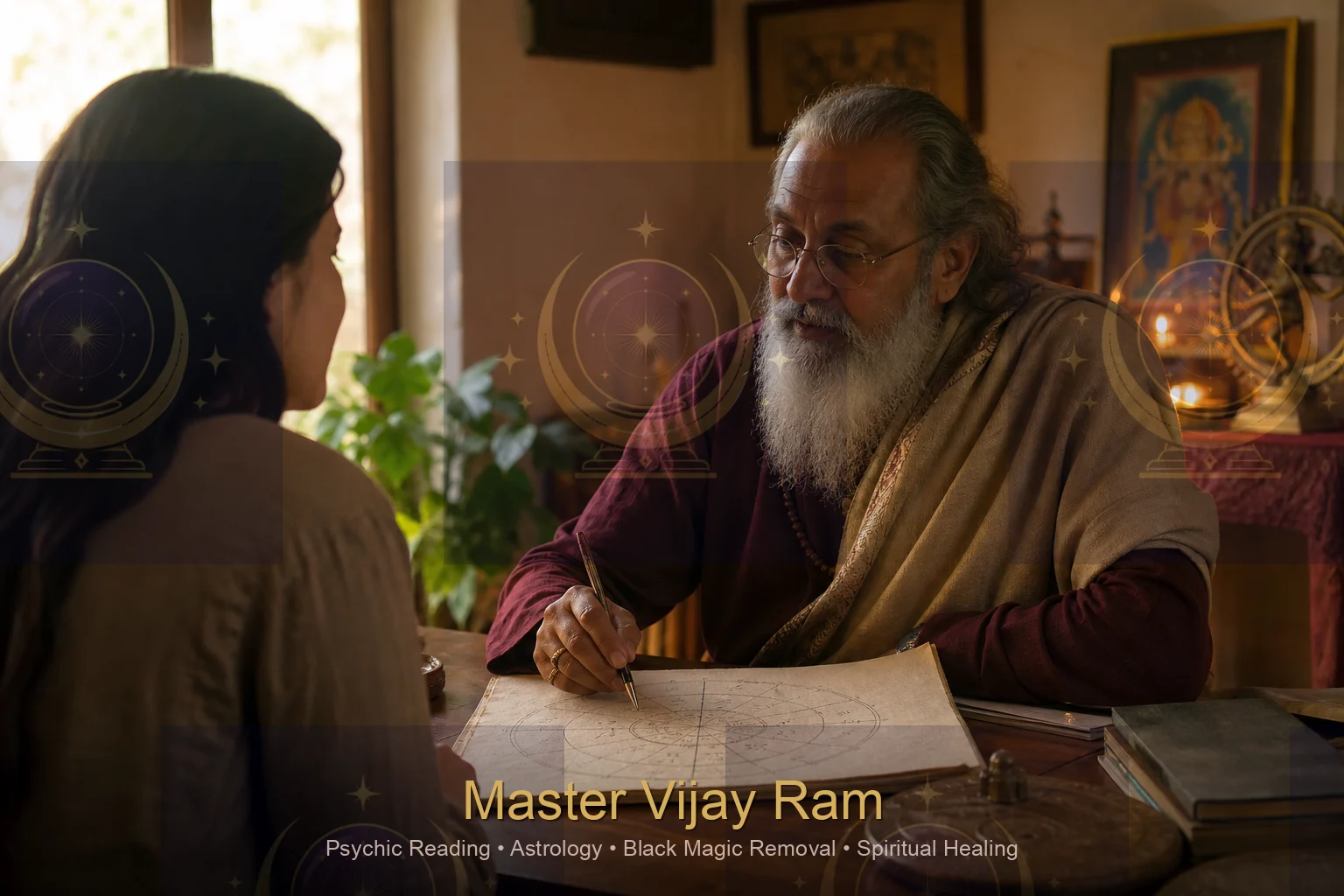
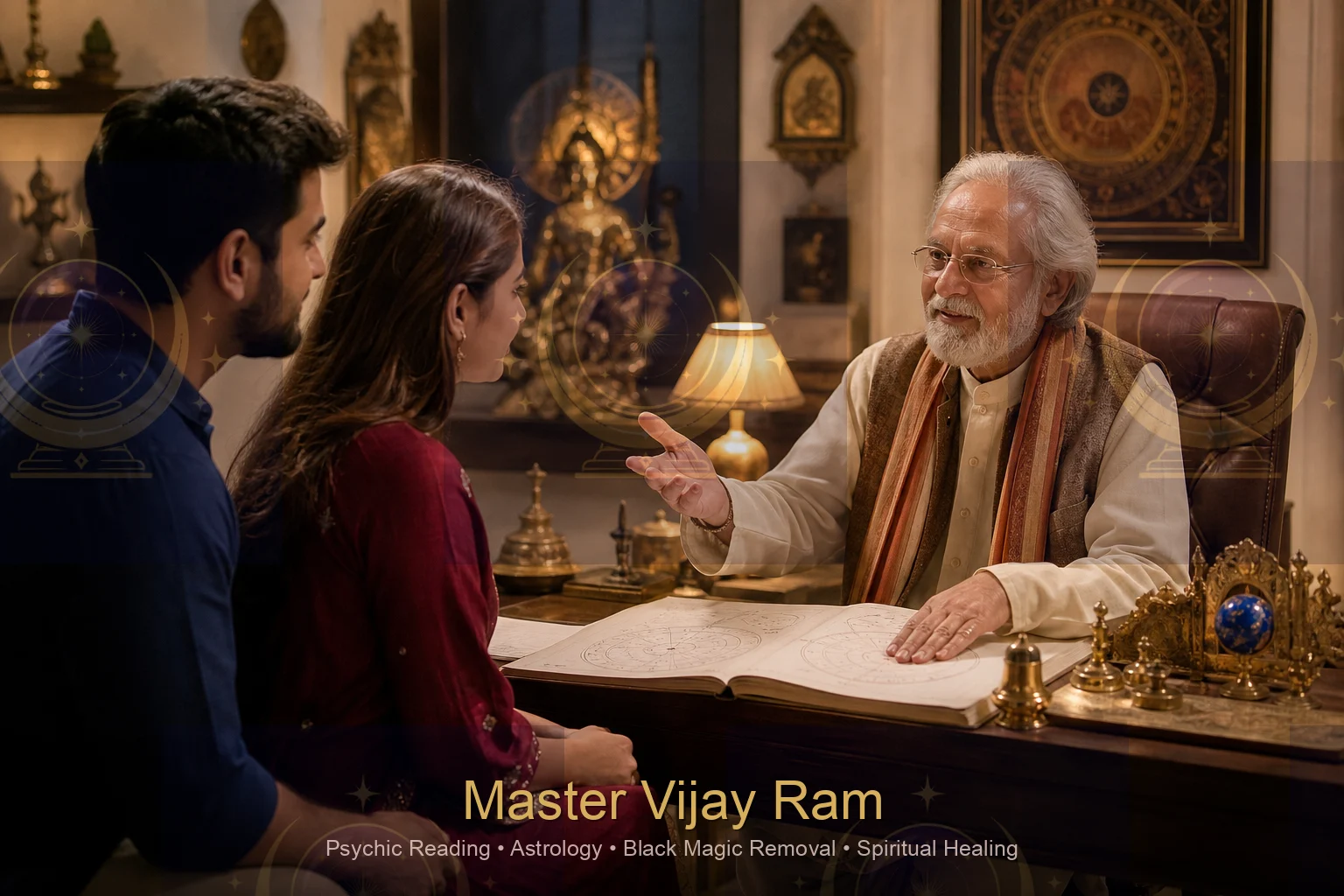
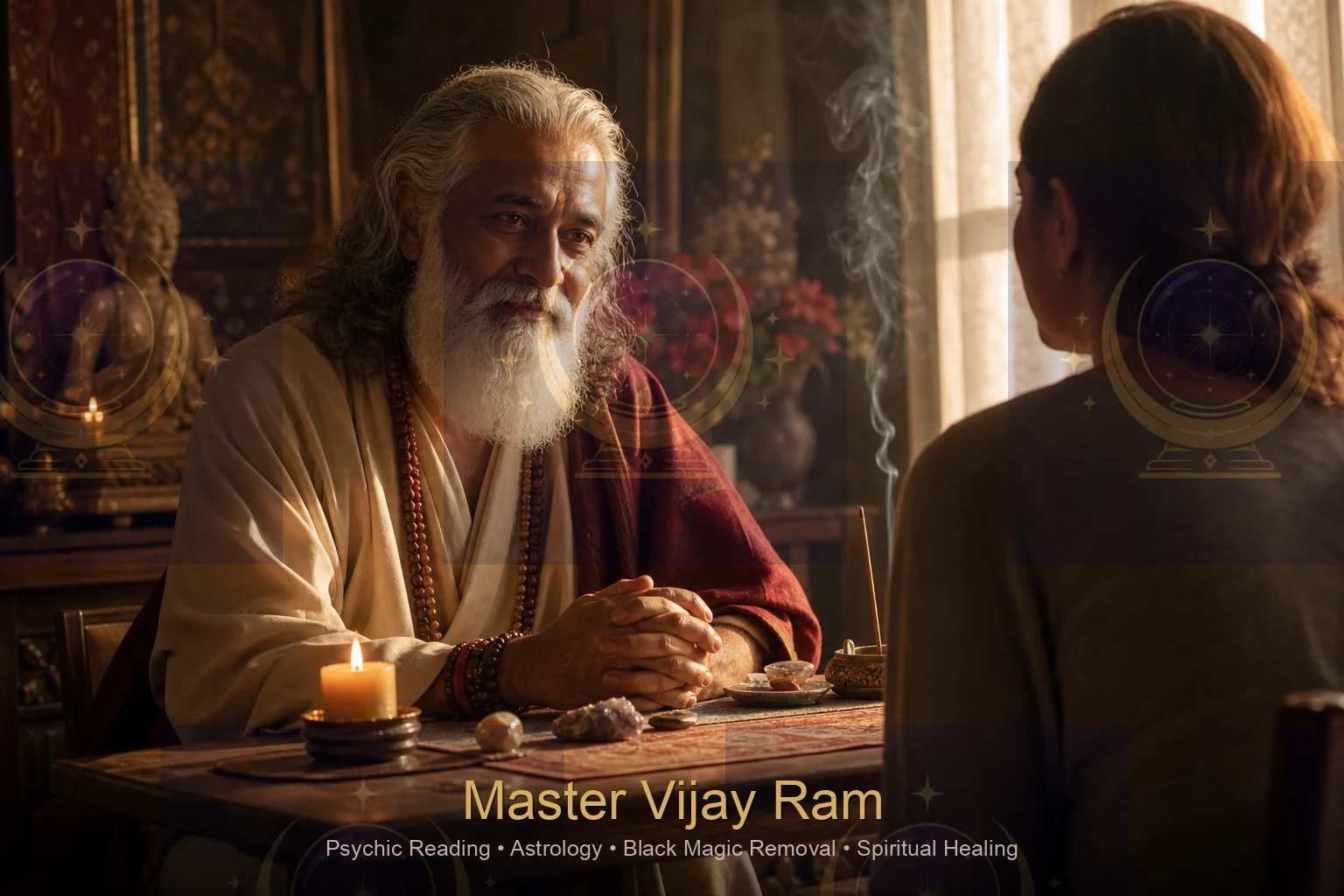
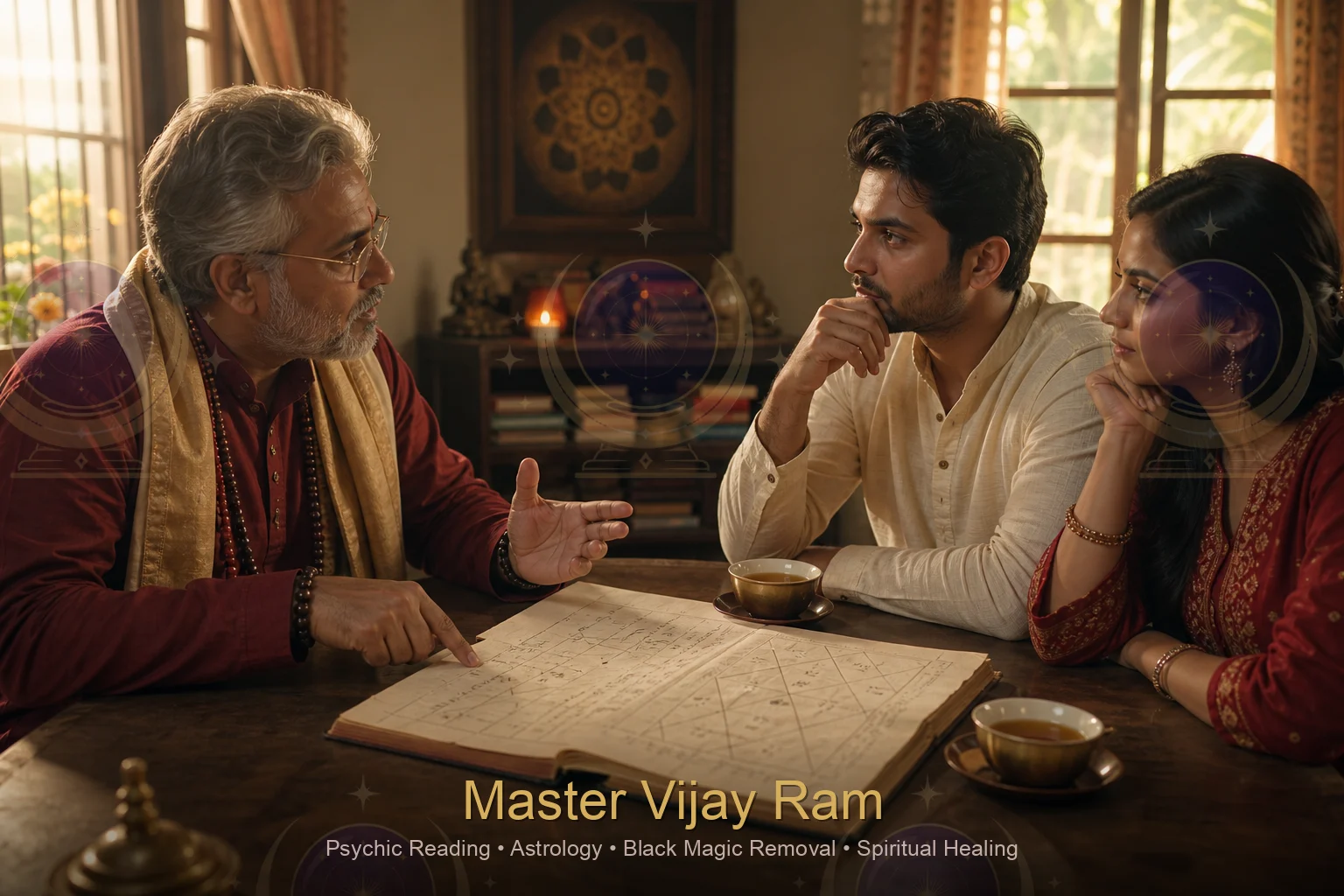
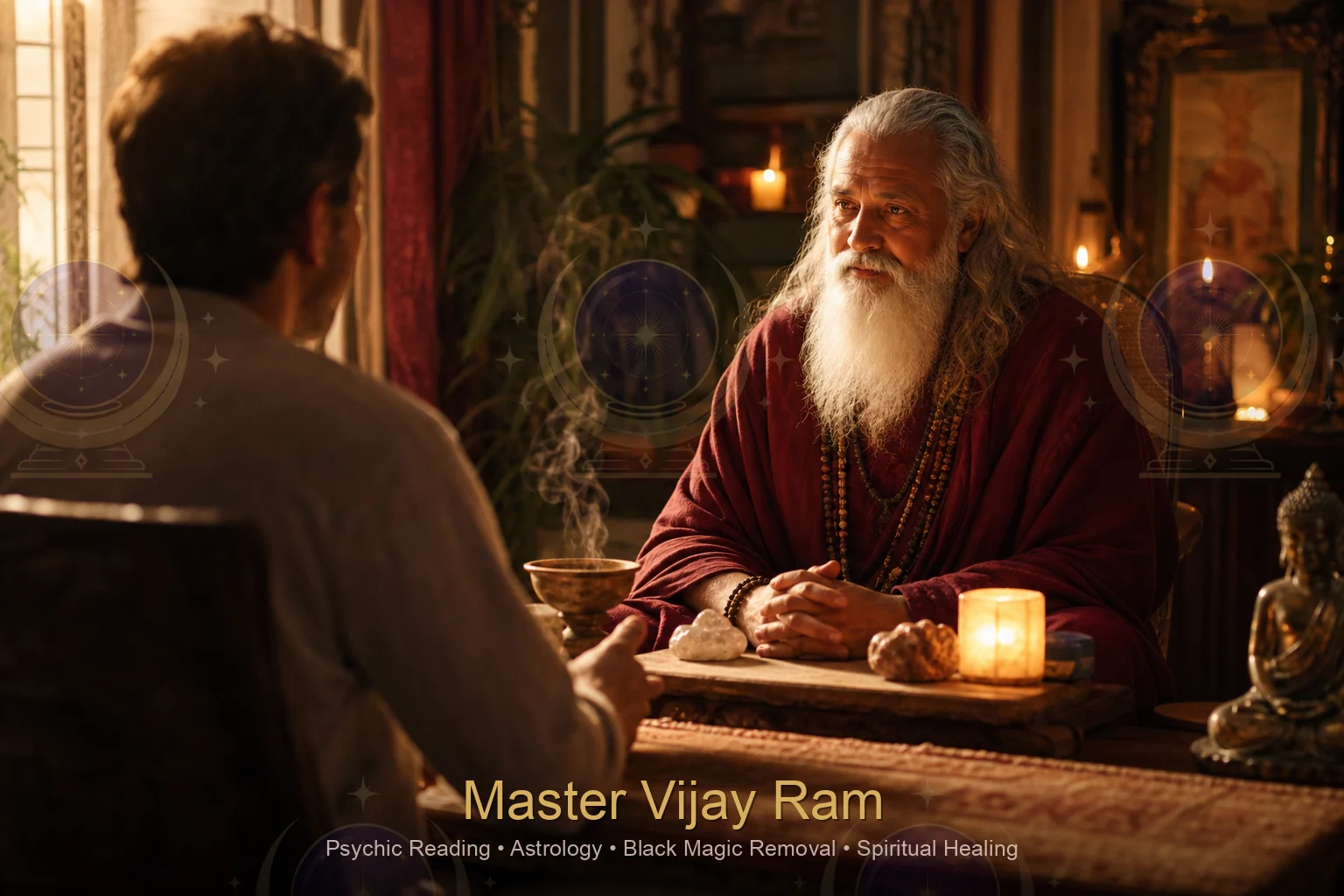
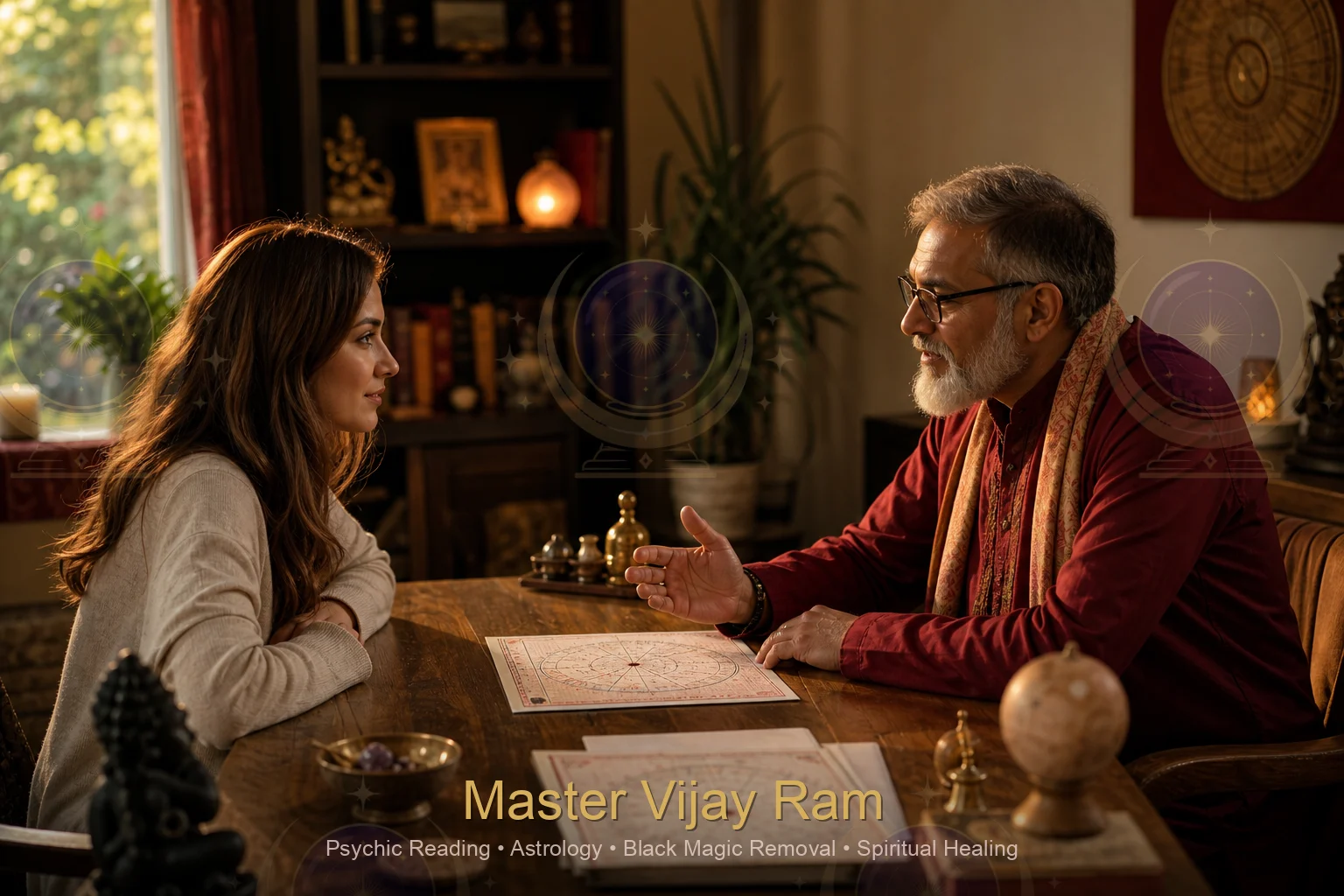
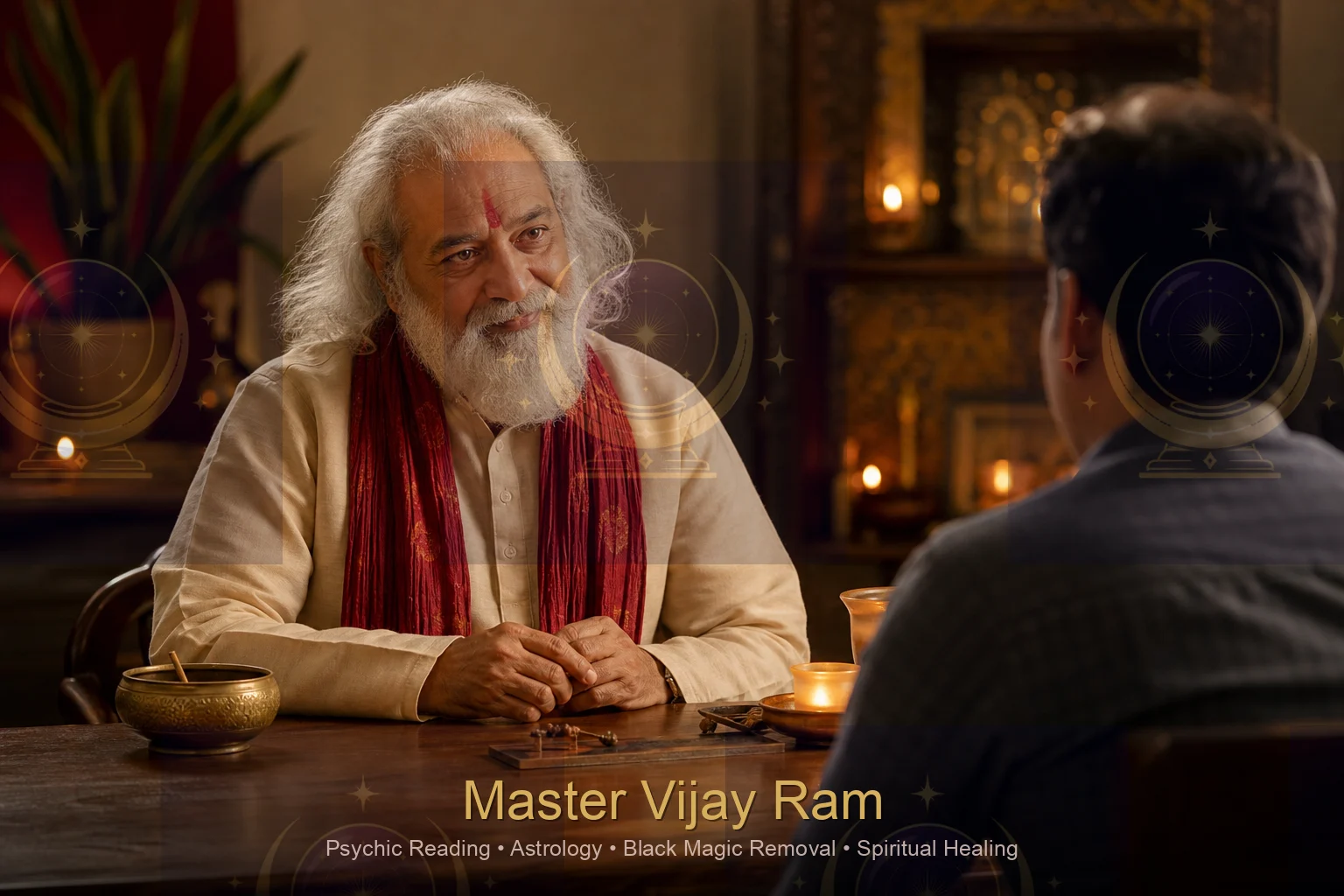
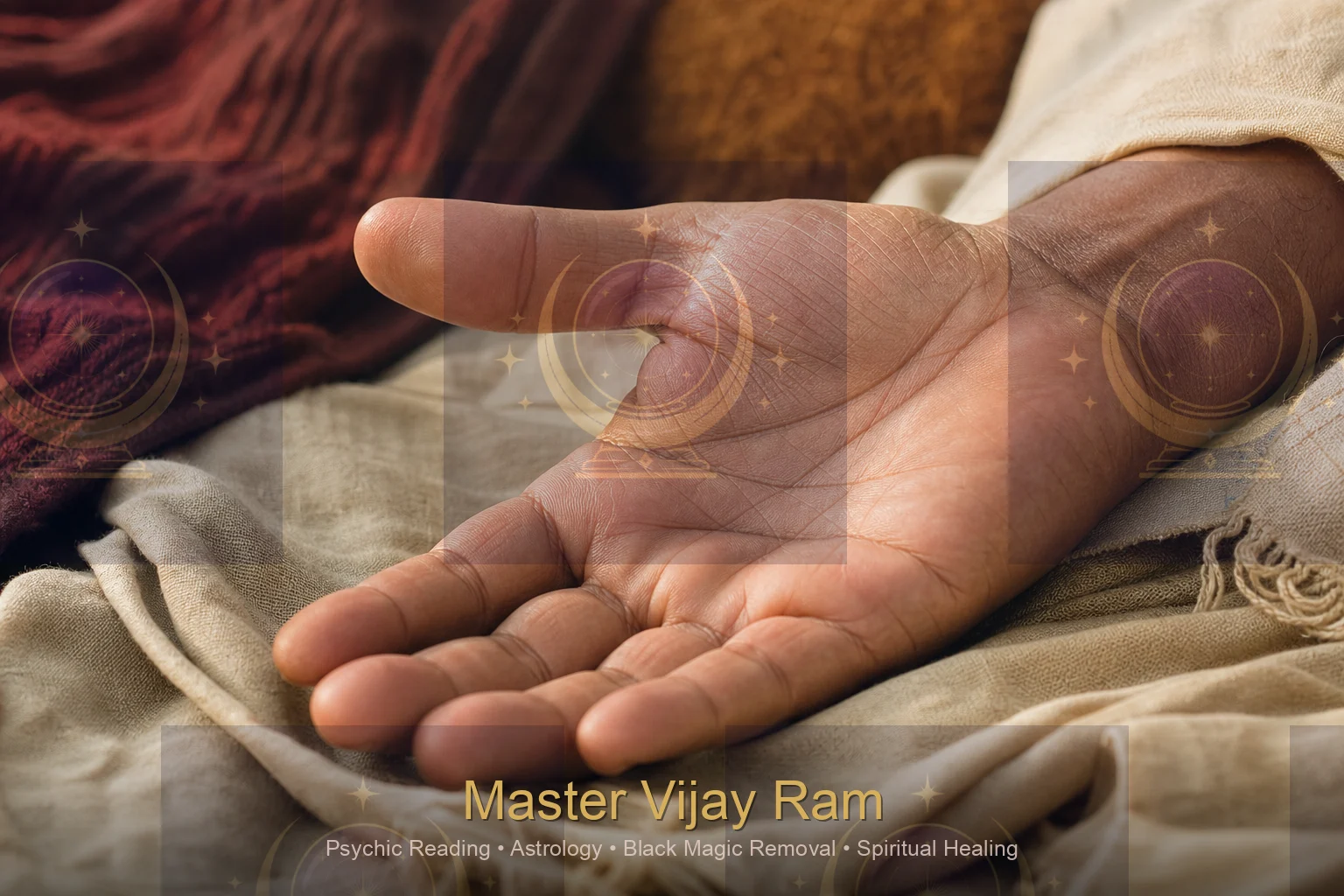
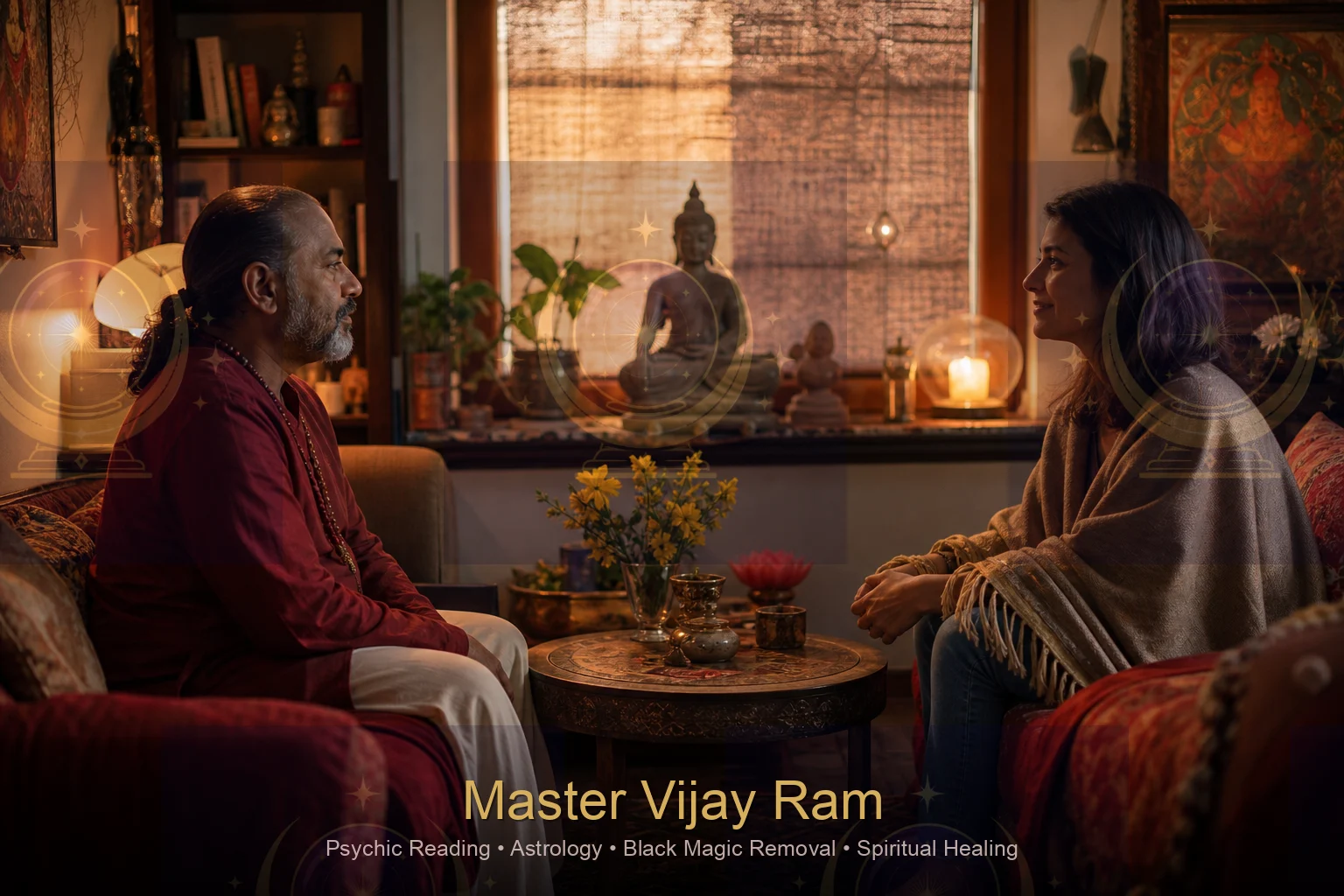
A session begins with a quiet conversation about what you'd like insight on, followed by a close study of both palms — lines, mounts, shape, and any distinctive markings. He explains what he observes in plain language, connects it to your questions, and leaves room for you to ask follow-up questions throughout.
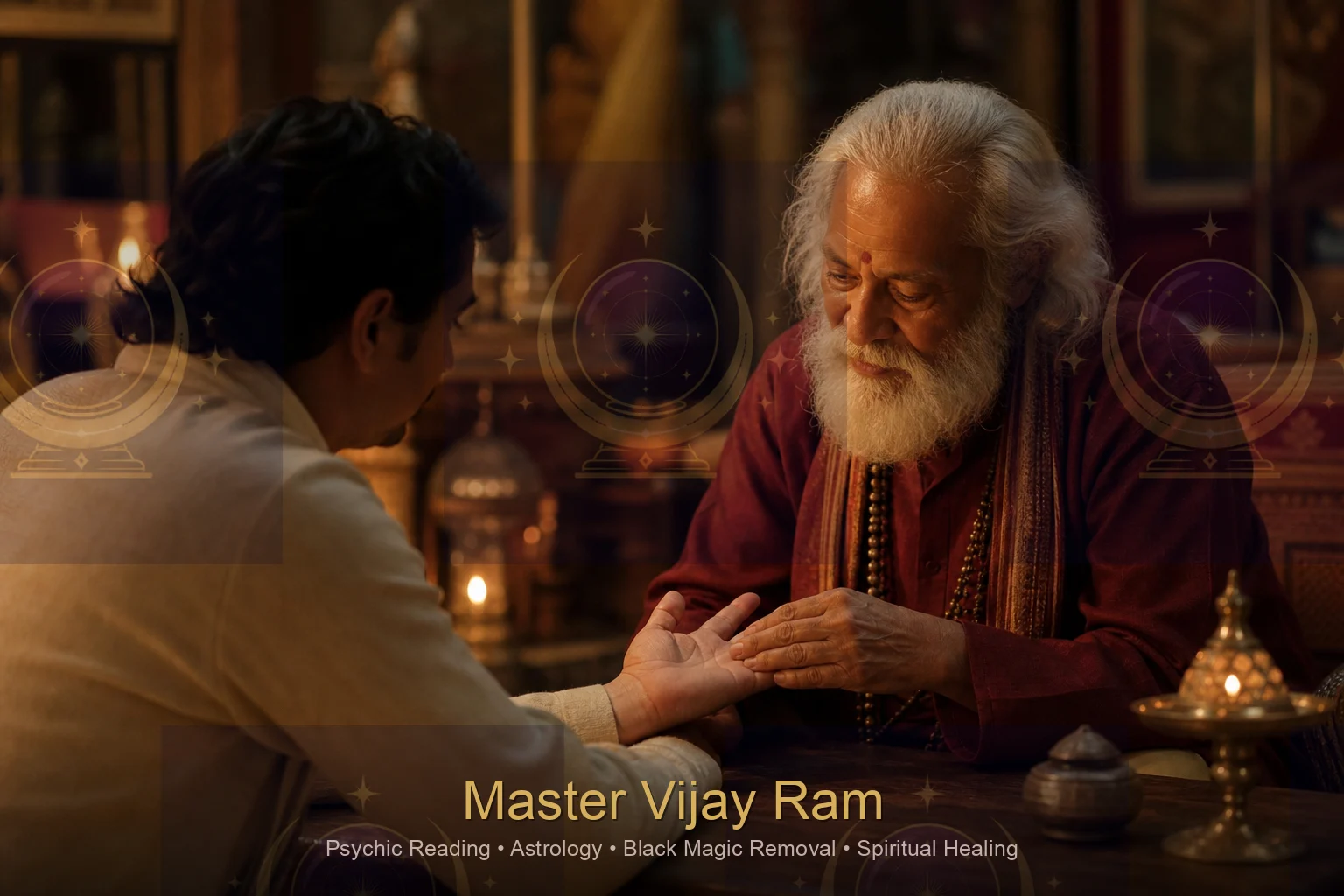
Sessions are unhurried and private. Master Vijay Ram typically looks at both hands, since the dominant hand is often read for present tendencies and the other for inherited traits or earlier life patterns. He talks through what specific lines and mounts suggest and how they relate to whatever brought you in — career uncertainty, relationship questions, or general life direction.
If you're local to the region, you can book a palm reading session in Kitchener directly, or browse the full range of spiritual and astrology services he offers if you're unsure which consultation fits your question best. Sessions are confidential, and clients of all faiths and backgrounds are welcome.
Serving nearby: Kitchener · Waterloo · Cambridge · Guelph · Brantford · London · Hamilton
Key takeaways
- Palm reading studies lines, mounts, and hand shape to reflect personality traits and life tendencies, not fixed events.
- The life, heart, head, and fate lines are the four main features examined in most palmistry traditions.
- Vedic palmistry links each mount to a planet, echoing the same framework used in Vedic astrology.
- No honest palm reader can guarantee outcomes; readings offer guidance and reflection, not certainty.
- Master Vijay Ram offers confidential palm reading sessions welcoming clients of all faiths across Kitchener, Waterloo, Cambridge, Guelph, and Brantford.
In closing
Your palms won't hand you certainty, but a thoughtful reading can offer clarity, self-understanding, and a sense of direction when you need it most. If you're curious what your hands might reveal, Master Vijay Ram welcomes you to book a private, confidential consultation and ask your questions openly, without judgment or pressure.