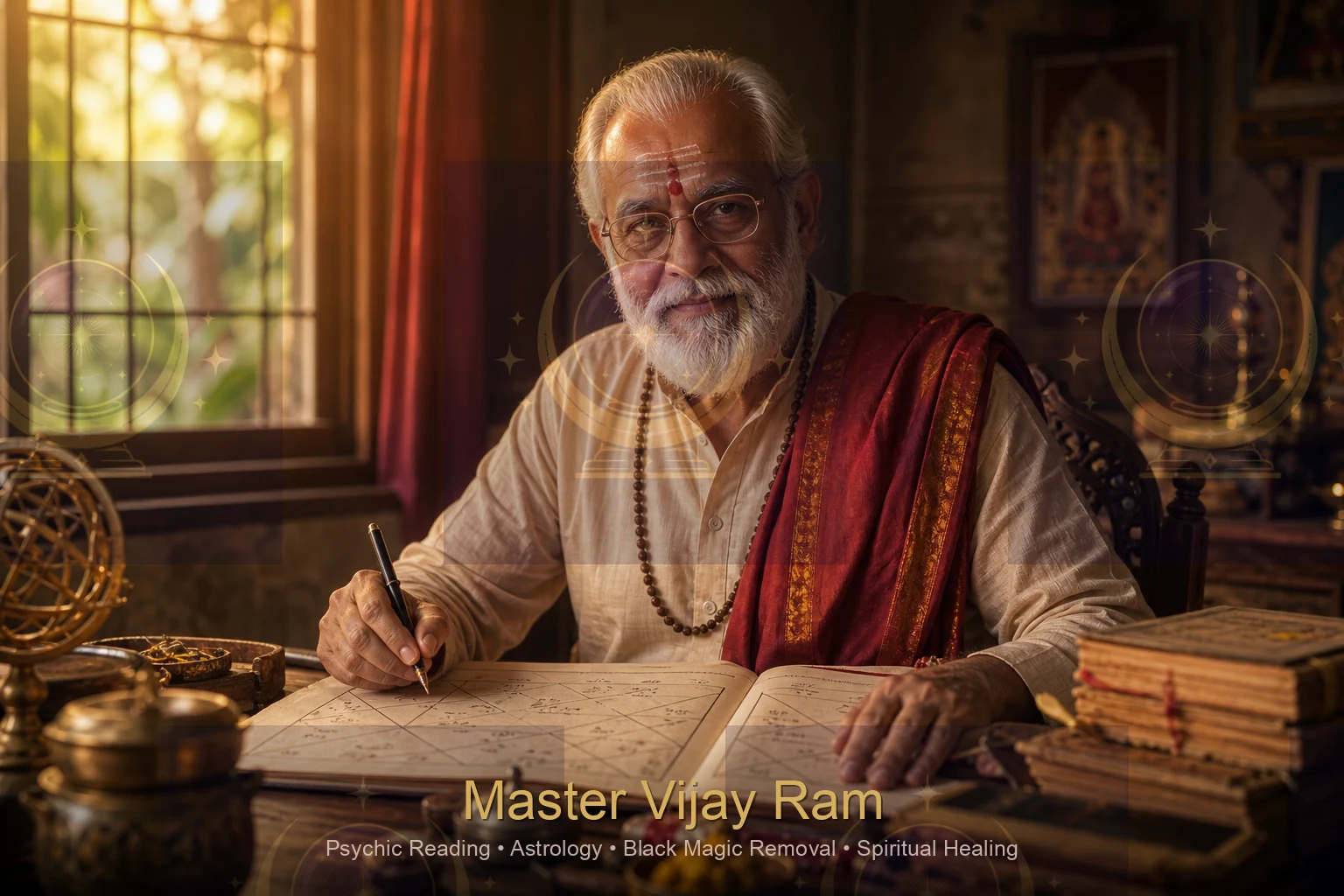
"Fortune teller" is one of those phrases people use without ever quite defining it. It carries a fairground image — a curtained booth, a shawl, a dramatic pronouncement — that has almost nothing to do with what actually happens when someone sits down with a practitioner. If you have typed the phrase into a search bar and felt slightly foolish doing it, this article is an attempt to explain what the work really consists of, in plain terms, from someone who has done it for over forty years.
The phrase covers several quite different practices
Fortune telling is an umbrella term, not a single method. In practice it usually means astrology, palmistry or intuitive reading — and those three work in very different ways.
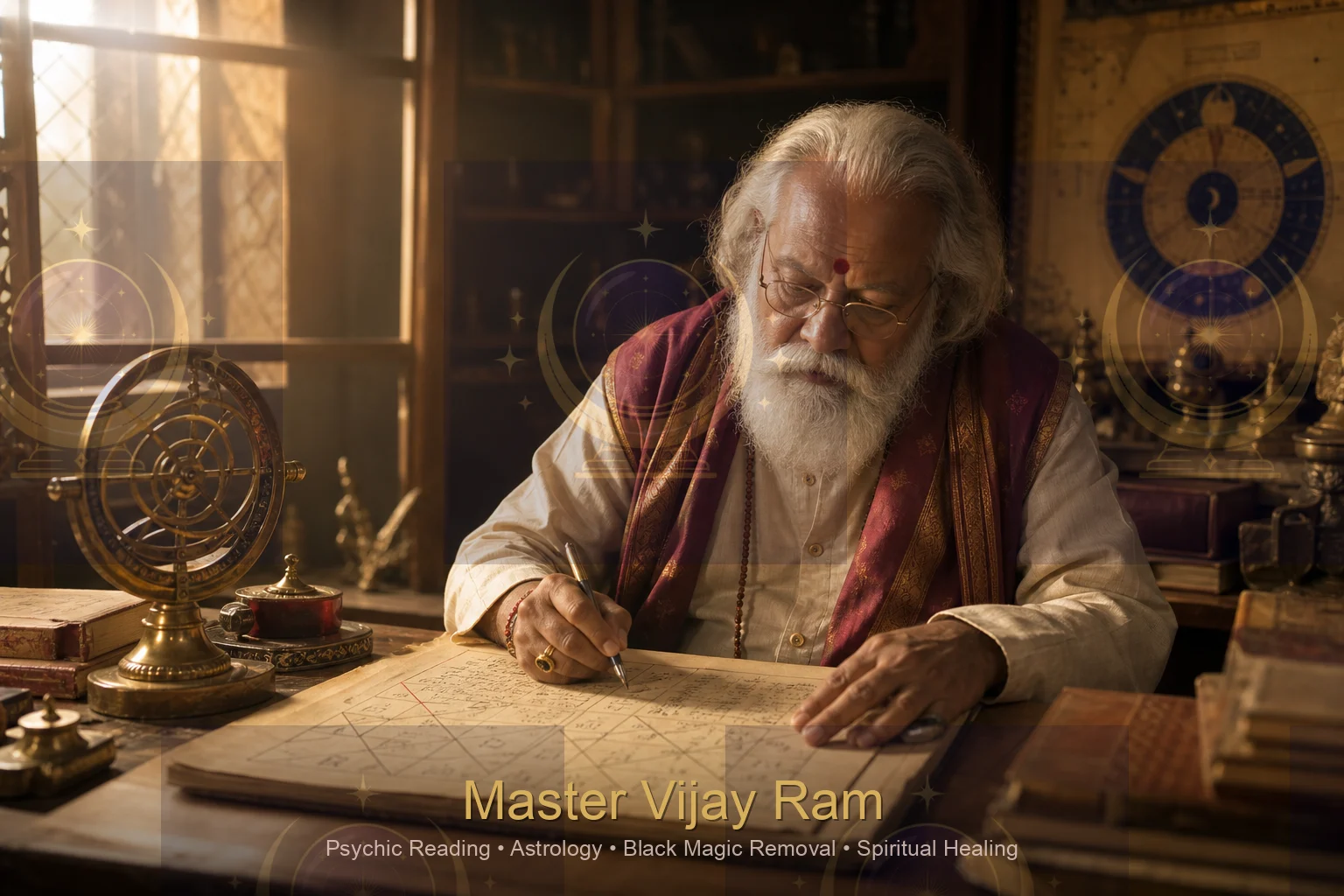
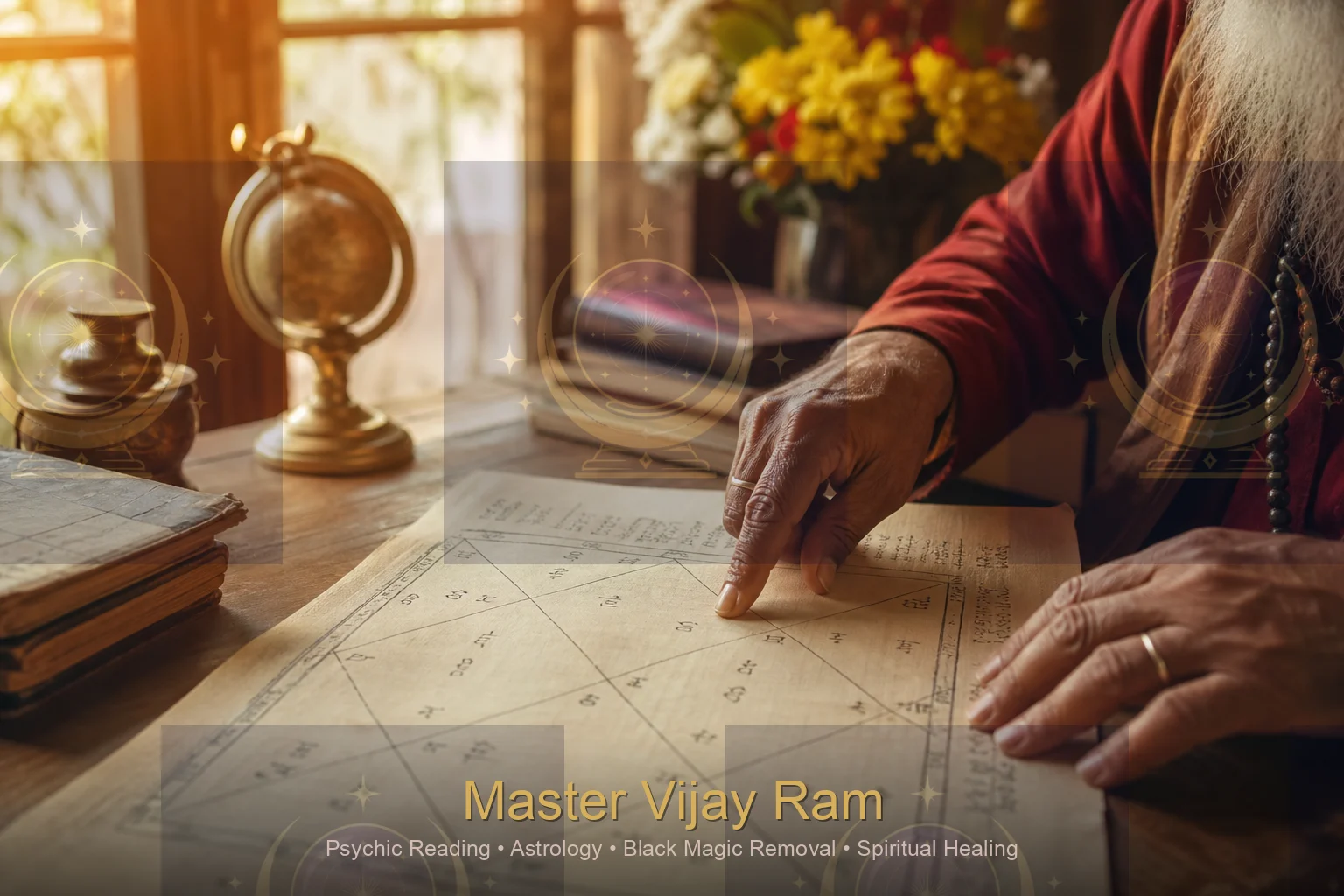
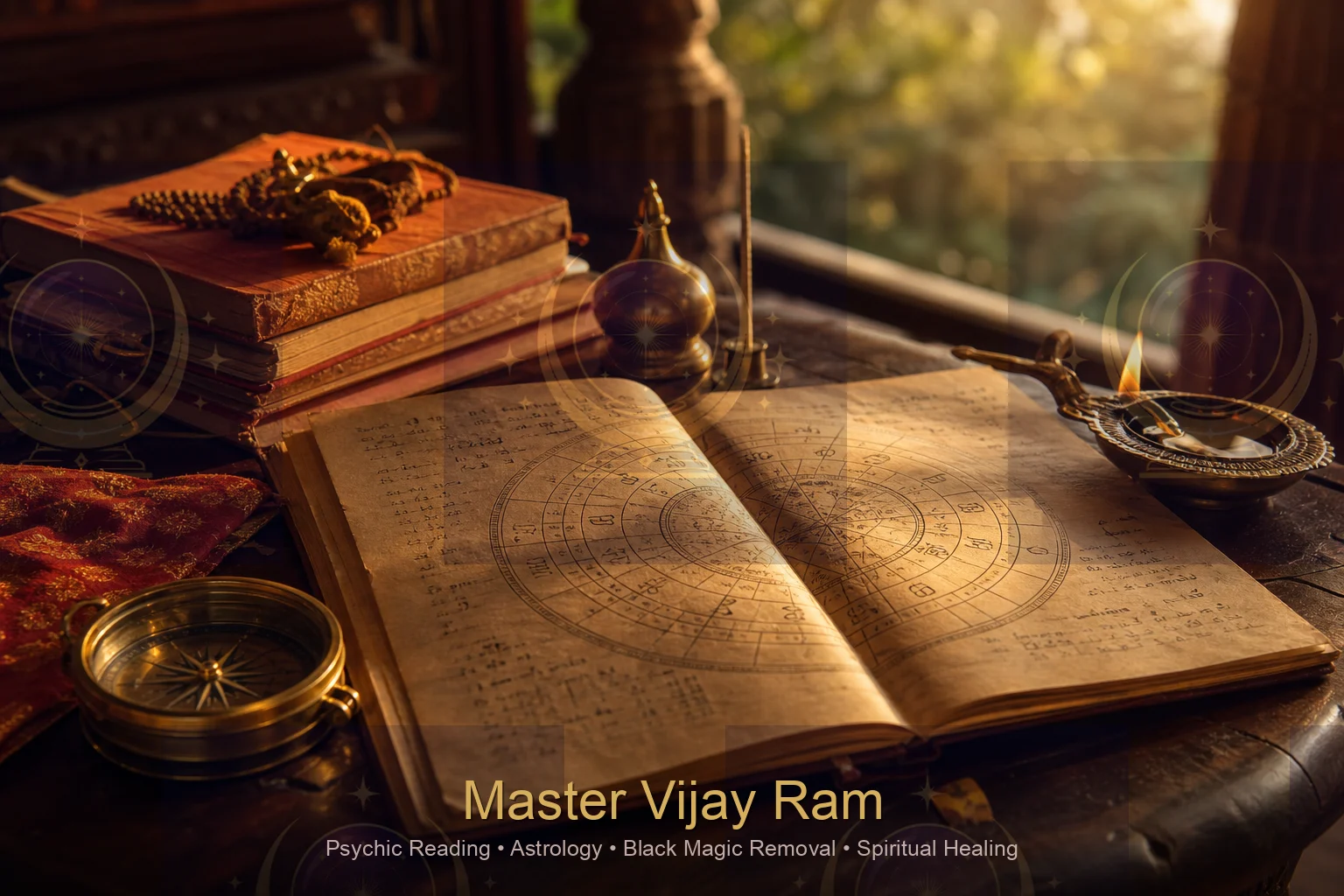
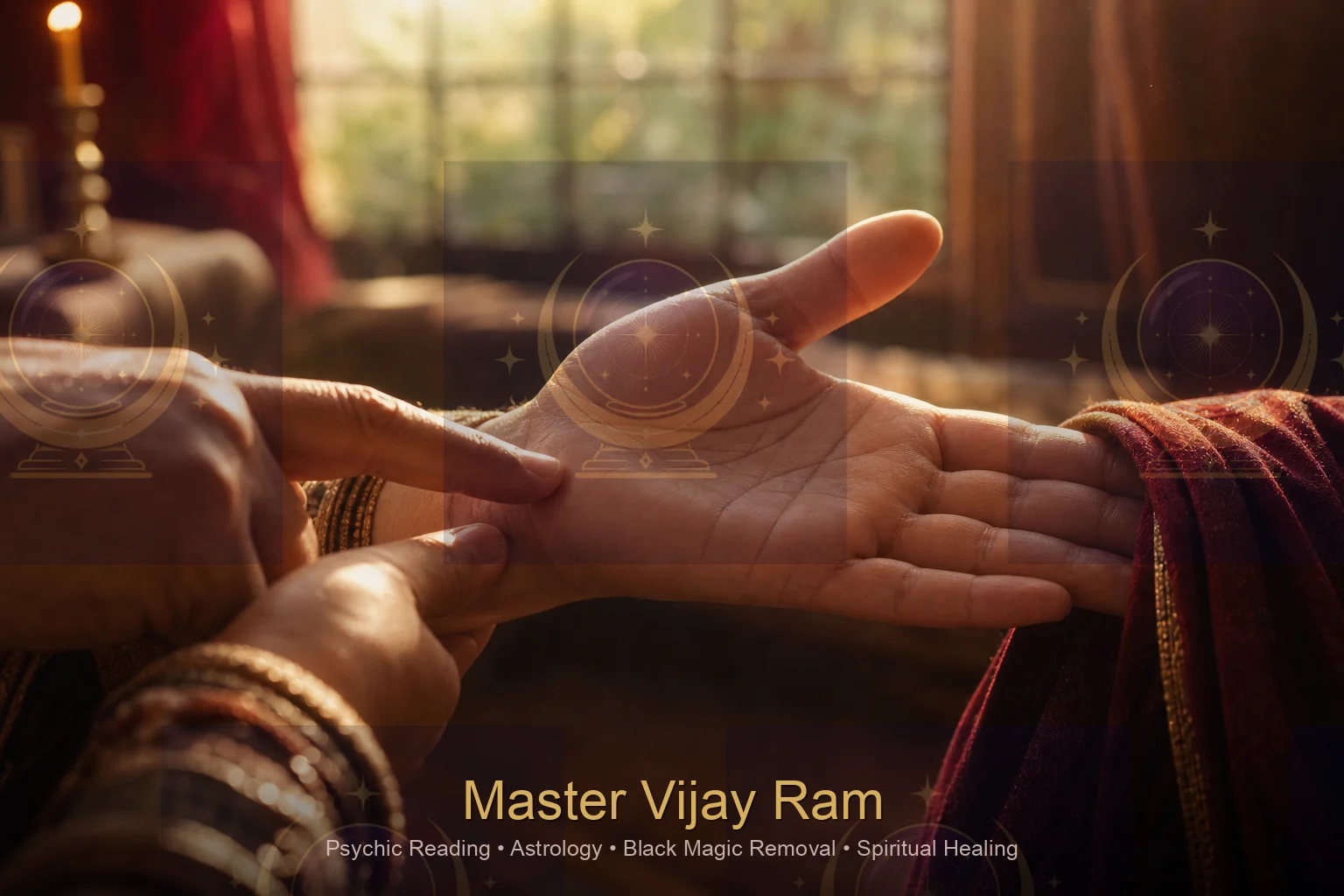
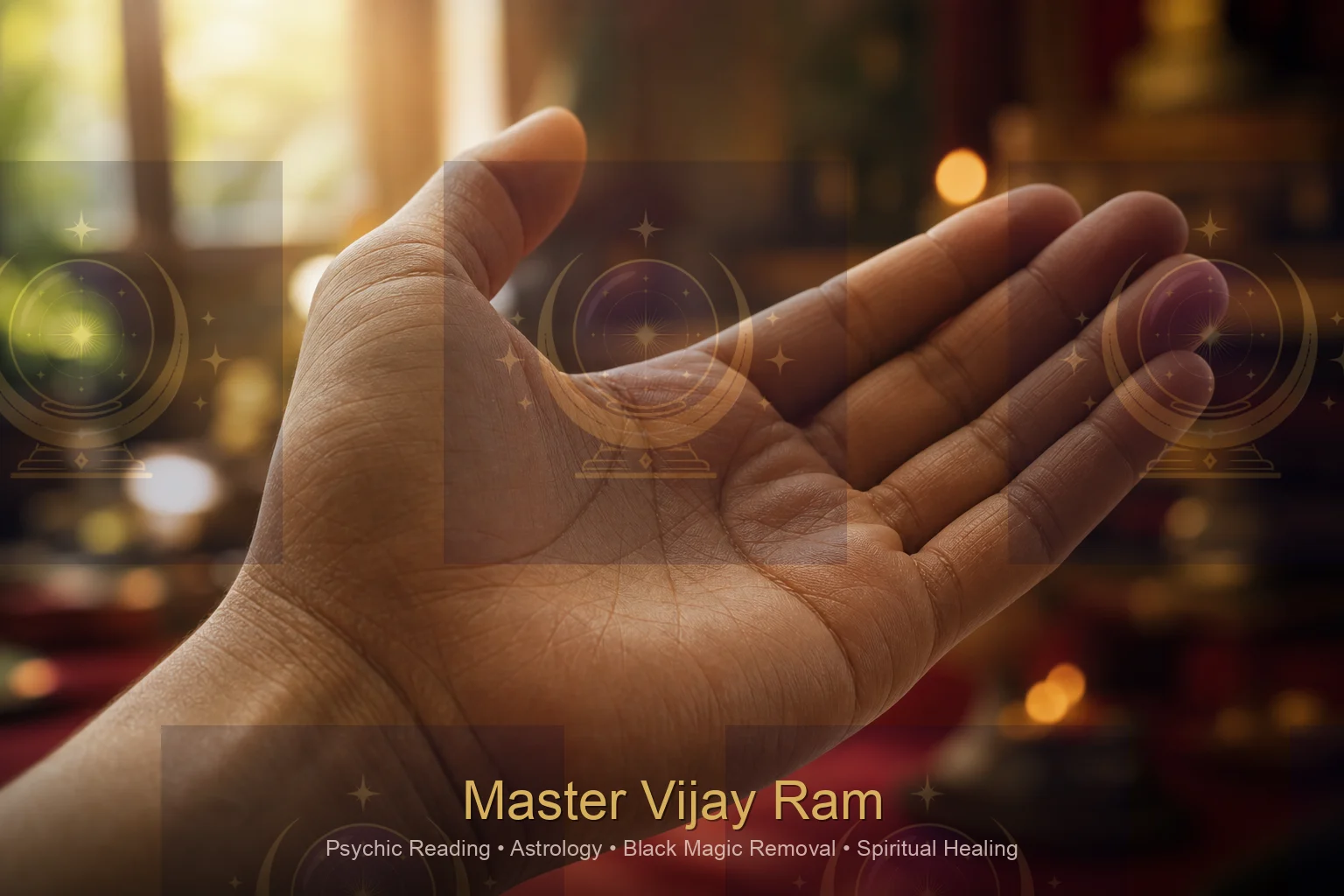
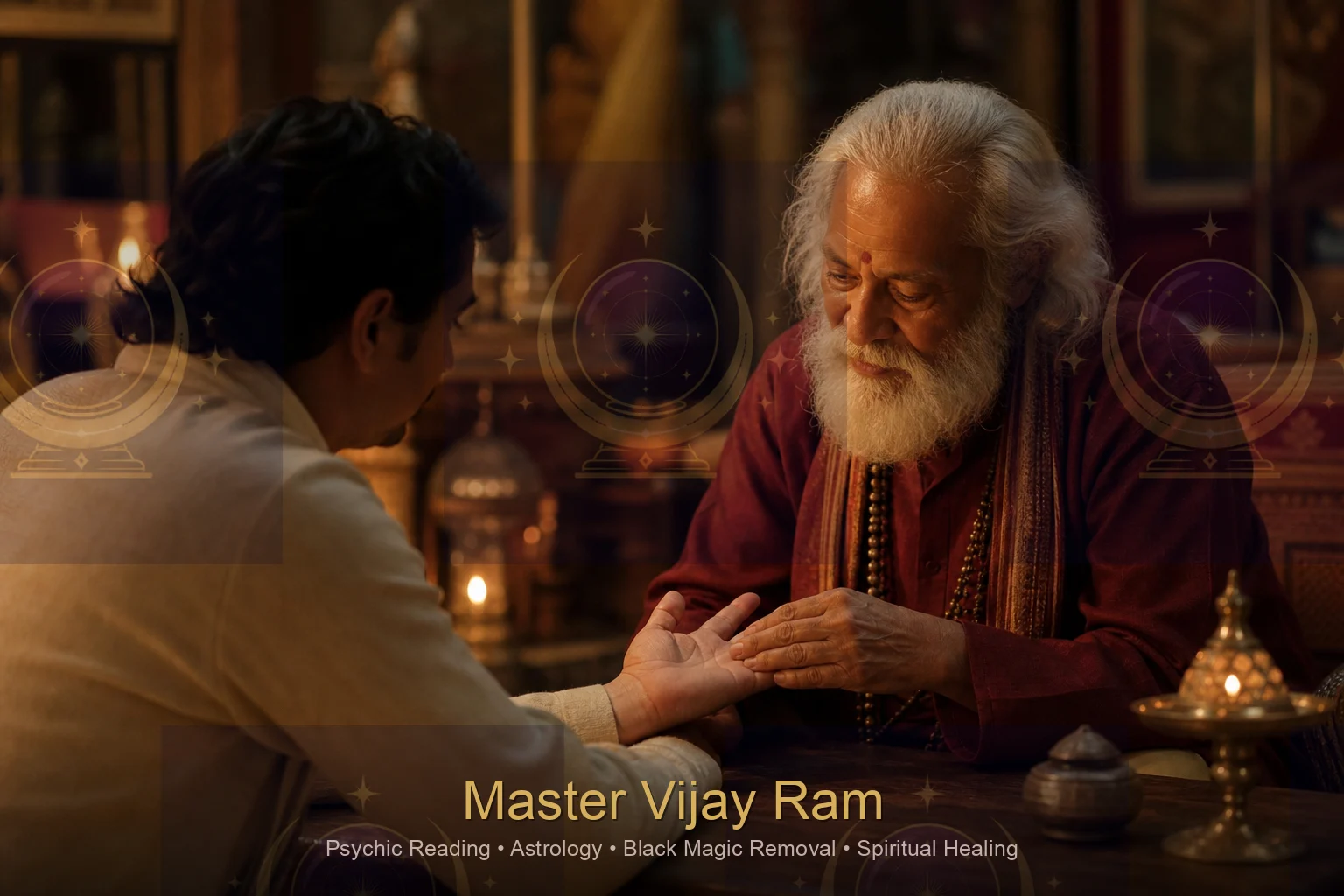
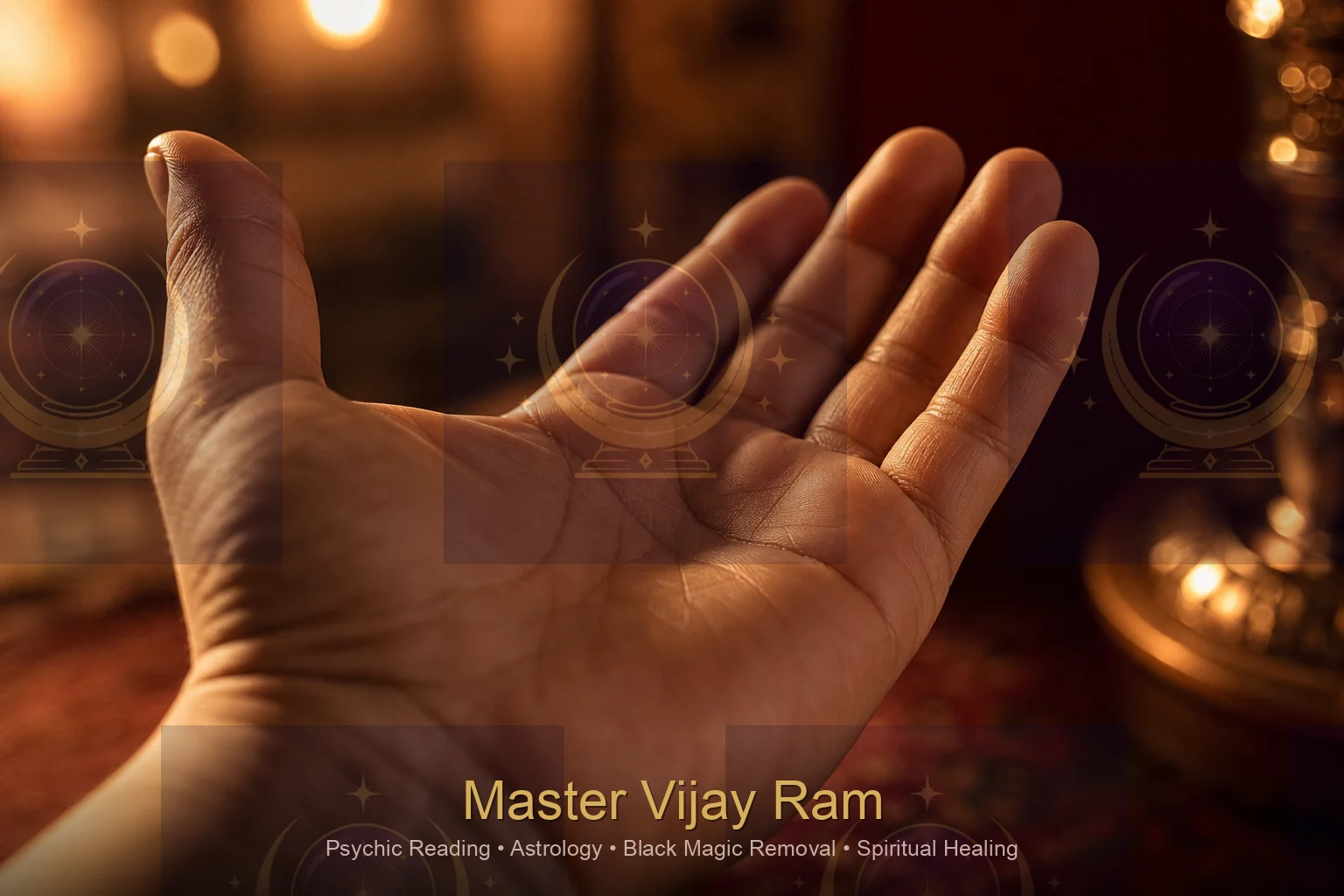
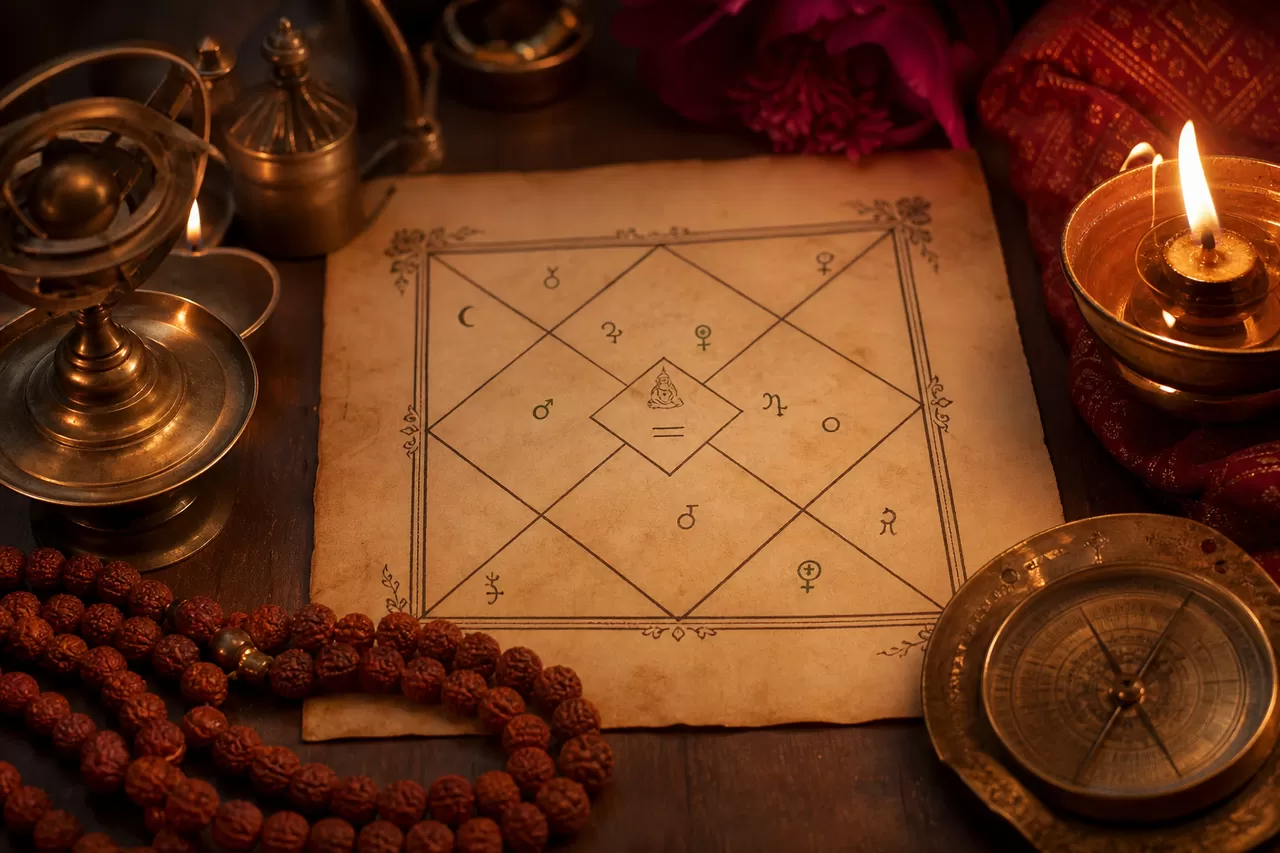
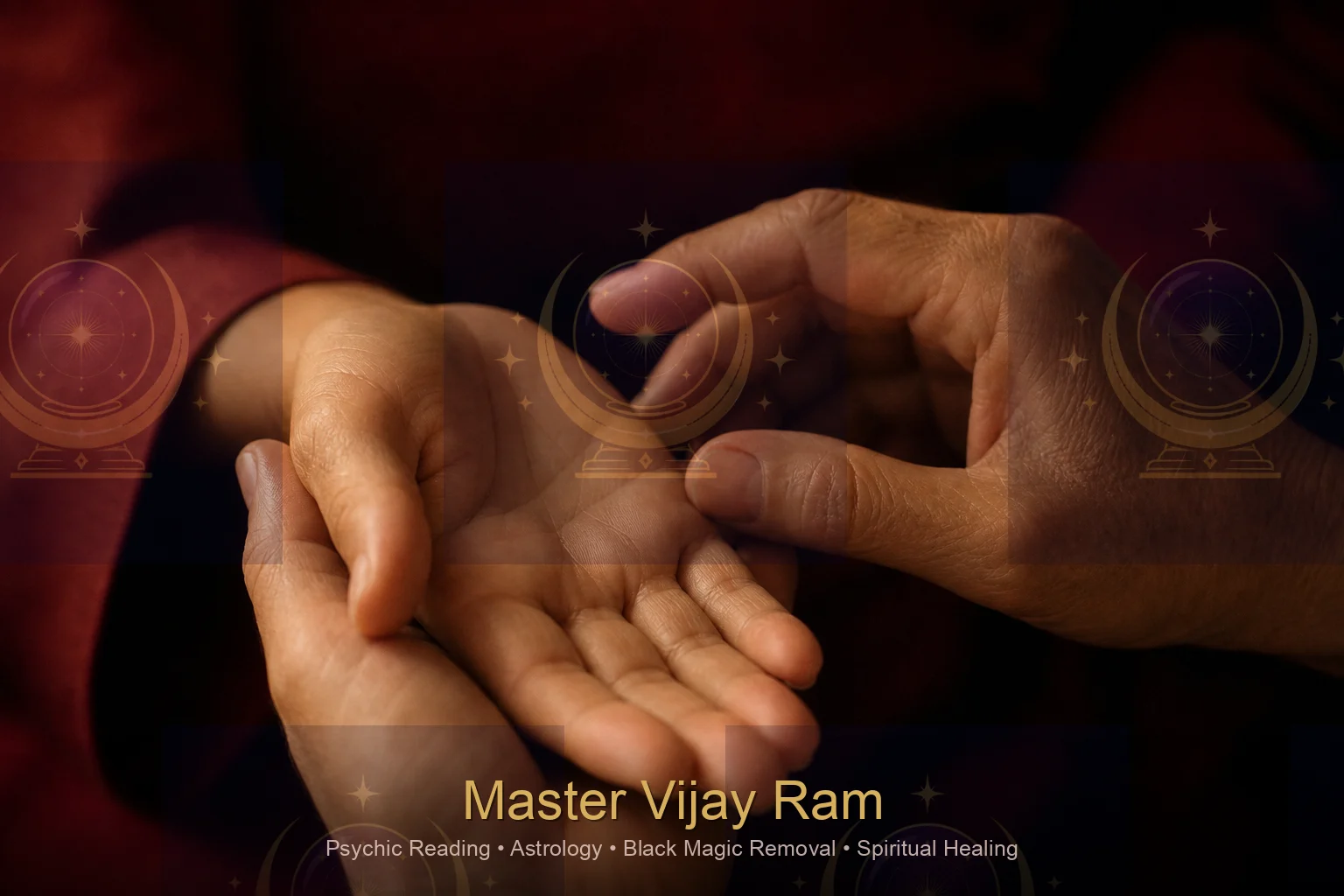
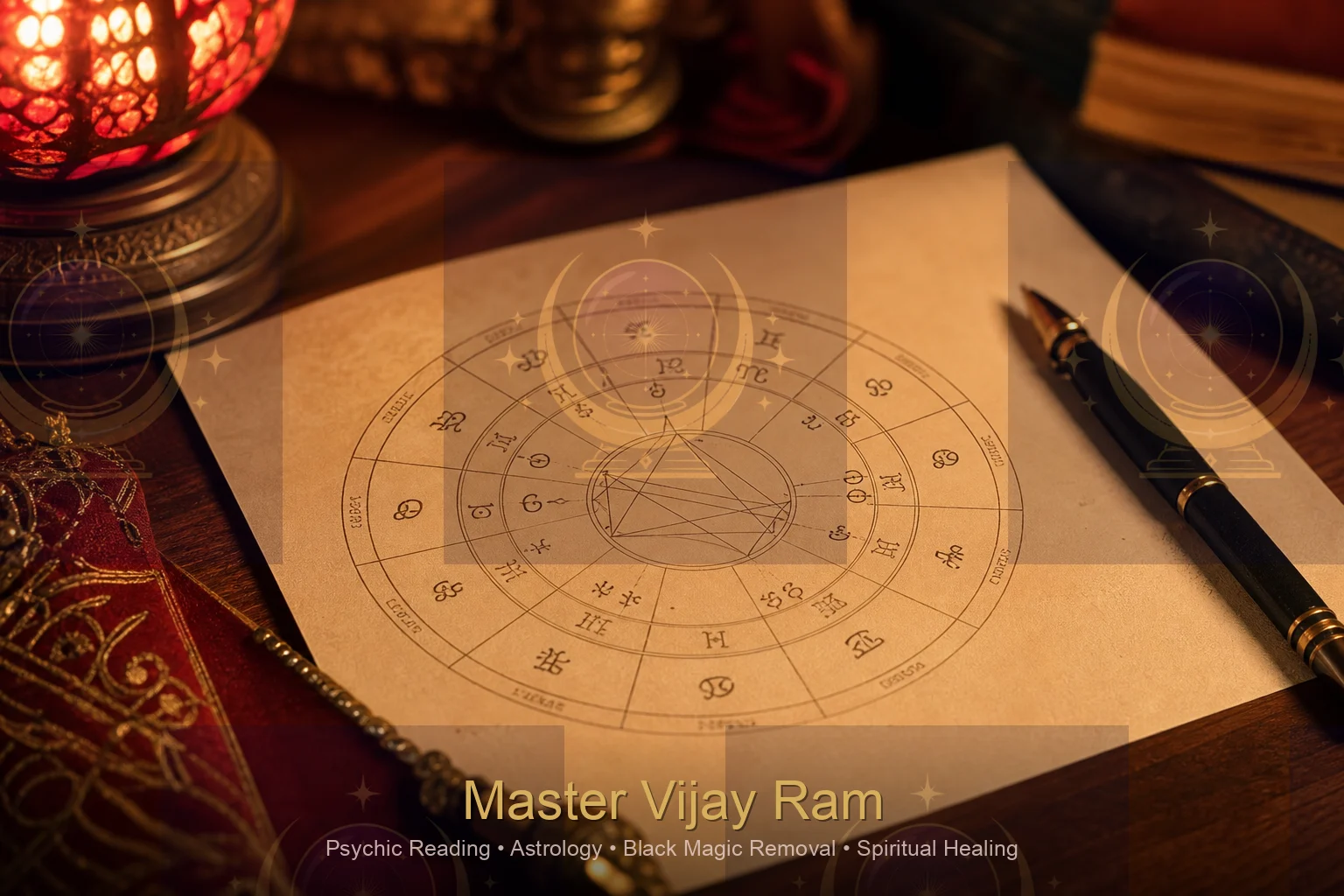
The first thing worth untangling is that fortune telling is not one practice. It is a general word covering several traditions that happen to share a purpose. A Vedic astrologer works from a birth chart calculated for your exact time and place of birth. A palmist reads the lines, mounts and shape of the hand. An intuitive reader works largely from impression. Each has its own training, its own logic and its own limits.
That matters when you are choosing who to see. Asking "can you tell my fortune?" is a bit like asking a medical practice "can you treat me?" — the answer depends entirely on what is actually wrong and who is in the room. If your question concerns timing, a chart is the right tool. If you have no reliable birth time, palmistry may serve you better.
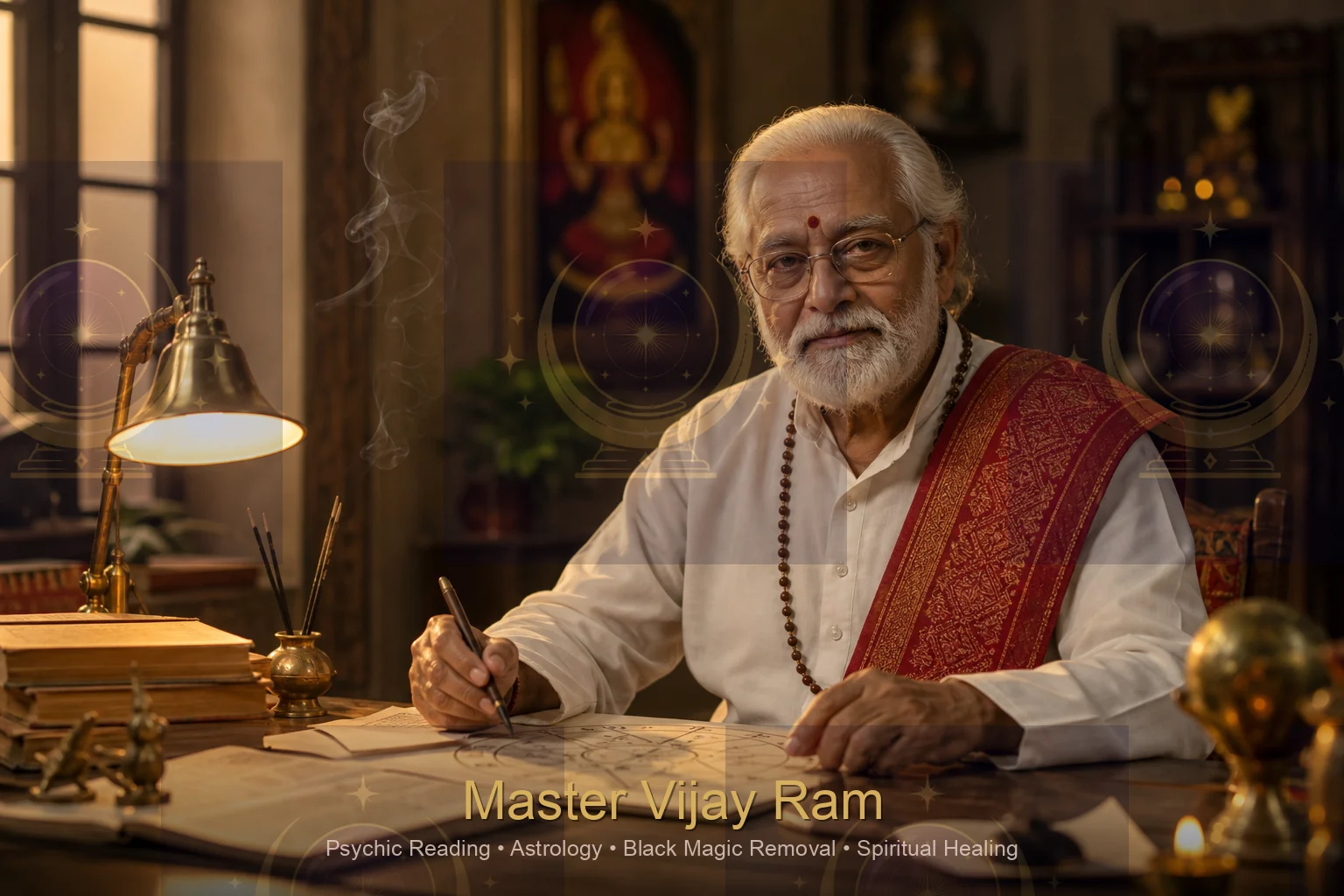
It is also worth saying which practices are not offered here, because people ask. Master Vijay Ram does not read cards, does not claim contact with those who have passed, and does not use a crystal ball. His practice is Vedic astrology, palmistry and intuitive guidance. Where a practitioner offers everything on the list, that is usually a sign the list is the product rather than the practice.
What a session actually looks like
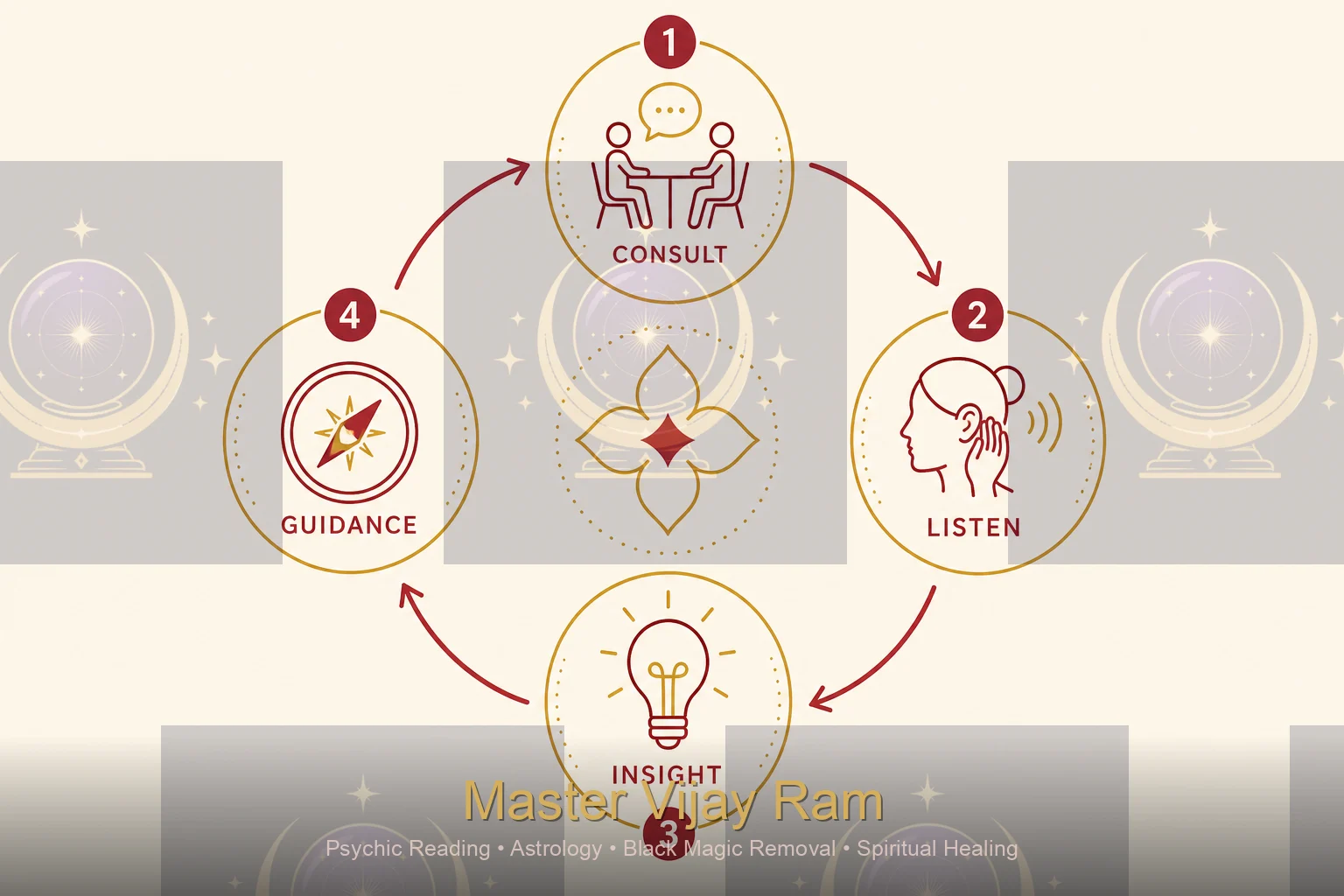
Most of a session is conversation. You describe the situation, the practitioner reads the relevant system against it, and you talk through what it suggests.
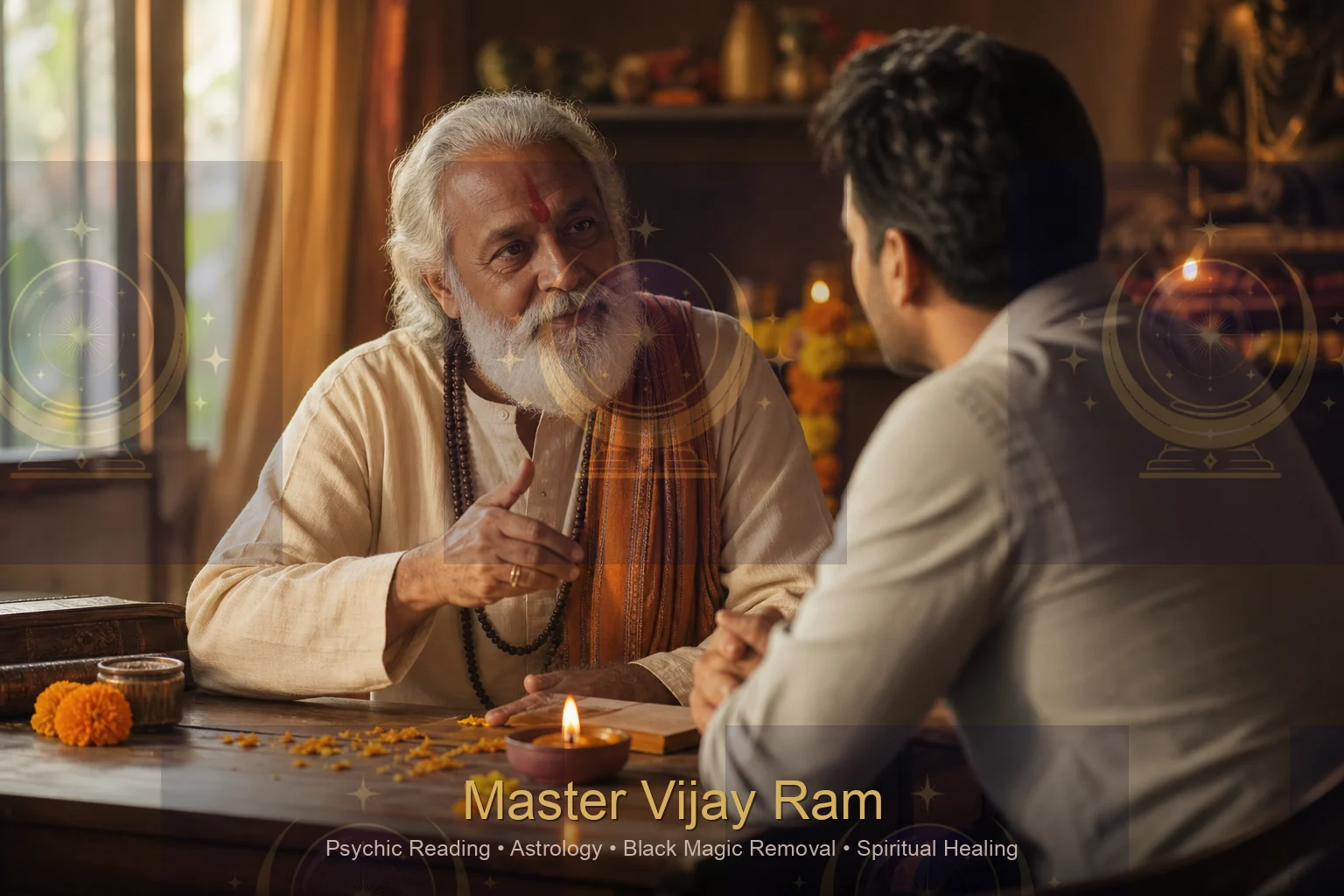
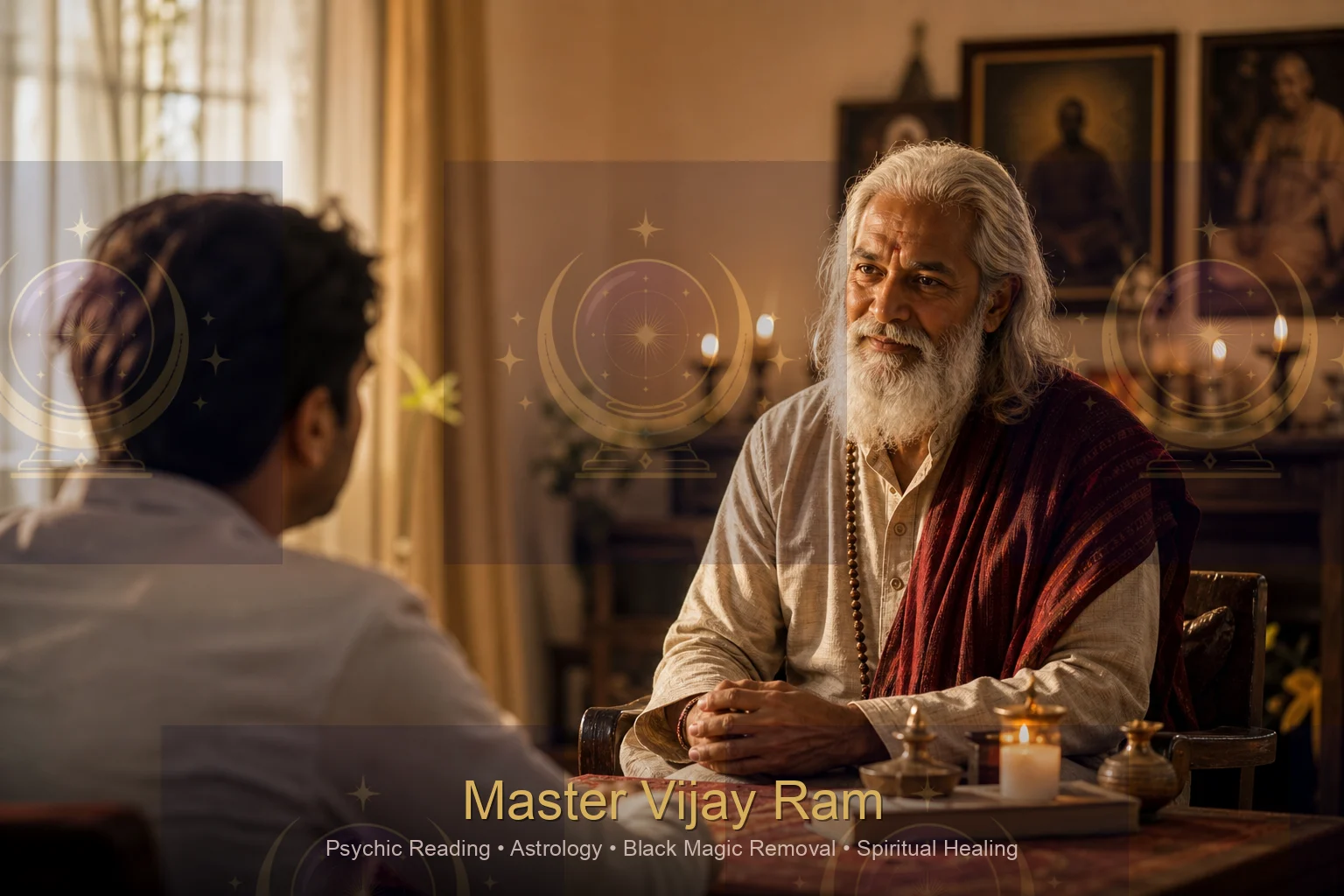
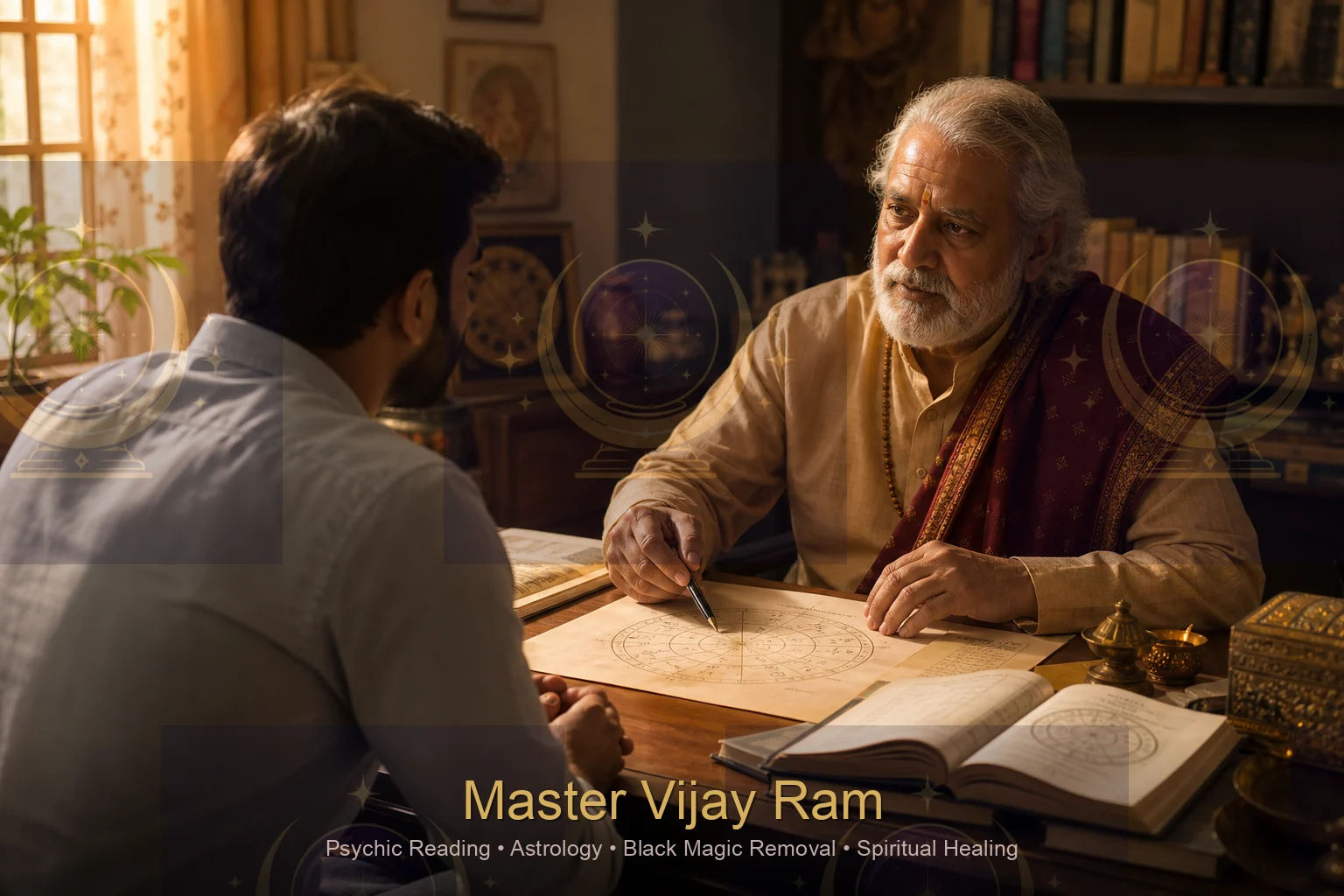
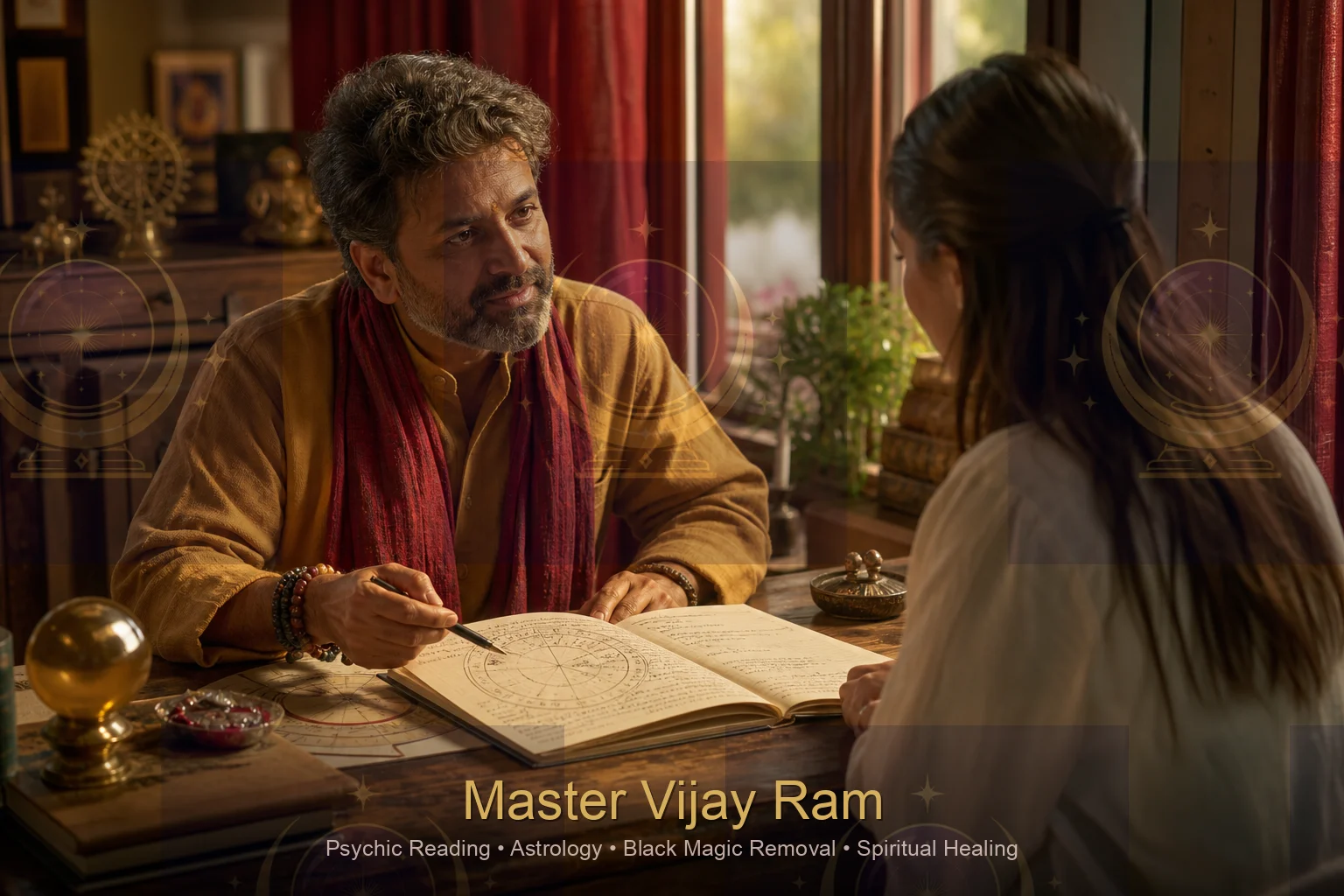
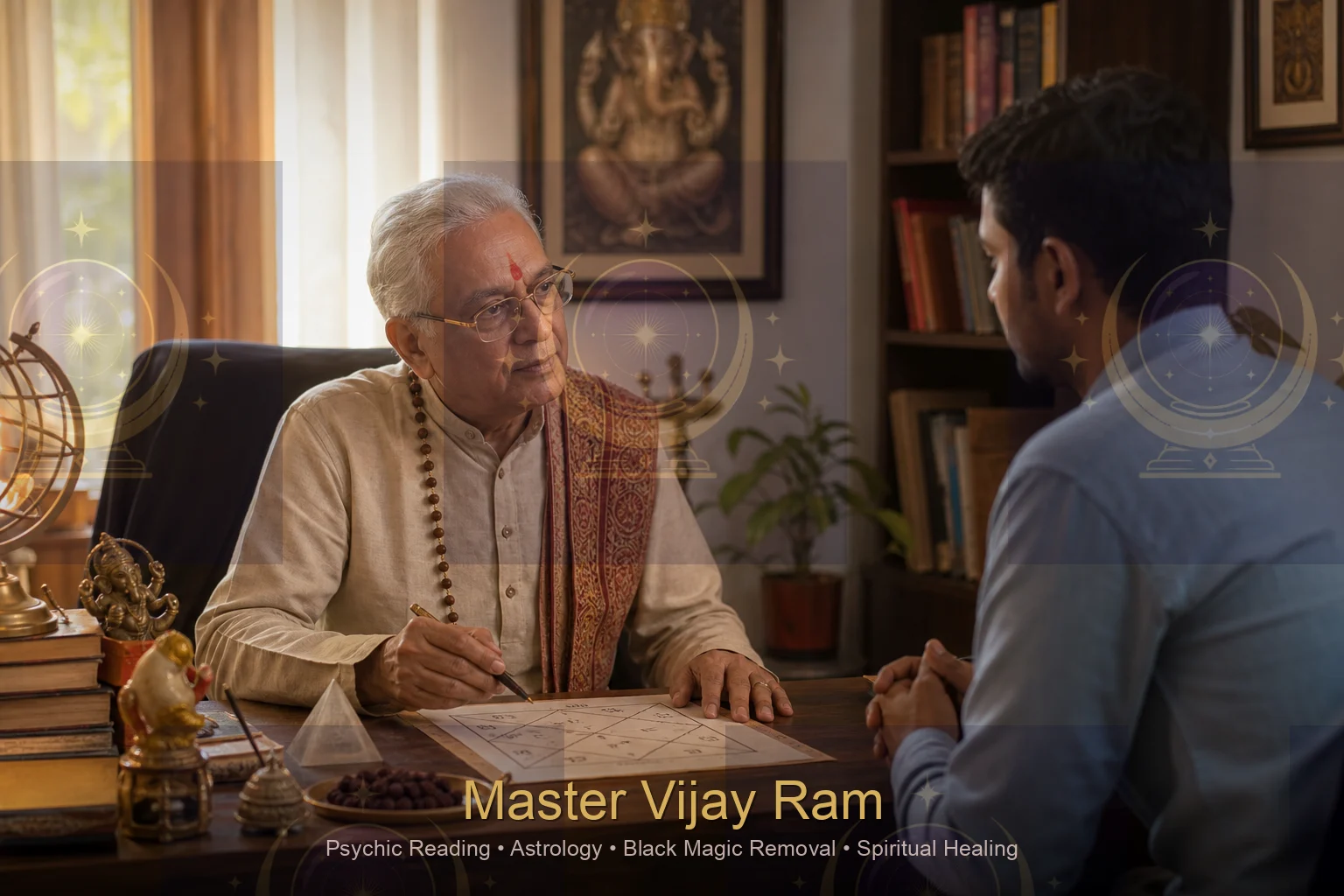
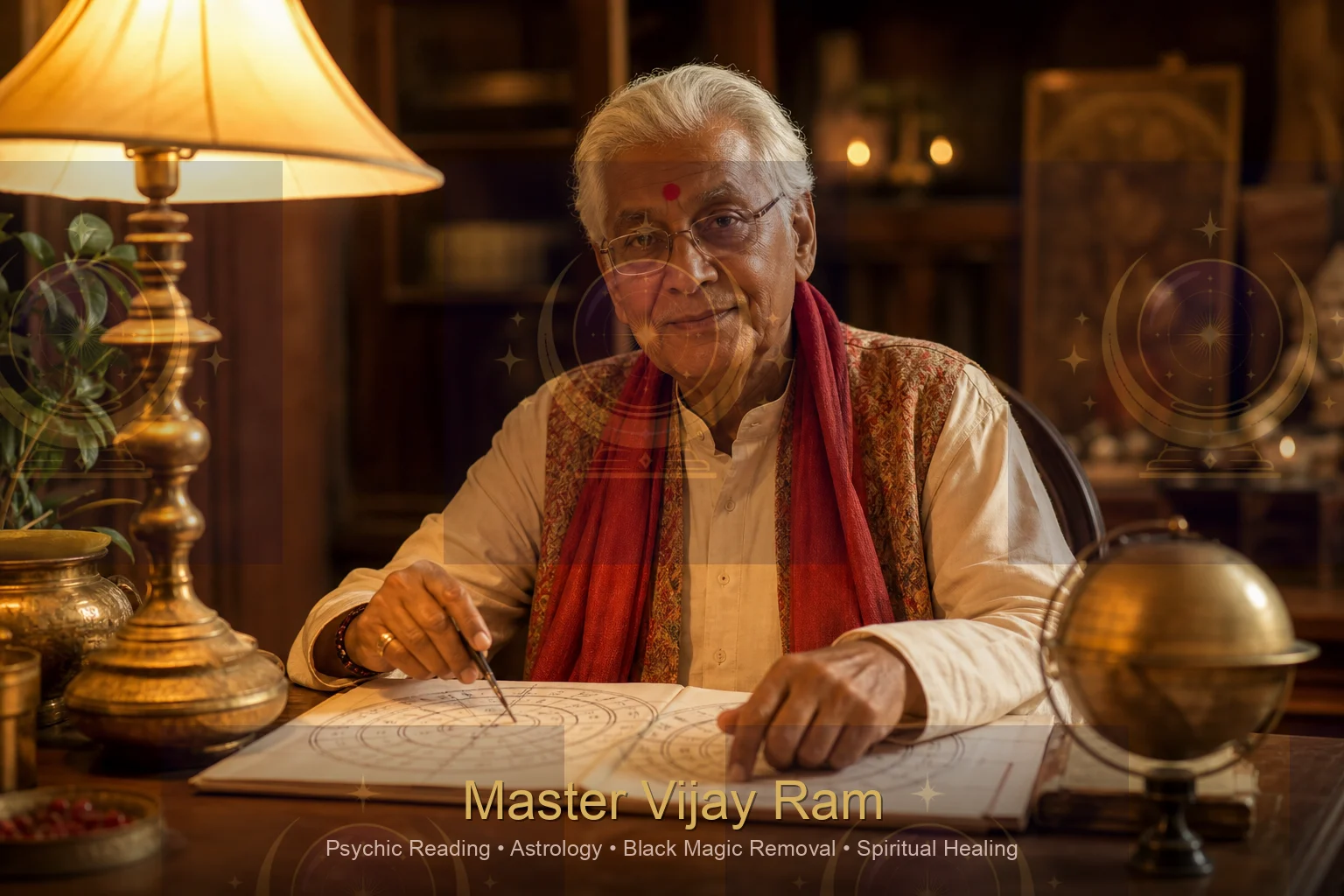
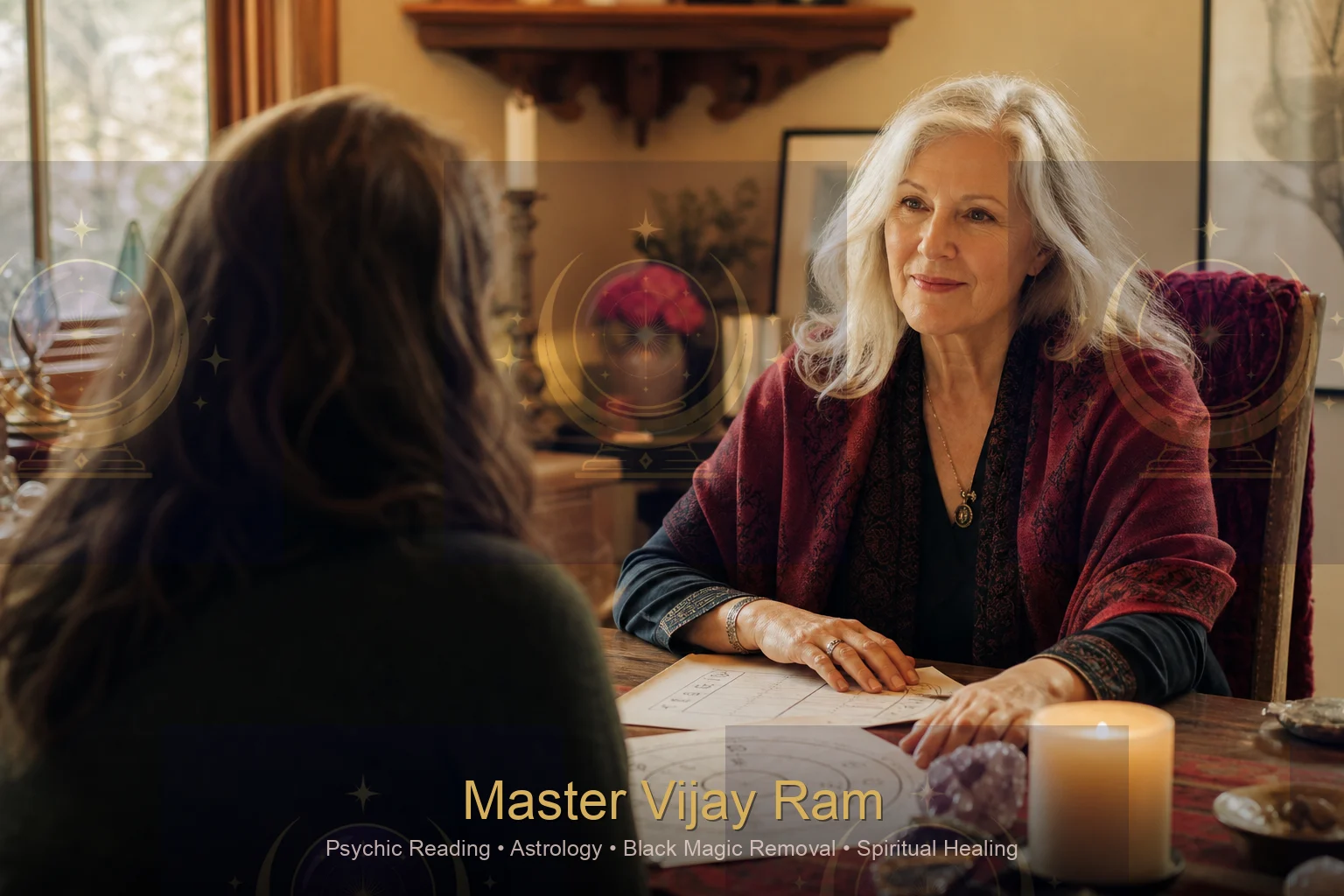
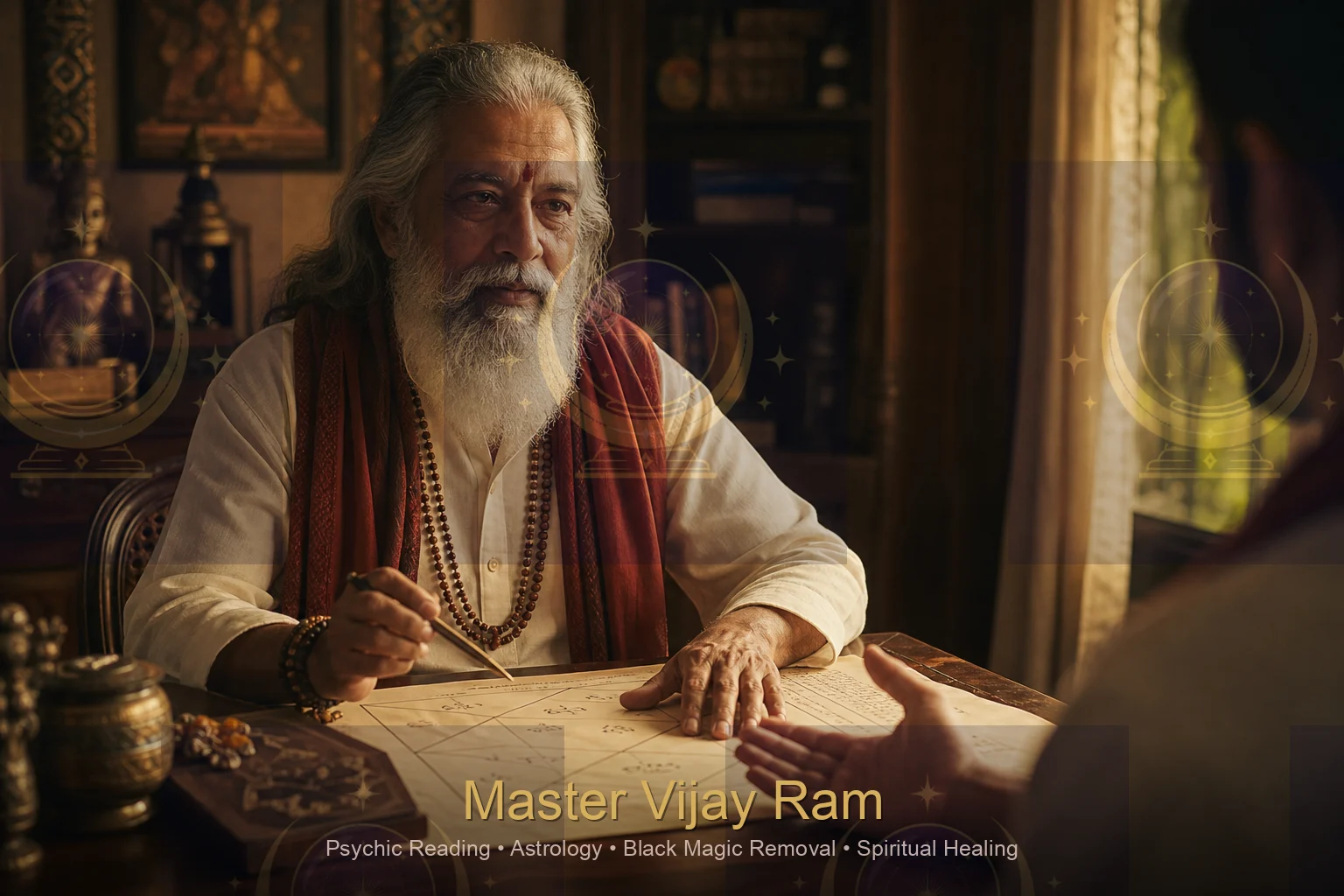
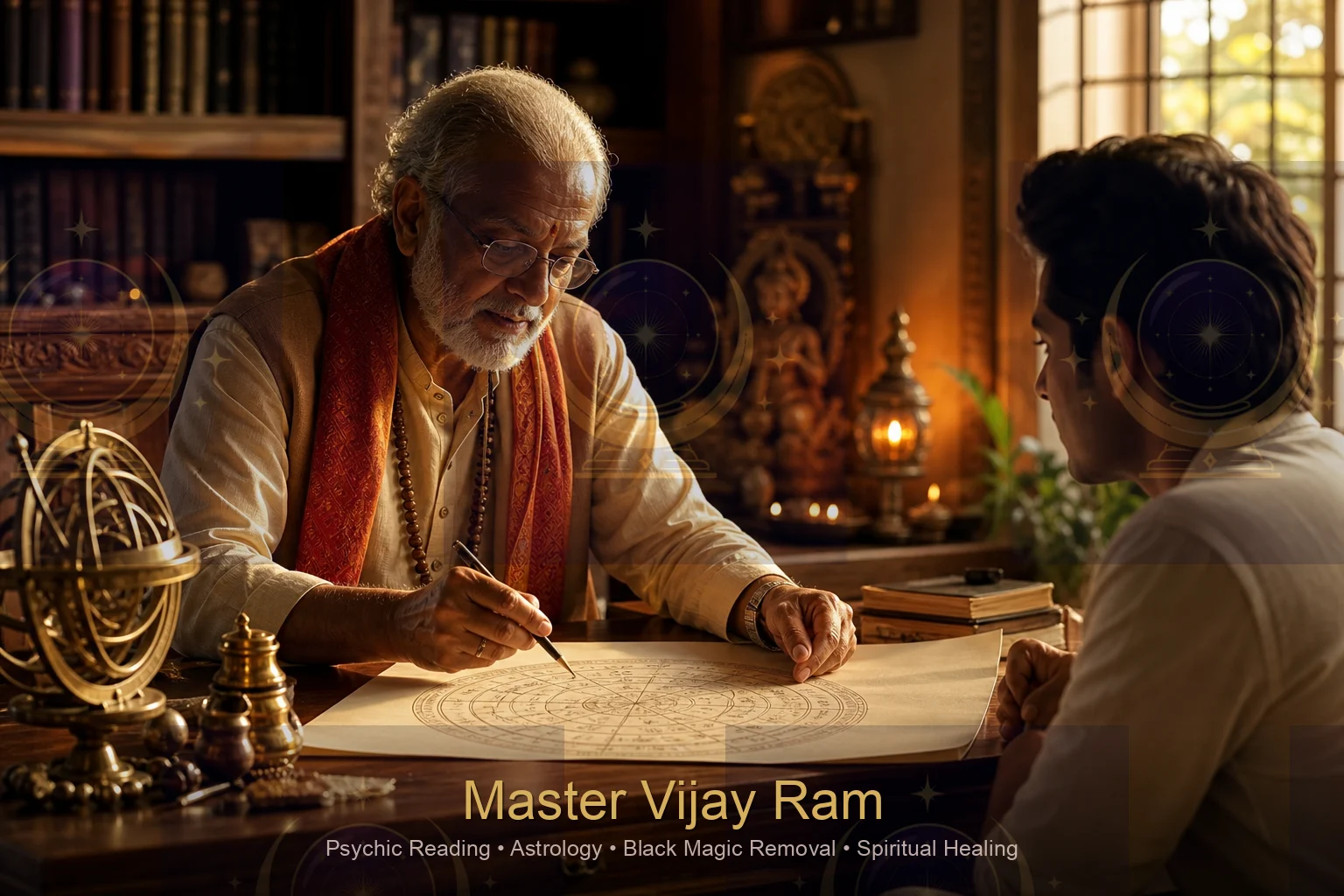
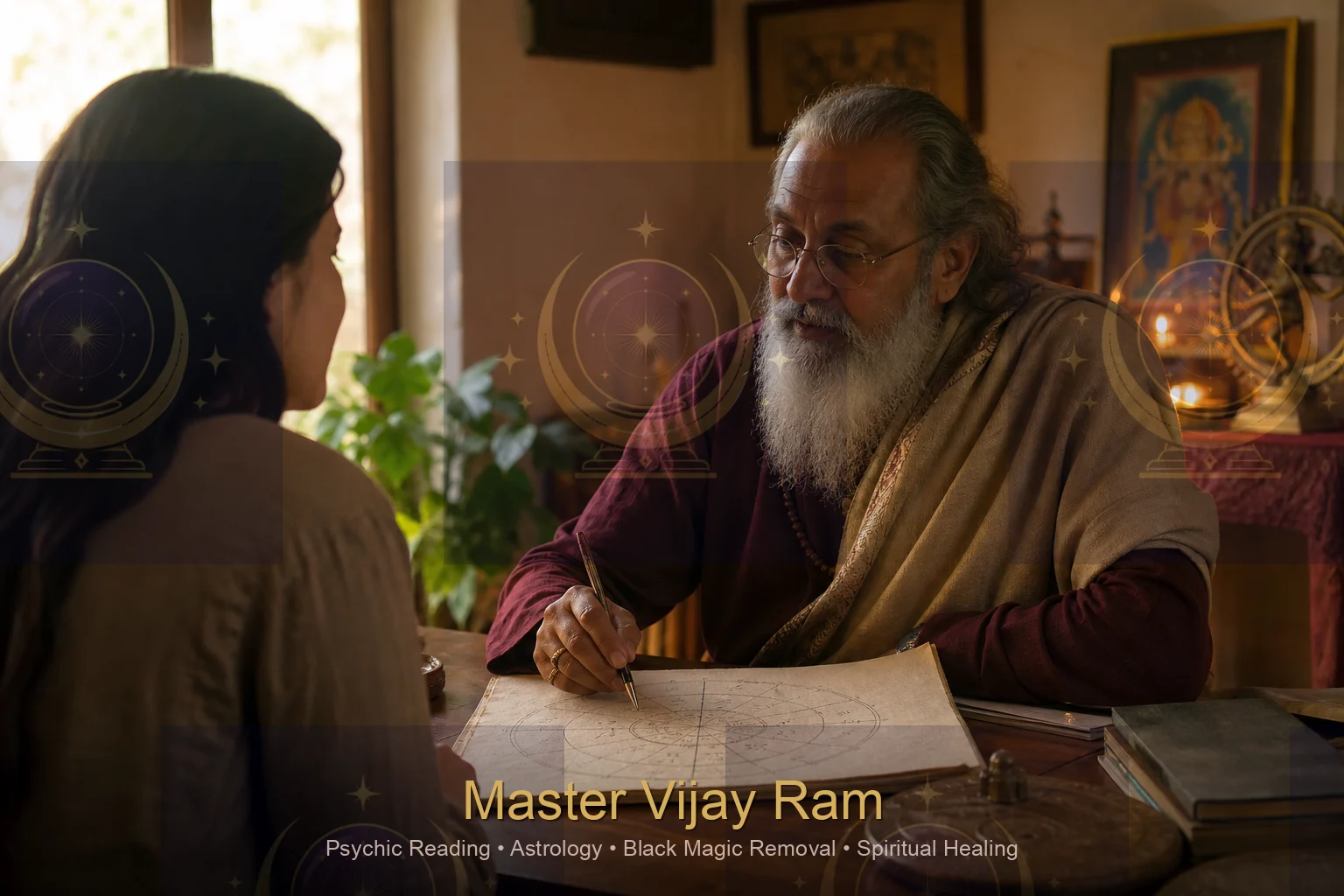
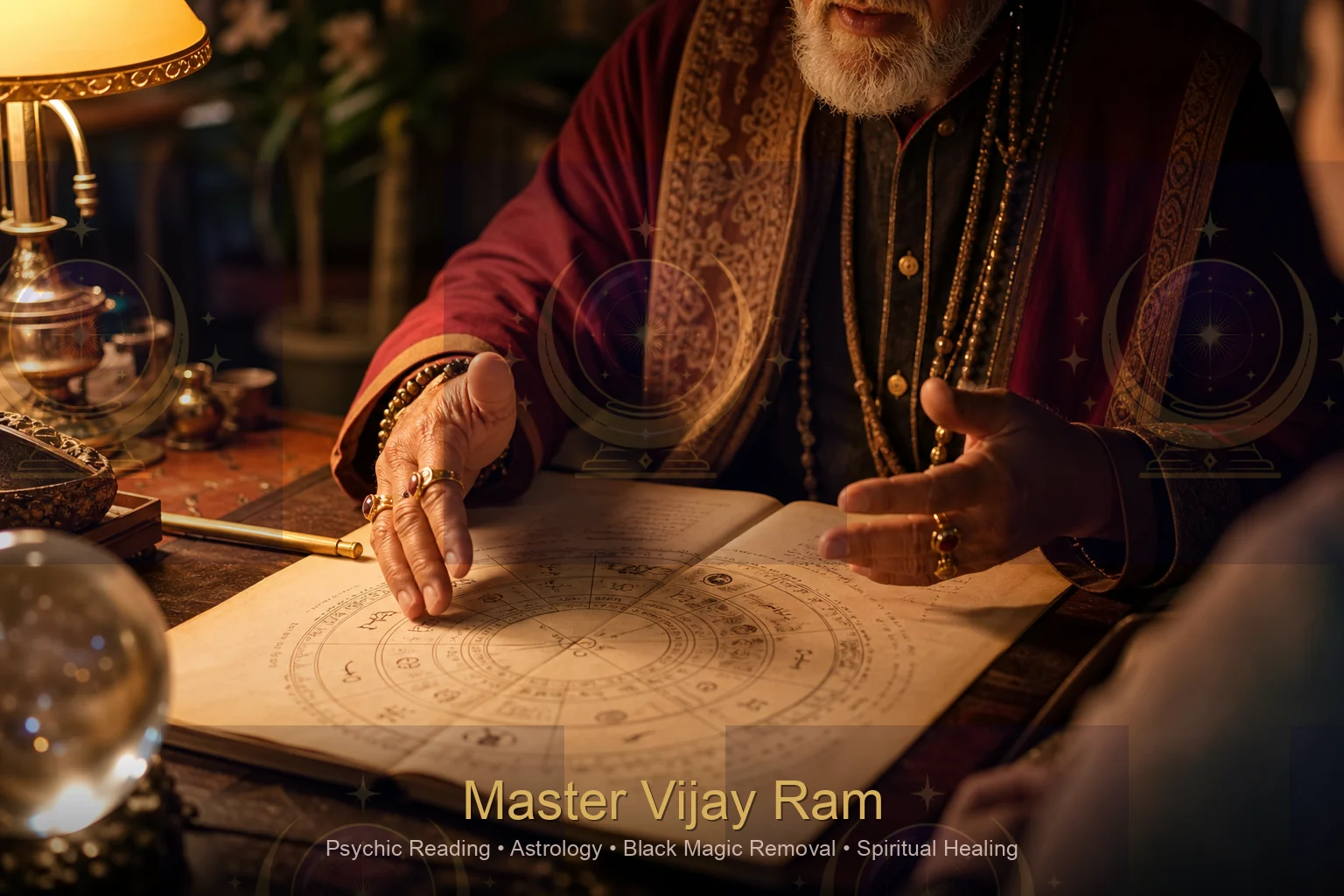
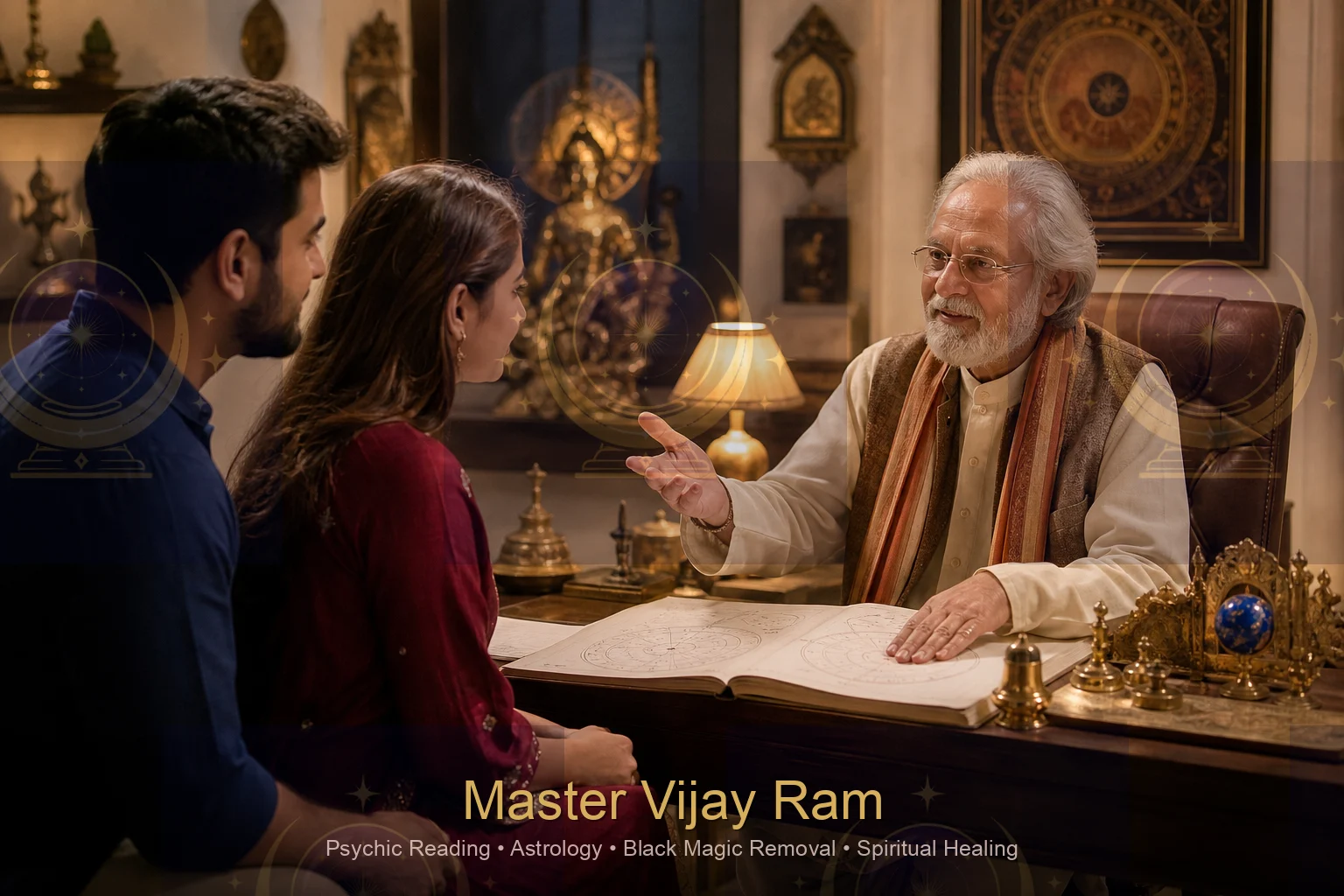
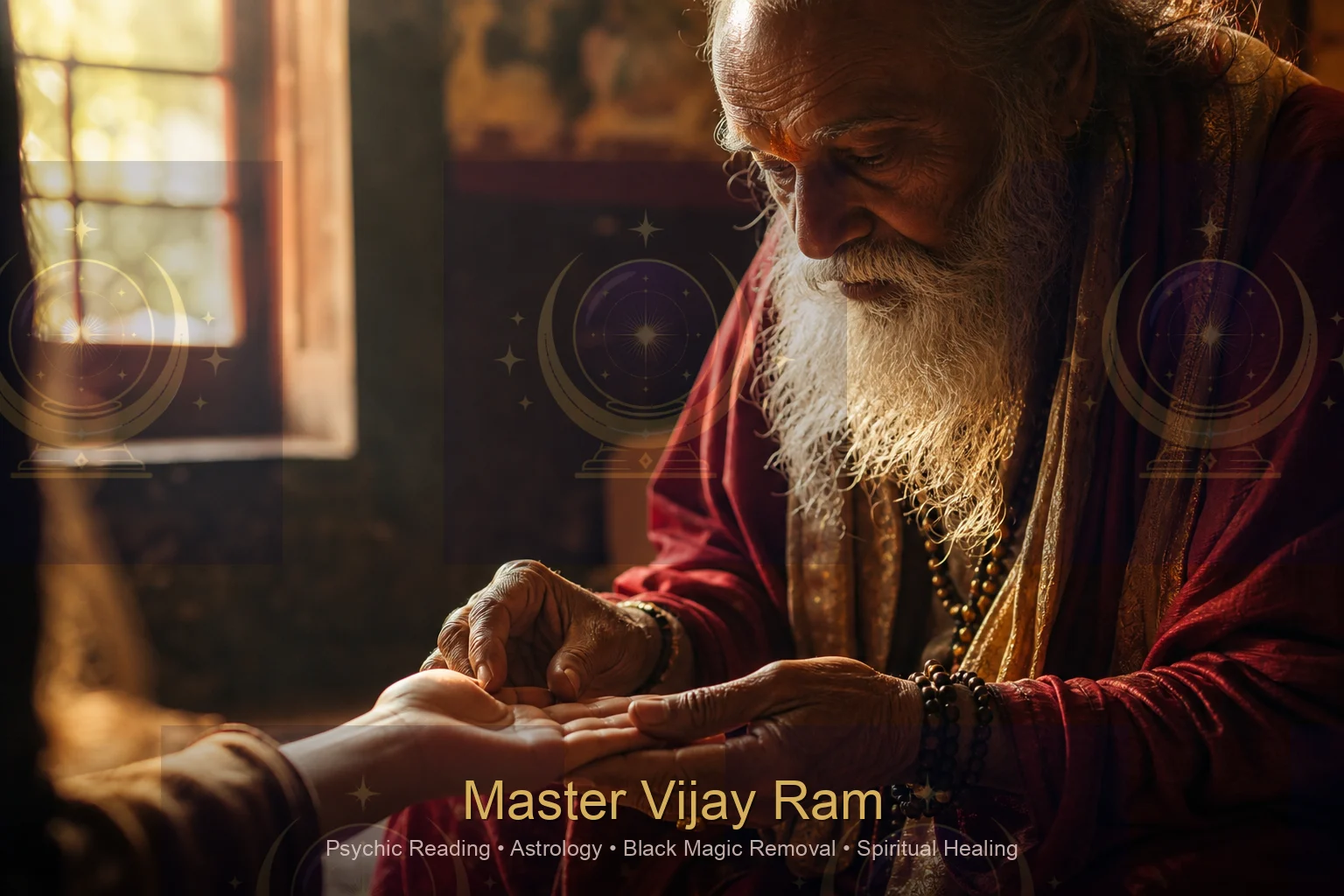
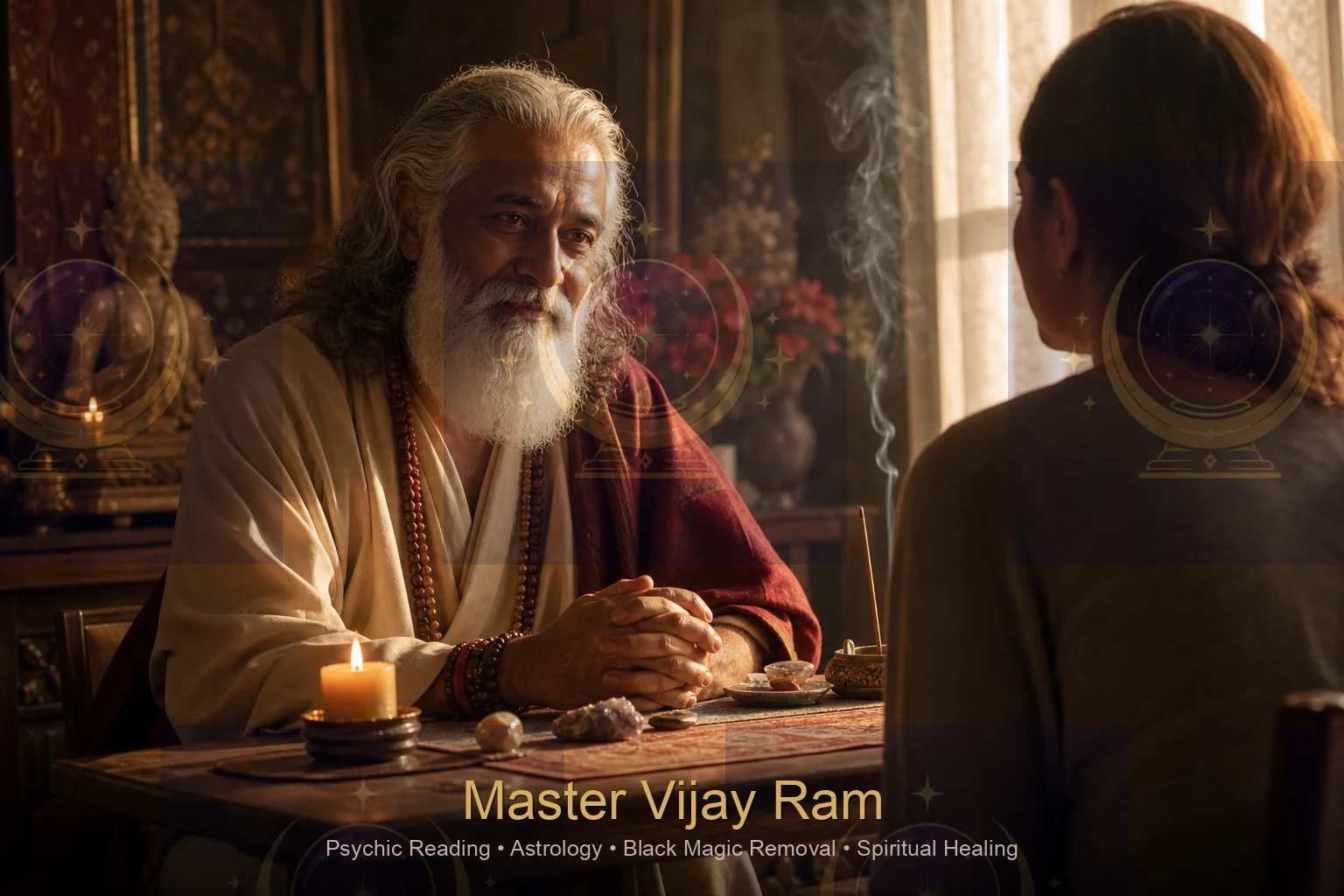
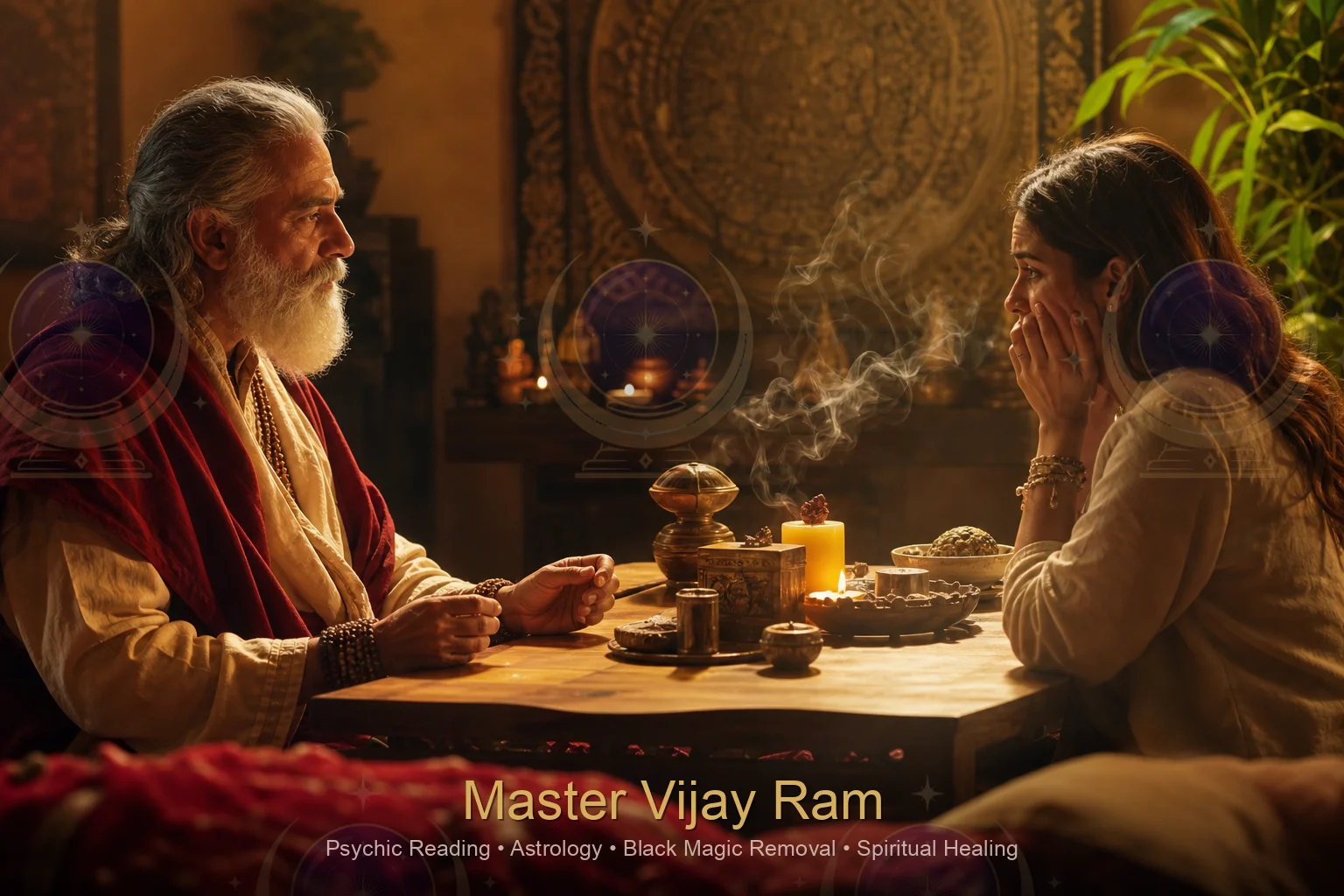
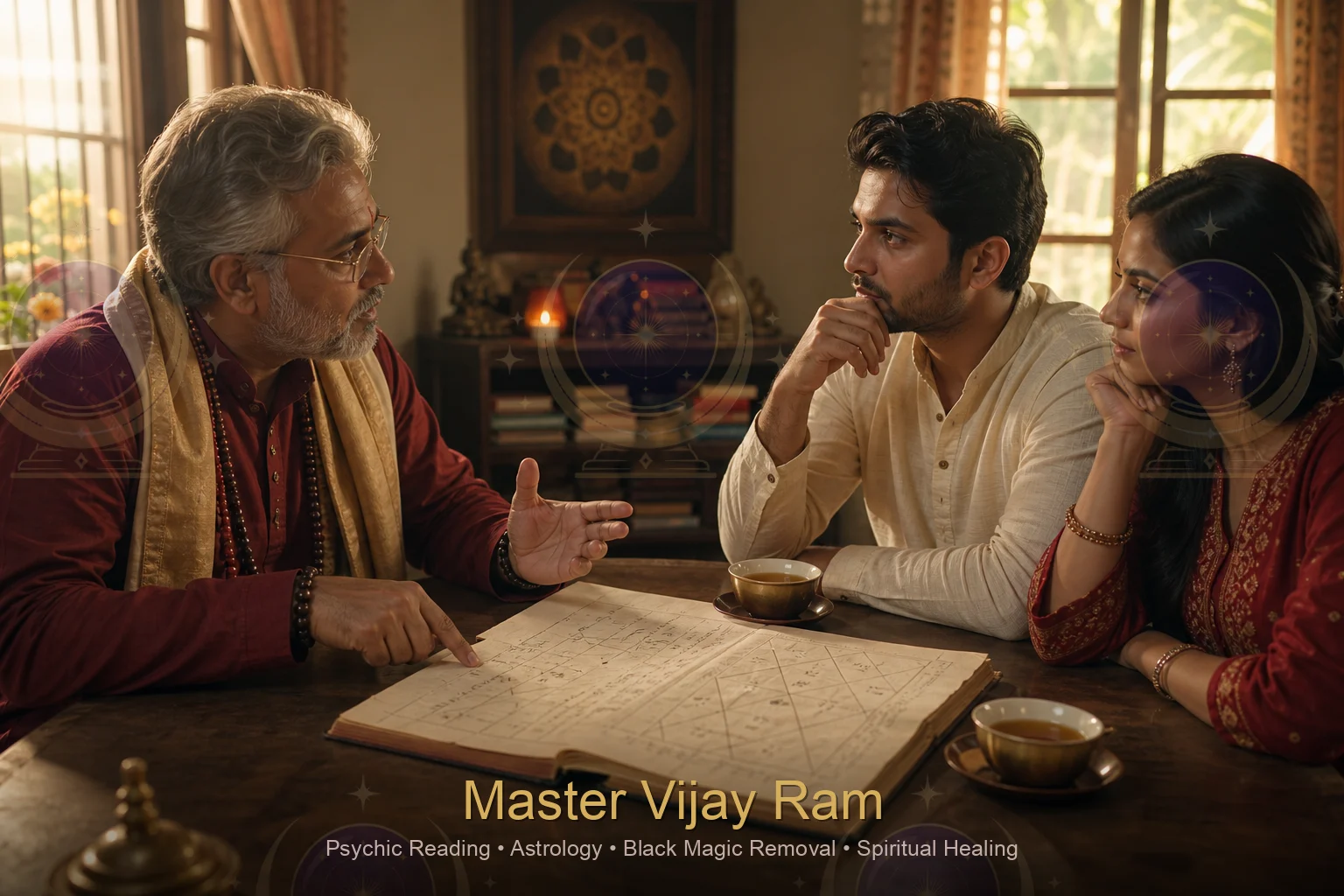
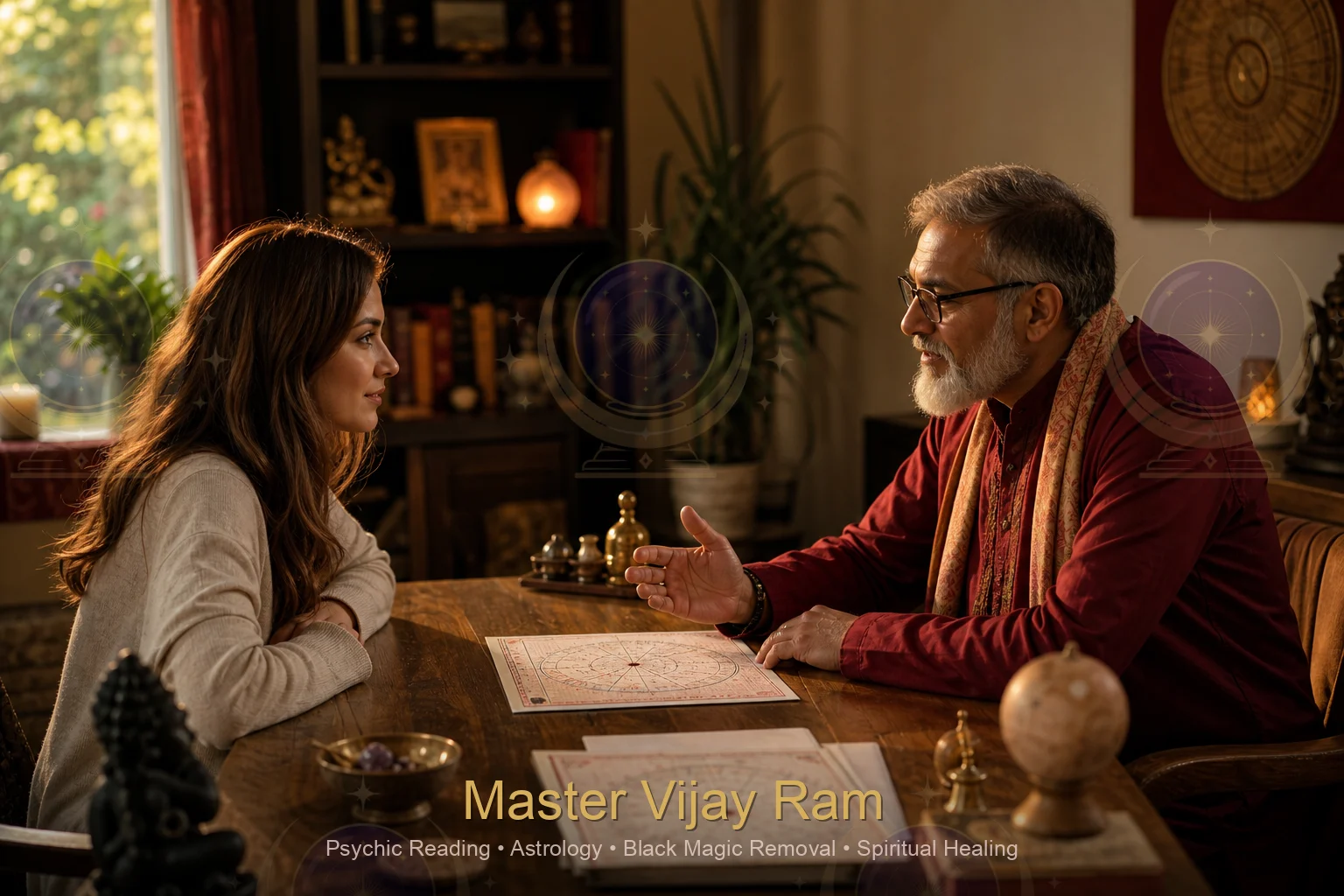
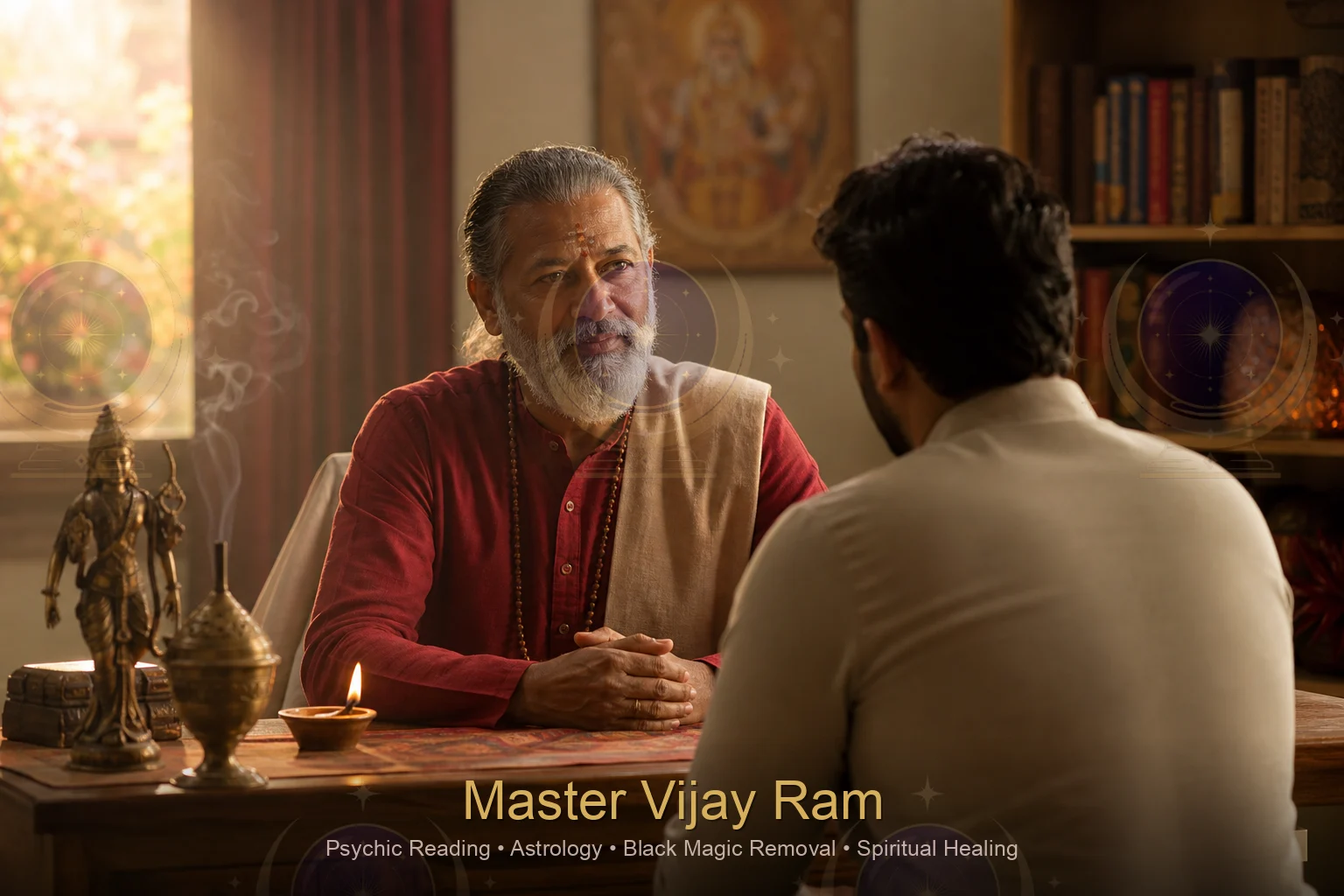
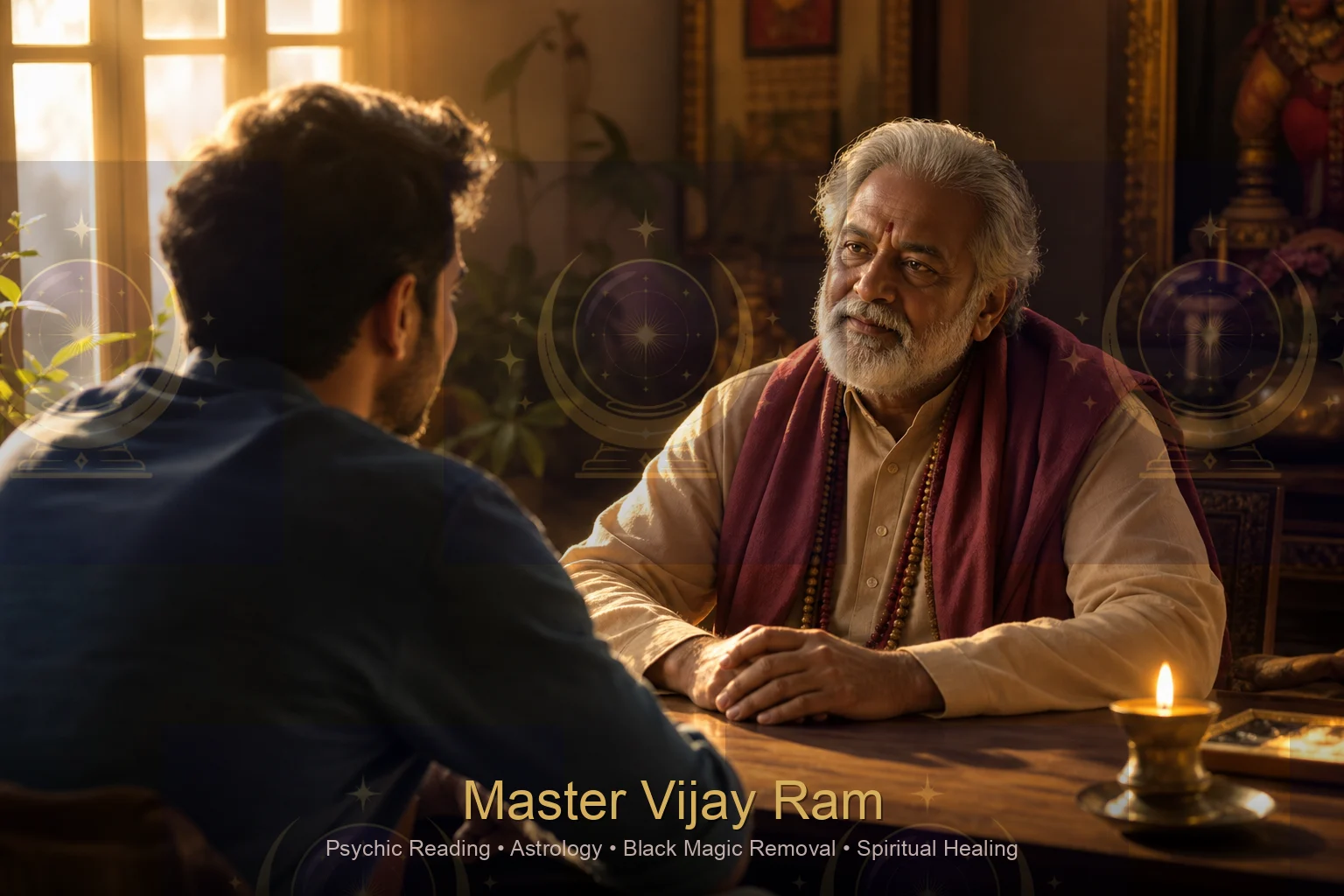
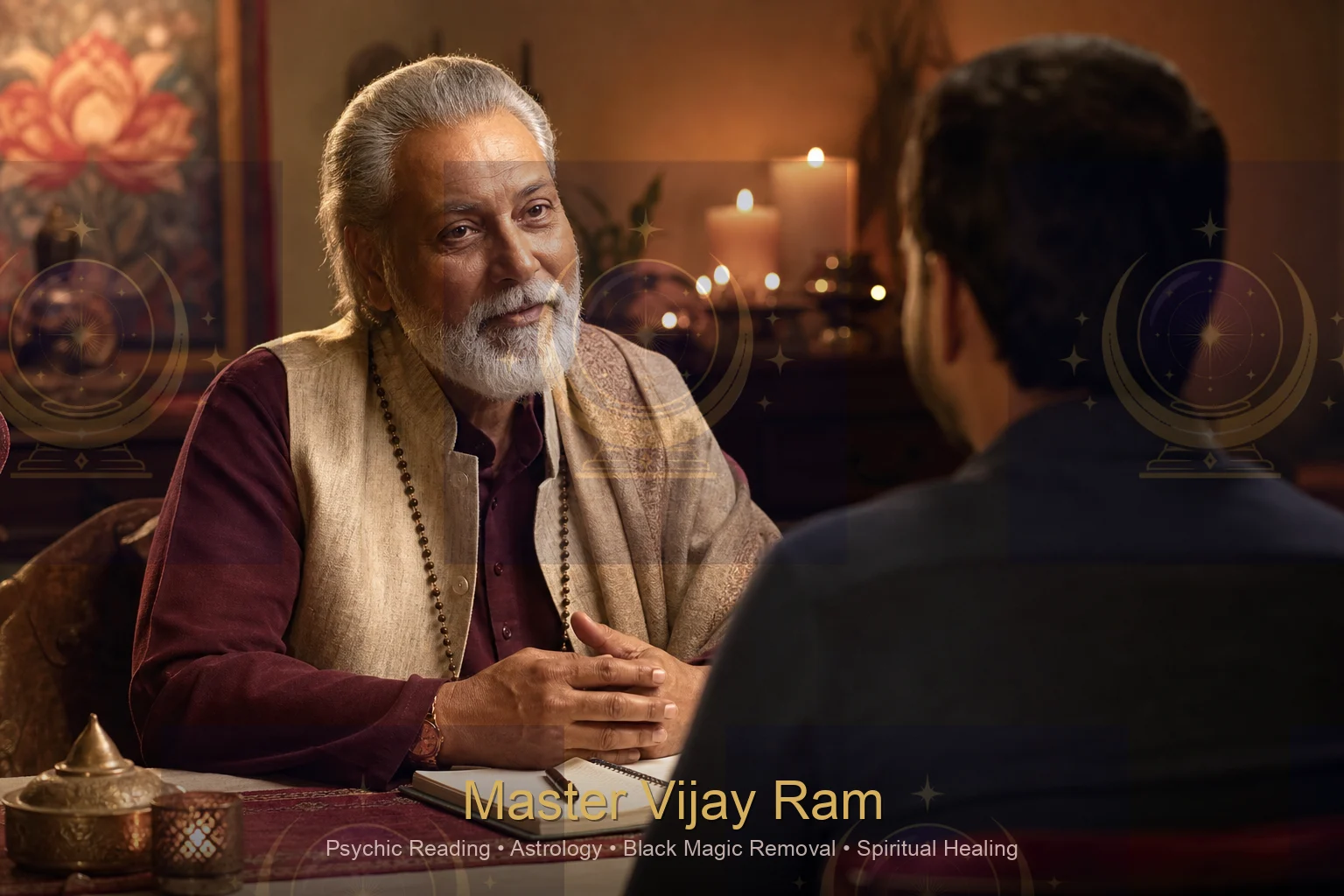
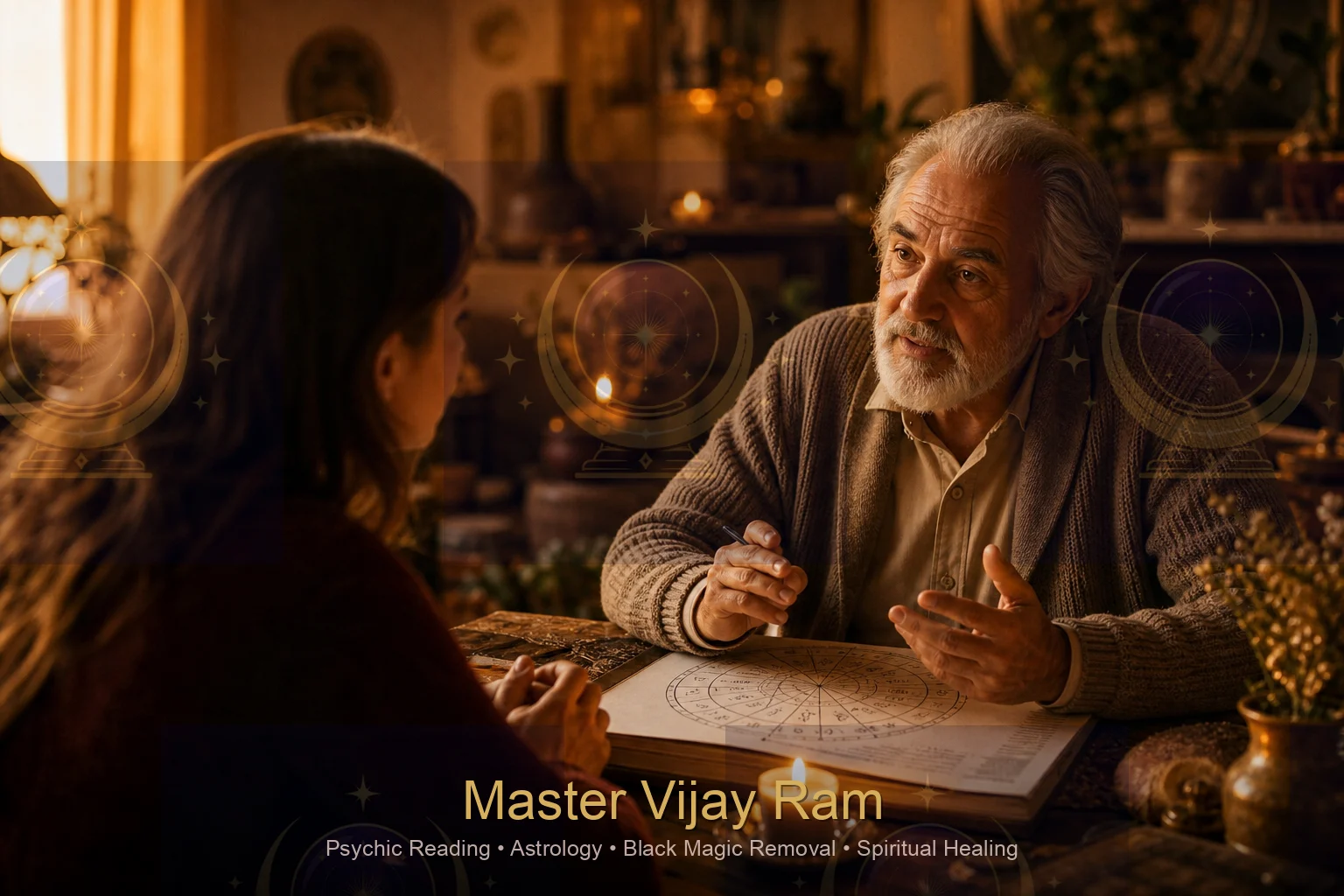
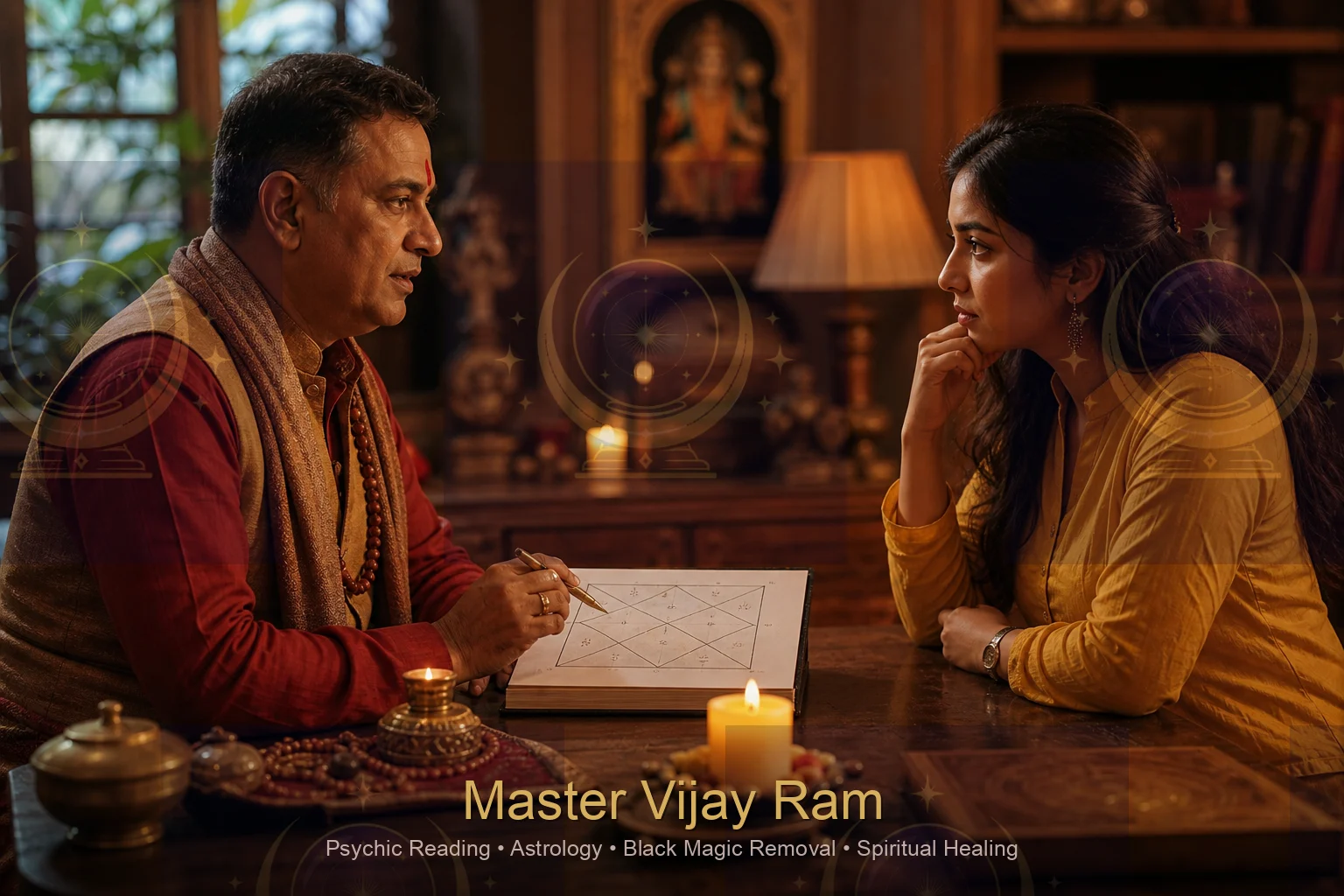
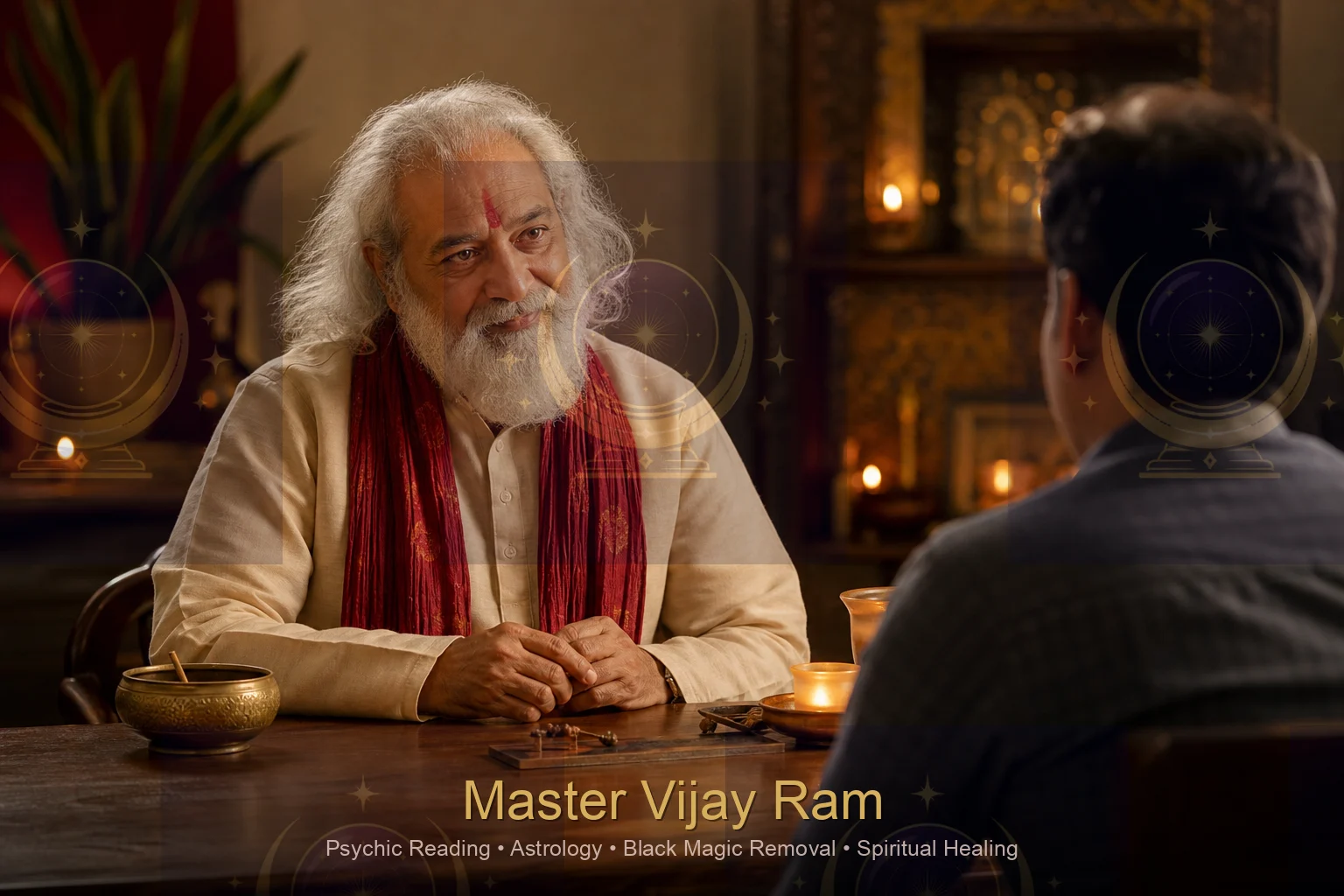
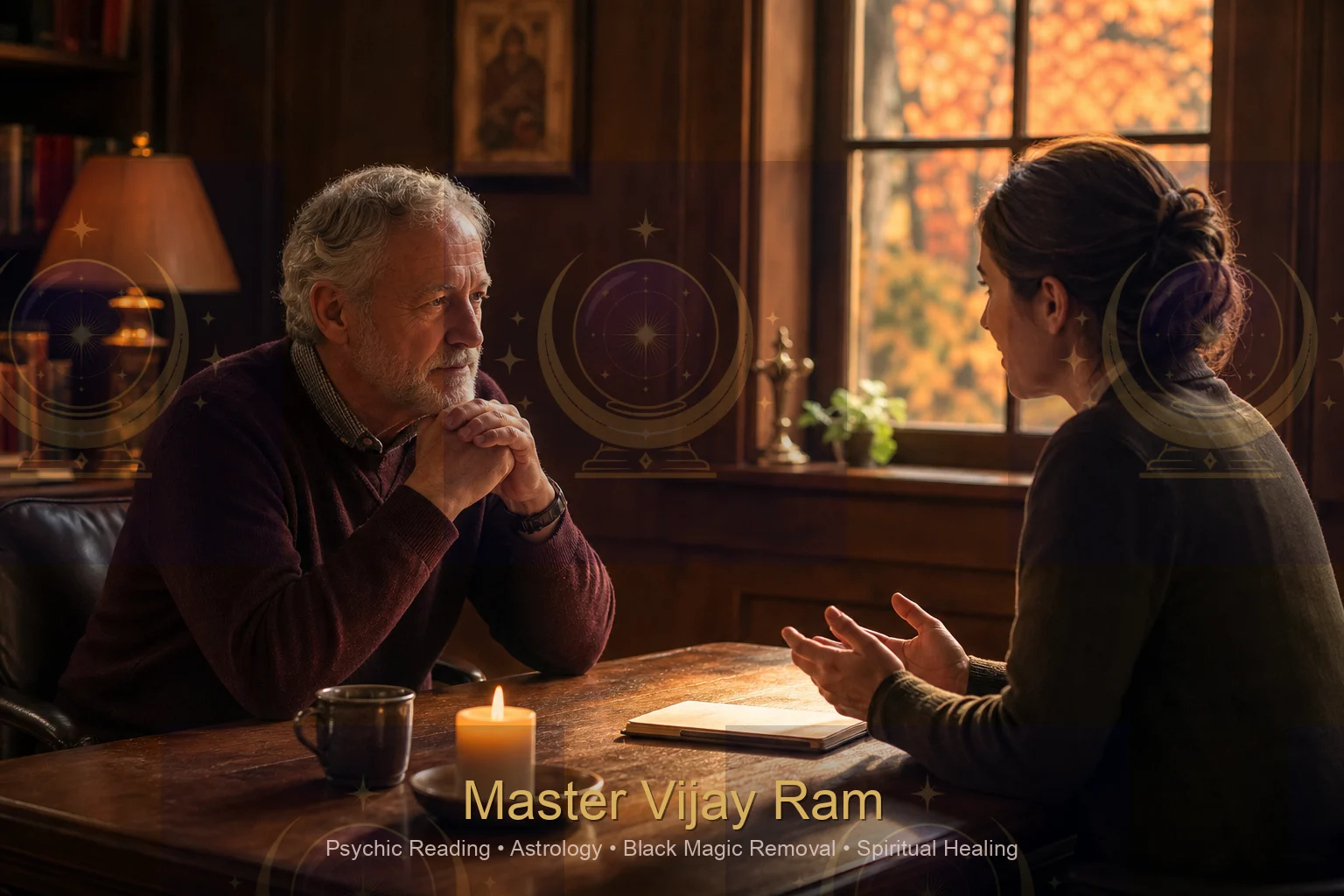
The reality is far more ordinary than the imagery. You sit down, you explain what brought you, and the practitioner asks questions. If you have supplied birth details, a chart has already been cast. Much of the hour is spent going back and forth — you say something, that changes which part of the chart is worth examining, and the reading follows the conversation rather than being delivered at you.
People sometimes arrive determined to say as little as possible, treating the session as a test of whether the practitioner can work it out unaided. It is an understandable instinct and it mostly wastes your own time. A chart shows structure and timing; it does not name your brother-in-law. Withholding the context simply means less of the hour is spent on your actual question.
Sessions here run around forty-five to sixty minutes, in person in Kitchener or by phone and video for clients further afield. Nothing about the format is theatrical, and there is no expectation that you believe anything in particular before you walk in.
What it can tell you — and what it cannot
A reading is good at pattern, tendency and timing. It is poor at specifics like exact dates, names and numbers, and any practitioner offering those is overreaching.
Here is the honest division. What a chart does well is describe tendency and timing: the kind of work that suits you, the periods when a relationship is likely to be under strain, the years when effort tends to convert into result. Those are structural observations and they hold up.
What it does badly — and what the fairground image promises — is specifics. Exact dates. The name of a future spouse. Lottery numbers. A practitioner producing those is either guessing or performing, and the confident delivery is precisely what makes it convincing. Being told "you will meet someone in March" feels far more satisfying than "the eighteen months from next autumn are the period your chart most supports for partnership", and the second is the one that is actually true.
The same applies to warnings. Any reading that identifies a catastrophe only a paid remedy can avert should end the appointment. That structure — frighten, then sell the cure — is the oldest arrangement in this trade and it has nothing to do with the traditions it borrows from.
Why people actually come
Most clients arrive with a decision they cannot resolve, not curiosity about the future. The value is usually clarity rather than prediction.
After four decades, the pattern is consistent: almost nobody comes out of idle curiosity. They come because something is unresolved and no ordinary source of advice has helped. A marriage that has gone quiet. A job that pays well and feels wrong. A family objection that will not shift. An adult child who has stopped calling.
What they usually want is not a prediction but orientation — a sense of which way the situation is actually facing, from someone who is not inside it and has no stake in the outcome. Friends and family are rarely able to give that, because they are inside it too.
That is why the most common thing clients say afterwards is not "you were right" but "that was what I already suspected". Hearing something you half-knew, said plainly by someone with no interest in flattering you, turns out to be worth a good deal.
How to tell a careful practitioner from a performer
Look for someone who states limits, declines to name people, does not manufacture urgency, and tells you when nothing is wrong.
A few signals separate the two, and they are not subtle once you know to look.
A careful practitioner states limits. They will tell you what the reading cannot establish, and they will say "I do not know" when that is the answer. They decline to name people. Confirming a suspicion about a relative on the strength of a reading has split families permanently, and it is not something a chart can honestly support. They do not manufacture urgency. No time-limited remedy, no escalating payments, no warnings about what happens if you stop. And they will tell you when nothing is wrong — arguably the most useful thing anyone in this trade can say, and the least profitable.
Against that, the warning signs: a diagnosis delivered within two minutes of meeting you, a price attached before the problem is explained, secrecy about what is in a taweez or amulet, and the suggestion that questioning any of it will cause the remedy to fail.

Serving nearby: Waterloo · Cambridge · Guelph · Brantford
Key takeaways
- "Fortune teller" is an umbrella term covering astrology, palmistry and intuitive reading — three different practices
- A session is mostly conversation, not pronouncement, and usually runs 45–60 minutes
- Readings are reliable on pattern and timing, unreliable on exact dates, names and numbers
- Most people come for clarity on a decision rather than prediction of the future
- Fear followed by a paid remedy is the oldest warning sign in the trade
In closing
If the phrase "fortune teller" has been putting you off, it is worth setting the imagery aside. What is actually on offer is an hour with someone who reads a structured system, has listened to a great many people in difficulty, and will tell you plainly what he sees — including when the answer is that nothing is wrong and you already know what to do.