
Quick answer. Durga Saptashati, or Chandi Path, is the recitation of seven hundred verses to the Goddess, traditionally for protection, strength and the removal of obstruction. The Navchandi havan follows the recitation. It is a substantial ceremony, most often performed during Navratri.
A substantial ceremony, and what it asks of a household
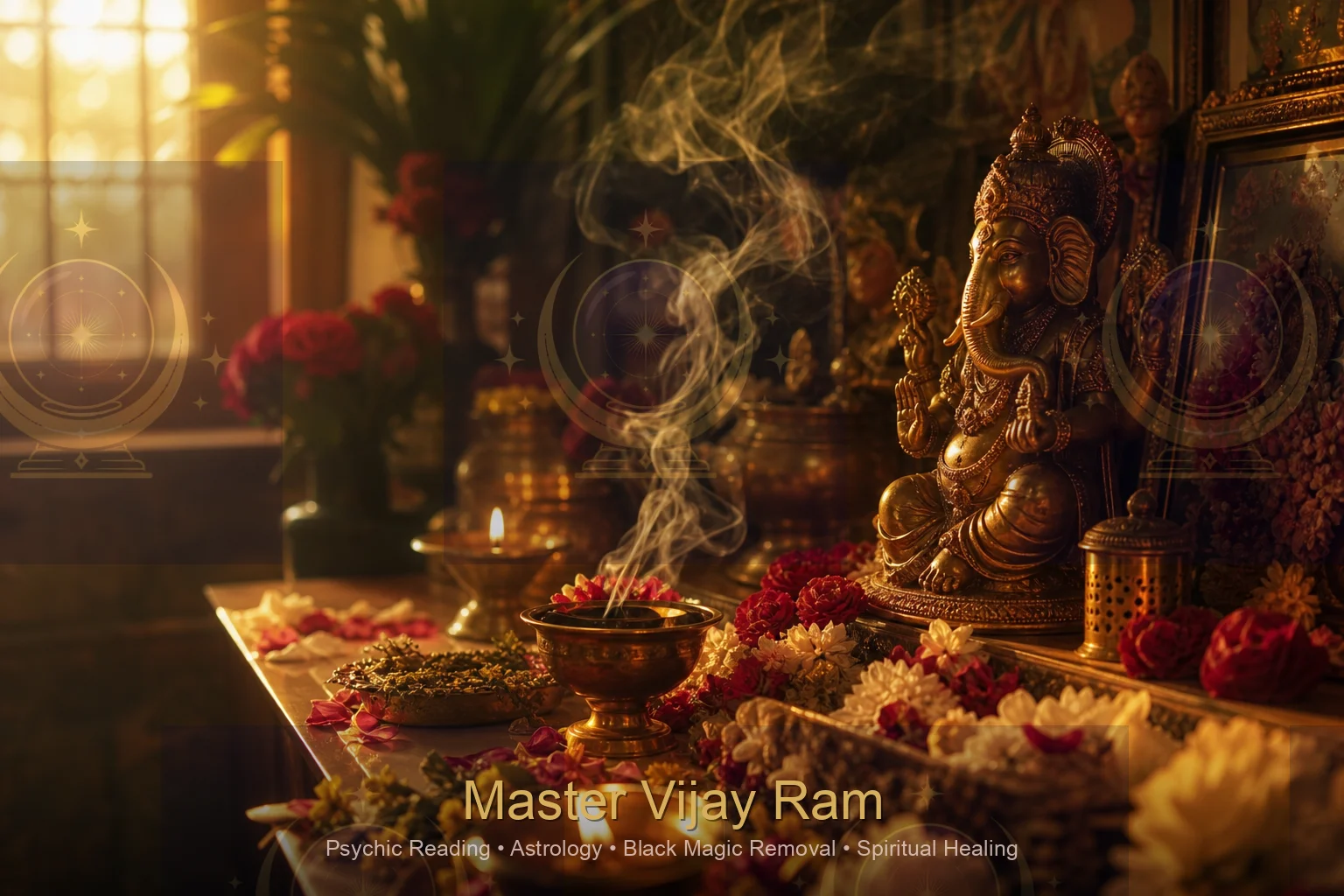
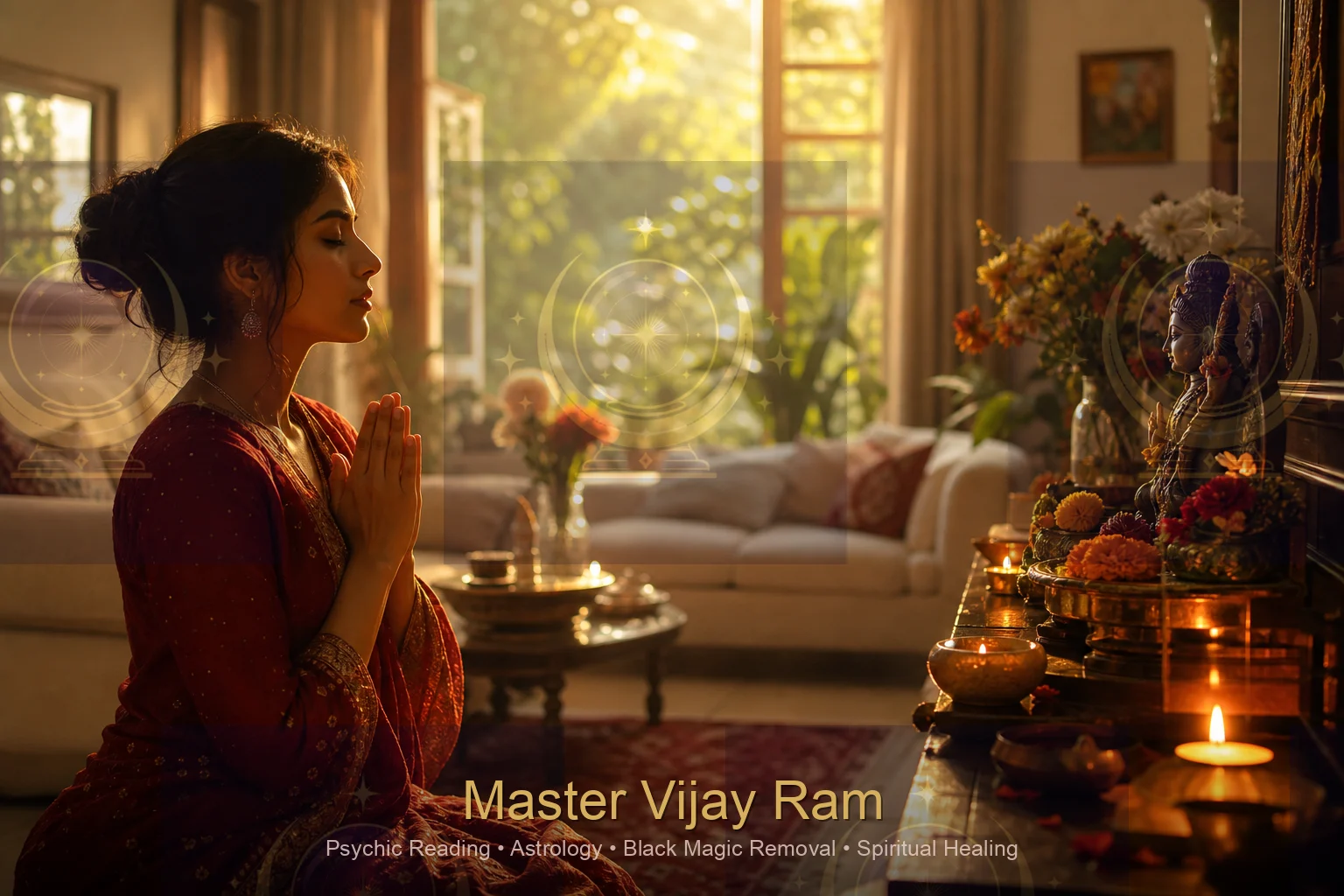
Durga Saptashati is seven hundred verses recounting the Goddess's victories over Mahishasura and the other asuras. It is one of the principal texts of Shakta practice and it is recited for protection, for strength in the face of something formidable, and for the removal of obstruction that has not yielded to lesser remedies.
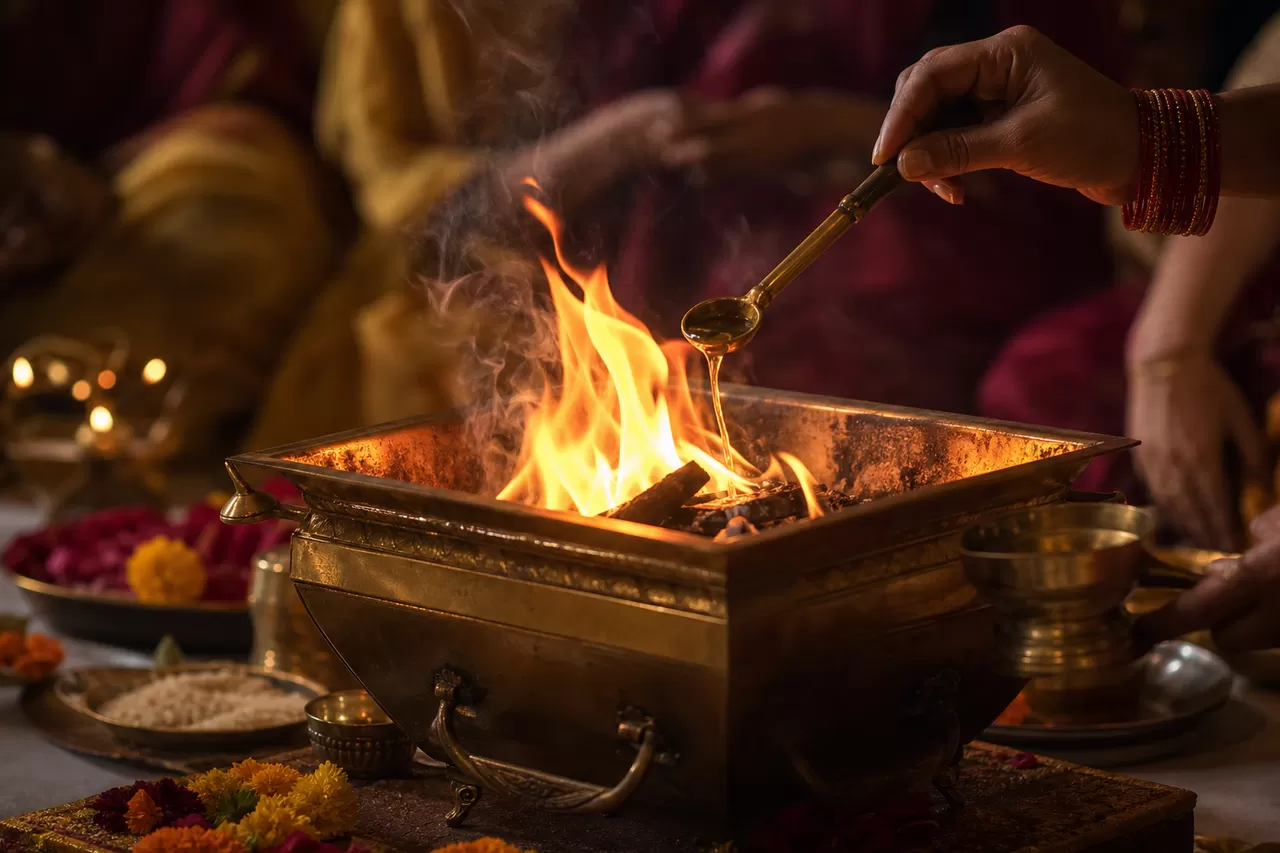
The Navchandi havan follows the recitation, with offerings made into the consecrated fire and the associated mantras. Together they form one of the more substantial undertakings in the tradition — a full path with havan runs to several hours and, in the more complete forms, across more than one day.
Navratri is the customary period, and most families who hold this do so then. It is also performed outside Navratri where a situation calls for it: sustained difficulty affecting a whole household, a serious threat to a business or livelihood, a family under prolonged strain, or after clearing where something substantial is wanted to settle the ground.
Because of its scale, this ceremony is discussed properly before it is arranged. What it involves, how long it takes, what the household needs to provide, who should attend and what is expected of them. Where something smaller would serve as well — a grah shanti, a Sunderkand path, a havan — Master Vijay Ram says so, rather than arranging the largest ceremony available.
A clear, caring path
How the ceremony is arranged
The ceremony is arranged by first confirming it is genuinely the right one for the situation, then setting a date and preparing the household, and finally reciting the seven hundred verses before performing the Navchandi havan.
Confirm it is the right ceremony
What the household is facing, and whether this scale is warranted or whether a grah shanti or havan would serve the purpose equally well.
Set the date and prepare
Navratri where possible, or a date chosen by muhurta. The household is told what to provide, how to arrange the space and what attendance involves.
Recite, then perform the havan
The Saptashati is recited with the meaning explained, followed by the Navchandi havan with its offerings, and concluded with aarti and prasad.
Do any of these sound familiar?
When this ceremony is held
Substantial by nature — smaller ceremonies are recommended where they would serve.
- Navratri is approaching and the household observes it
- Prolonged difficulty has affected the whole family
- A livelihood or business is under serious threat
- Clearing has been done and something substantial is wanted to settle it
- A family tradition of holding Chandi path needs leading properly
- Lesser remedies have been tried without effect
Your questions, answered
Durga Saptashati — your questions answered
A full path with havan runs several hours, and the more complete forms extend across more than one day. You are given a realistic schedule when it is arranged so the household can plan properly.
No, though Navratri is customary and most families choose it. The ceremony is performed at other times where a situation warrants it, with an auspicious date selected by muhurta.
Often something smaller would do, and you will be told when that is the case. A grah shanti, a havan or a Sunderkand path meets many situations perfectly well. This ceremony is for circumstances that genuinely warrant its scale.
The materials are specified in advance as a written list, and are ordinary items available locally. Nothing rare or costly is required, and you are told plainly what is needed before the date is fixed.
Often, yes — and you will be told so. Durga Saptashati is a substantial undertaking, and it is not prescribed where a shorter puja or a simple observance would genuinely serve.